
Honda Accord Years to Avoid (Worst to Best Ranked)
Uncover the definitive ranking of Honda Accord model years, revealing which to avoid due to common issues and which offer superior reliability.
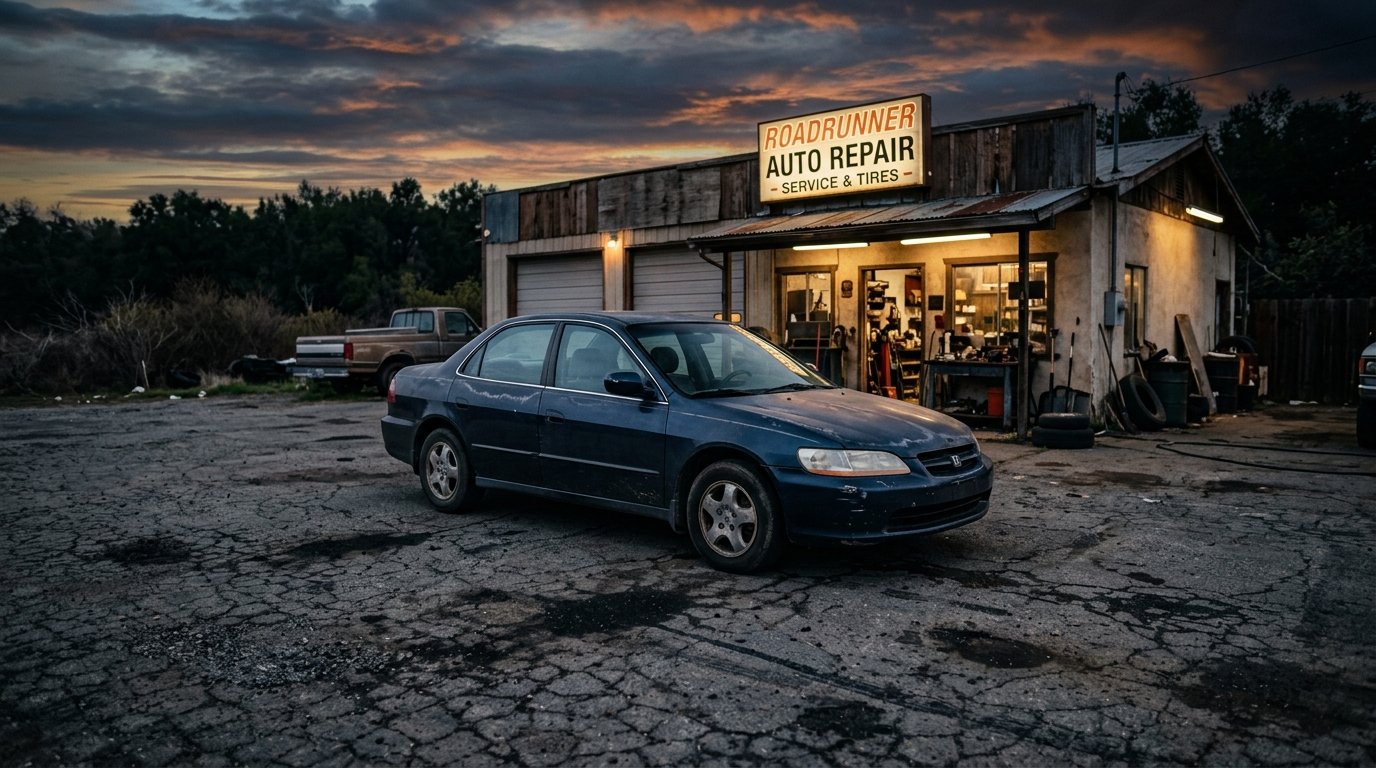
HONDA ACCORD YEARS TO AVOID (WORST TO BEST RANKED)
INTRODUCTION Buying a used Honda Accord can be one of the smartest automotive decisions, offering reliability and comfort for years. However, even with the Accord's stellar reputation, not all model years deliver the same peace of mind. A poor choice can quickly turn a perceived bargain into a recurring financial drain, while a wise selection provides dependable transport with minimal fuss. This article systematically ranks Honda Accord model years from the most problematic to the most highly recommended, detailing specific issues, their typical costs, and essential buying advice to empower your purchase.
WHY THIS MATTERS The financial impact of choosing the wrong used vehicle extends far beyond the initial purchase price. A seemingly inexpensive Accord from a problematic generation might require thousands of dollars in unforeseen repairs, wiping out any savings and potentially stranding you. For example, a notorious automatic transmission failure can easily cost $3,500 to $4,500 to replace or rebuild, an expense that can materialize unexpectedly at 90,000 to 120,000 miles. Conversely, a well-chosen Accord can reliably serve you for five years with annual maintenance costs averaging $500 to $800, plus routine consumables. The difference between a "lemon" and a "gem" can translate to a disparity of $5,000 to $10,000 in total cost of ownership over a five-year period, impacting everything from your emergency fund to your daily commute reliability. Prudent research ensures your investment delivers true value.
THE RANKINGS
-
1998-2002 Honda Accord Automatic Transmissions These sixth-generation Accords are perhaps the most notorious for widespread automatic transmission failures. The Honda BA7/B7XA and B7TA automatic transmissions fitted to both four-cylinder and V6 models were poorly designed for long-term durability. Owners frequently report rough shifting, slipping gears, or complete failure, often occurring between 70,000 and 120,000 miles. Repair involves a costly rebuild or replacement, typically running between $3,500 and $4,500. A practical buyer tip for these years is to rigorously inspect service records for transmission replacements and ensure the current unit shifts smoothly with no hesitation or flaring.
-
2003-2007 Honda Accord V6 Automatic Transmissions While an improvement over the previous generation, the automatic transmissions in the seventh-generation V6 Accords still presented significant reliability challenges. The Honda Baya and M7ZA automatic units were prone to premature failure, particularly in the V6 models which placed more stress on the gearbox. Symptoms include harsh shifts from first to second gear, delayed engagement, or complete loss of drive. Failures often emerge between 80,000 and 130,000 miles. Expect repair costs similar to the prior generation, in the $3,000 to $4,000 range. For buyers considering these models, a pre-purchase inspection focusing heavily on transmission health and fluid condition is non-negotiable.
-
2008-2012 Honda Accord V6 with Variable Cylinder Management (VCM) The eighth-generation V6 Accords introduced Honda's Variable Cylinder Management (VCM) system, designed to improve fuel economy by deactivating cylinders. While the transmissions were generally more robust than earlier models, VCM itself became a significant source of problems. The constant activation and deactivation cycles often lead to excessive oil consumption, fouled spark plugs, and premature piston ring wear. These issues typically manifest after 60,000 miles, leading to burning oil and misfires. Addressing VCM-related oil consumption can involve engine work costing $1,500 to $3,000, or the installation of a VCM disabling device for $100 to $200 plus labor. Buyers should specifically ask if a VCM disabler has been installed or if the engine has been serviced for oil consumption.
-
2013-2017 Honda Accord V6 with VCM (Improved but Cautious) The ninth-generation Accord, particularly the V6 models, continued to utilize VCM. While Honda made revisions to the system and many owners report trouble-free operation, the potential for oil consumption and related VCM issues still exists, though less prevalent than in the previous generation. Other minor complaints include battery drain issues, often traced to parasitic draws from infotainment systems or relays, which can cost $200 to $500 to diagnose and repair. The 2.4-liter four-cylinder models from this generation are generally excellent and largely free of these VCM concerns. Buyers of the V6 should still inquire about oil consumption history and consider a VCM disabler for preventative maintenance.
-
2006-2007 Honda Accord 4-Cylinder Manual Transmission These seventh-generation four-cylinder Accords, especially those equipped with a manual transmission, represent a high point in Accord reliability. The 2.4-liter K24A engine is known for its durability and relatively few widespread issues when properly maintained. The manual transmission sidesteps the automatic transmission problems of earlier V6 models entirely, offering a robust and engaging driving experience. Common issues are minimal, usually confined to wear items like suspension components at higher mileages. A full clutch replacement might be needed around 100,000 to 150,000 miles, costing $1,000 to $1,500. This is an excellent choice for a budget-conscious buyer prioritizing long-term mechanical resilience.
-
2011-2012 Honda Accord 4-Cylinder The late eighth-generation Accords, specifically those powered by the 2.4-liter four-cylinder engine, are commendably reliable. These models benefit from the improvements made over previous generations without inheriting the more significant VCM issues found in their V6 counterparts. They offer a comfortable ride, decent fuel economy, and strong build quality. Minor issues might include power steering pump leaks, common on many Honda models from this era, typically appearing after 100,000 miles and costing $500 to $800 to replace. For buyers, these years offer a sweet spot of modern features and Honda's traditional reliability without major pitfalls.
-
2018-2022 Honda Accord (Current Generation) The tenth-generation Accord marks a significant leap in design and engineering, offering robust powertrains and advanced features. Available with turbocharged 1.5-liter or 2.0-liter engines, paired with continuously variable transmissions (CVT) or a 10-speed automatic, these models have demonstrated excellent reliability thus far. Early concerns about the 1.5-liter engine's oil dilution issue in cold climates were largely addressed by Honda with software updates. Major widespread mechanical failures are rare. These models provide modern safety features, technology, and superior driving dynamics. A practical buyer tip for these newer models is to ensure all software recalls have been performed and to review the complete dealer service history for optimal long-term health.
WHAT TO CHECK BEFORE YOU BUY
- Transmission Fluid Condition: Pull the transmission dipstick (if equipped) and observe the fluid. It should be bright red and translucent, not dark brown, black, or smell burnt.
- Engine Oil Level and Quality: Check the engine oil on a level surface. Look for correct level, clear amber color, and ensure no milky residue is present, which could indicate coolant contamination.
- Power Steering System: Inspect the power steering fluid reservoir for proper level and look for leaks around the pump, hoses, and steering rack. Honda's often develop minor seepage.
- Test Drive VCM Operation: On V6 models (2008-2017), listen and feel for any vibrations or rough operation when the car is cruising at steady speeds, as this could indicate VCM activation issues.
- HVAC System Functionality: Turn on the heating and air conditioning. Verify all fan speeds work, that air comes out of all vents, and that the AC blows truly cold air.
- Undercarriage and Rust: Inspect the underside, especially around the subframe, suspension mounting points, and rocker panels for excessive rust, which indicates poor maintenance or road salt exposure.
- Tire Wear Pattern: Observe the tire treads for uneven wear patterns, such as feathering or inner/outer edge wear, which can point to alignment problems or worn suspension components.
COST OF OWNERSHIP OVER 5 YEARS The overall cost of ownership for a used Honda Accord can vary significantly depending on the model year chosen, its initial condition, and how diligently it has been maintained. For a well-chosen Accord from a reliable generation, expect to budget approximately $500 to $800 annually for routine maintenance. This covers essential items like oil changes every 5,000 to 7,500 miles, tire rotations, brake fluid flushes every 3 years, and air filter replacements. Over five years, this equates to $2,500 to $4,000 in preventative care.
However, the risk of major repairs is where the costs diverge. For a problematic Accord from the 1998-2007 automatic transmission era, or a V6 with unaddressed VCM issues, you could easily face an additional $3,000 to $5,000 in repairs within the first few years of ownership. This brings the potential total repair expenditure over five years for a poorly chosen model into the $5,000 to $10,000 range on top of routine maintenance. Conversely, a well-regarded 4-cylinder Accord from 2011-2012 or later might only require standard wear-item replacements like brakes or suspension components, perhaps totaling $1,000 to $2,500 over five years.
Fuel costs are another significant factor. A 4-cylinder Accord typically averages 26-30 miles per gallon (MPG) combined, while V6 models generally achieve 22-26 MPG. Assuming an average of 12,000 miles driven annually and a fuel price of $3.50 per gallon, yearly fuel expenses could range from $1,400 to $1,900. Over five years, this adds $7,000 to $9,500 to the total. Insurance premiums for an Accord are generally moderate, typically ranging from $1,200 to $1,800 per year depending on driver age, location, and coverage, adding another $6,000 to $9,000 over five years. When all factors are combined, the total cost of ownership for a used Honda Accord over five years, excluding purchase price, can range from a lean $16,500 for a meticulously chosen reliable model to upwards of $25,000 or $30,000 for a problematic year that demands significant repairs.
OUR VERDICT For buyers seeking dependable, long-term transportation, the Honda Accord remains a highly recommended used car, provided the right model year and configuration are chosen. Our unequivocal recommendation is to focus on 4-cylinder models from the 2011-2012 (eighth generation), 2013-2017 (ninth generation), or the excellent 2018-2022 (tenth generation). These years offer the best balance of reliability, modern features, and value. Absolutely avoid the 1998-2007 automatic transmission models and exercise extreme caution with V6 models equipped with VCM from 2008-2017 unless concrete proof of VCM mitigation or prior engine work is available. If your budget restricts you to the problematic early generations, consider a manually shifted 4-cylinder model, or explore alternatives like a Toyota Camry or Mazda6 from the same period.
FREQUENTLY ASKED QUESTIONS
Q: What is a good budget for a reliable used Honda Accord? A: A good budget for a reliable used Honda Accord typically ranges from $8,000 to $15,000. This range allows access to solid 4-cylinder models from the 2011-2017 generations, which offer proven reliability and a good balance of features without the common issues of older, cheaper models.
Q: What mileage is too high for a used Accord? A: For a well-maintained Honda Accord, 150,000 to 200,000 miles is not necessarily too high, especially for the robust 4-cylinder engines. However, at these mileages, expect more wear item replacements like suspension components, alternators, or starters. Always prioritize service history over raw mileage figures.
Q: Are there any specific Accord years I should absolutely avoid? A: Yes, definitely avoid the 1998-2007 Honda Accord models equipped with automatic transmissions due to their widespread and expensive transmission failure issues. Additionally, exercise extreme caution with 2008-2017 V6 models that use Variable Cylinder Management (VCM) unless there is documented evidence of VCM repair or a disabler installation.
Q: What are the most common known issues across Honda Accords? A: Beyond the specific problematic years, common issues that can appear across various Accord generations include power steering pump leaks, general wear on suspension bushings and components, and occasionally alternator failures. Keeping up with fluid changes and timing belt replacements (on V6 engines before 2008) is crucial.
Q: How much does it typically cost to maintain a Honda Accord annually? A: On average, routine annual maintenance for a reliable Honda Accord costs between $500 and $800. This includes oil changes, tire rotations, air filter replacements, and other minor services. Major service intervals, like timing belt changes on older V6s, will increase these costs in specific years.
Q: Do Honda Accords hold their resale value well? A: Yes, Honda Accords generally hold their resale value very well, often better than many competitors, especially the more reliable 4-cylinder models. This is due to their strong reputation for reliability, fuel efficiency, and widespread appeal. Well-maintained examples with good service records command premium prices in the used market.