
Honda CR-V vs Toyota RAV4: Full Reliability Breakdown
Deciding between the Honda CR-V and Toyota RAV4? Get a full, unbiased reliability breakdown to help you choose your next dependable SUV with confidence.
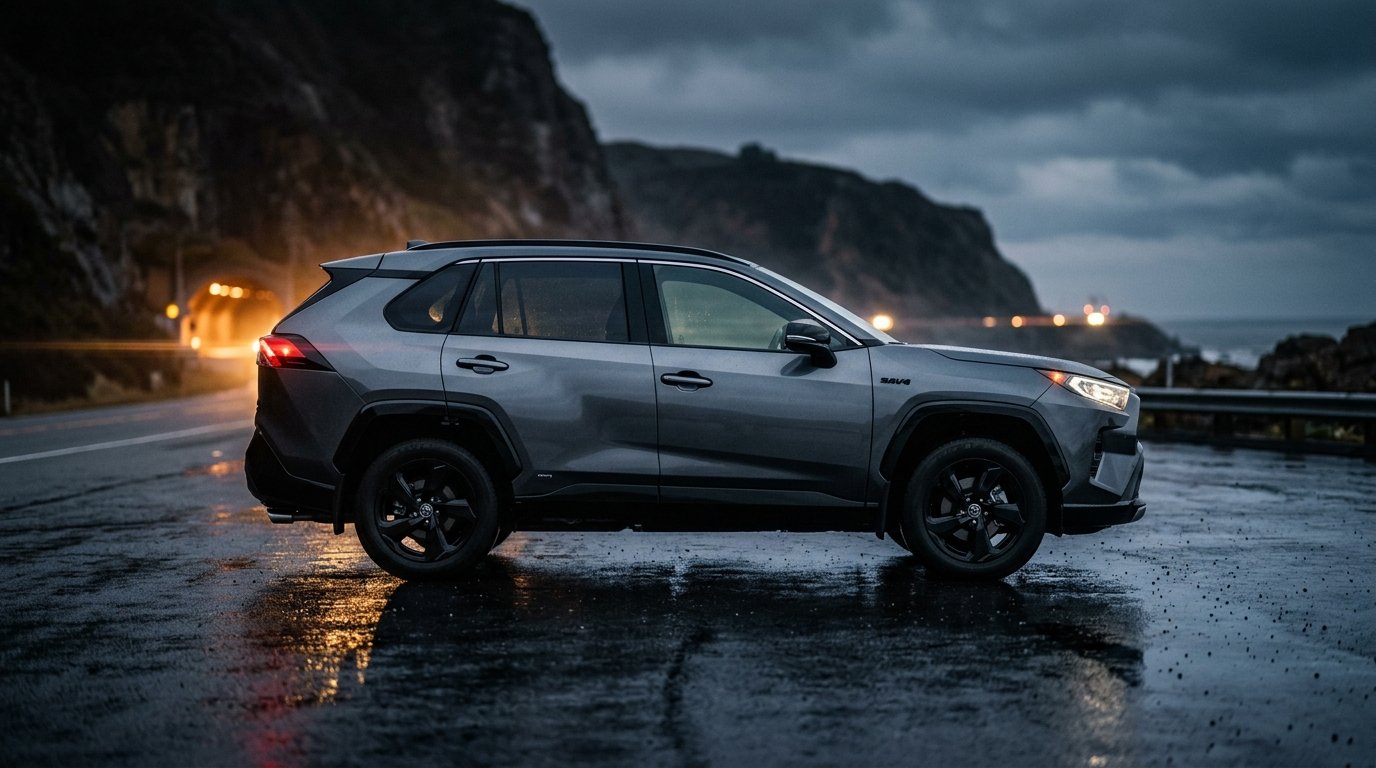
Honda CR-V vs Toyota RAV4: Full Reliability Breakdown
INTRODUCTION Choosing a used compact SUV is a significant financial decision, with the Honda CR-V and Toyota RAV4 frequently topping buyer lists. These vehicles represent a substantial investment, and understanding their long-term reliability is paramount to avoiding unexpected costs and ensuring peace of mind. This comprehensive breakdown dissects specific model years, highlights known failure points, estimates typical repair expenses, and offers actionable advice for used car shoppers to make an informed, confident purchase.
WHY THIS MATTERS A used vehicle purchase can be a financial minefield or a smart investment, and the difference often hinges on reliability. An unreliable CR-V or RAV4 could easily cost an owner an additional $2,000 to $4,000 in unforeseen repairs within the first two years of ownership, beyond routine maintenance. This unexpected expense can wipe out initial savings from buying used and strain household budgets. Conversely, selecting a robust model year with minimal known issues can translate to thousands of dollars saved in repair bills, higher resale value down the line, and greater overall satisfaction. Understanding the specific vulnerabilities and strengths of each model year allows a buyer to budget accurately, negotiate effectively, and avoid costly surprises, transforming a potentially risky acquisition into a financially sound decision.
THE TOP 5 / THE RANKINGS / THE YEARS
-
TOYOTA RAV4 (2013-2018) This fourth-generation RAV4 stands out for its rock-solid dependability. Major powertrain issues are rare, with the 2.5-liter four-cylinder engine and conventional six-speed automatic transmission proving highly robust. Owners frequently report reaching 200,000 miles or more with only routine maintenance. The primary concern is minor, often related to the infotainment system or interior trim rattles, which do not impede vehicle operation. Typical mileage for minor issues, if any, often exceeds 100,000 miles and repairs are generally under $300. BUYER TIP: Focus on models with a complete service history to confirm consistent oil changes and fluid flushes, maximizing this generation's inherent longevity.
-
HONDA CR-V (2002-2006) The second-generation CR-V, equipped with the K24A1 2.4-liter engine, is a strong contender for sheer endurance. While generally reliable, a common failure point is the AC compressor, which can seize or become noisy. This issue typically appears between 100,000 and 150,000 miles. Repair involves replacing the compressor, condenser, and dryer, often costing between $800 and $1,500. Transmission fluid should be regularly changed to prevent issues, though major failures are not widespread. BUYER TIP: During inspection, run the air conditioning on full cold and listen for any unusual noises or grinding from the engine bay, indicating a failing compressor.
-
TOYOTA RAV4 (2006-2012) The third-generation RAV4 offers good reliability but has a few more notable issues than its successor. The primary concern for some models, particularly those with the 2.4-liter engine, is potential excessive oil consumption, which can begin around 80,000-120,000 miles. Some owners of the V6 models reported water pump failures around 100,000-150,000 miles, costing $400-$700 to replace. Another infrequent but costly issue is a shudder from the automatic transmission's torque converter, typically manifesting above 100,000 miles, with repair potentially ranging from $1,500 to $3,000. BUYER TIP: For 2.4L models, perform an oil consumption test or check service records for frequent top-offs. Test drive V6 models specifically listening for any whining from the engine bay.
-
HONDA CR-V (2007-2011) This third-generation CR-V is largely robust, powered by a refined K24Z1 2.4-liter engine. A common issue is a noisy VTC (Variable Timing Control) actuator at cold startup, which causes a brief grinding sound. This typically occurs after 70,000 miles and is more of an annoyance than an immediate catastrophic failure. Replacement costs for the VTC actuator generally range from $400 to $800. Power steering pump leaks are also somewhat common, usually appearing around 100,000 miles, with repairs costing $300-$600. BUYER TIP: Start the engine from cold and listen carefully for any grinding or rattling sound that lasts for 1-2 seconds immediately after ignition.
-
HONDA CR-V (2017-2018 1.5T engine) While a popular and efficient model, the early fifth-generation CR-V with the 1.5-liter turbocharged engine experienced widely reported oil dilution issues. This occurs when gasoline contaminates the engine oil, particularly in cold climates or during short trips, leading to reduced lubrication and potential long-term engine wear. The issue often becomes noticeable after 30,000 miles, with symptoms like a strong gasoline smell from the oil or elevated oil levels. Honda issued software updates and extended warranties, but long-term effects are still monitored. A complete engine replacement could be $4,000-$7,000 if severe, though most cases are mitigated by updates and careful maintenance. BUYER TIP: Pull the dipstick and smell the oil. A strong gasoline odor is a red flag. Inquire if all Honda service bulletins and software updates for oil dilution have been applied.
WHAT TO CHECK BEFORE YOU BUY
- Check all fluid levels and conditions: Pull the engine oil dipstick and look for milky residue or a strong gasoline smell. Inspect transmission fluid for burnt odor or dark brown color. Check coolant reservoir for proper level and absence of oil film.
- Listen for engine noises: Start the vehicle cold and listen for grinding, ticking, or excessive rattling. Pay particular attention to VTC actuator noises on older CR-Vs or belt squeal on RAV4s.
- Inspect for leaks: Look under the vehicle after a test drive for any fresh drips or stains on the pavement, and check engine bay components for visible fluid leaks around seals or hoses.
- Test all electronics: Verify the functionality of the air conditioning, heater, power windows, door locks, infotainment system, and all dashboard warning lights.
- Drive the vehicle at various speeds: Pay attention to transmission shifts for smoothness, listen for abnormal road or suspension noises, and feel for any vibrations or pulling from the steering.
- Examine tire wear: Uneven tire wear patterns can indicate underlying suspension issues, misalignment, or worn steering components that will require costly repairs.
- Check the undercarriage for rust: Especially on vehicles from regions with road salt, inspect frame rails, suspension components, and brake lines for excessive corrosion.
COST OF OWNERSHIP OVER 5 YEARS The cost of ownership for both the Honda CR-V and Toyota RAV4 generally falls into similar competitive ranges, although specific model years can skew these figures. Routine annual maintenance, including oil changes, tire rotations, and cabin air filter replacements, typically averages between $300 and $600 for either vehicle. These costs are often lower at independent shops compared to dealerships, but quality parts are essential for longevity.
Major repair risk is where the differences become more pronounced. For a well-maintained Toyota RAV4 from the 2013-2018 generation, the risk of a significant repair exceeding $1,000 in a five-year period is relatively low, perhaps one in four vehicles. Older RAV4s or CR-Vs, particularly those with known issues like the CR-V's VTC actuator or the RAV4's potential torque converter shudder, carry a higher probability of needing a substantial repair, potentially ranging from $1,500 to $3,000 over the five-year ownership period. It is prudent to budget an additional $500 to $1,000 per year for potential unexpected repairs, especially for vehicles approaching or exceeding 150,000 miles.
Fuel costs are largely comparable, as both models typically achieve EPA combined ratings between 25 and 30 miles per gallon depending on the year and powertrain. With gasoline prices fluctuating between $3.50 and $4.00 per gallon, an average driver covering 12,000 miles annually could expect to spend $1,400 to $1,920 on fuel each year. Insurance premiums are highly variable based on driver history, location, and coverage, but generally, both the CR-V and RAV4 are considered safe vehicles and fall into moderate insurance cost brackets, typically ranging from $1,200 to $1,800 annually for full coverage.
OUR VERDICT For the discerning used car buyer prioritizing long-term, trouble-free ownership, the Toyota RAV4, particularly the 2013-2018 fourth-generation models, emerges as the most reliable choice. While older Honda CR-Vs like the 2002-2006 generation offer commendable durability, the consistency of the RAV4's powertrain across its later generations provides a slight edge in overall risk avoidance. Both are excellent vehicles, but the RAV4 consistently demonstrates fewer widespread, costly issues, minimizing the potential for unexpected repair bills.
FREQUENTLY ASKED QUESTIONS
Q: Which model year is the best budget pick for reliability? A: For buyers on a tighter budget seeking maximum reliability, the 2002-2006 Honda CR-V or the 2001-2005 Toyota RAV4 offer excellent value. These older generations are simpler mechanically, making repairs generally less expensive, and they boast proven durability for their age.
Q: How many miles is too many for a used CR-V or RAV4? A: For a well-maintained CR-V or RAV4, 150,000 to 200,000 miles is not necessarily too many, provided there is a detailed service history. Many examples of both models routinely exceed 250,000 miles with proper care, so focus on condition and maintenance records over mileage alone.
Q: Are there specific years to avoid for either model? A: For the CR-V, approach early 5th-generation models (2017-2018) with the 1.5L turbocharged engine cautiously due to oil dilution concerns. For the RAV4, some 3rd-generation models (2006-2012) had reports of excessive oil consumption in the 2.4L engine and infrequent torque converter shudder issues.
Q: What are the most common known issues for both vehicles? A: Common CR-V issues include AC compressor failures (older models) and VTC actuator noise (2007-2011). RAV4 concerns can involve excessive oil consumption (some 2.4L engines in 2006-2012 models) and occasional water pump failures on V6 versions.
Q: How do their average maintenance costs compare? A: Overall, the average annual routine maintenance costs for both models are very similar, typically ranging from $300 to $600. The key difference lies in the likelihood and cost of infrequent, major repairs, where the RAV4 often has a slight edge in predictability.
Q: Which vehicle tends to hold its resale value better? A: Both the Honda CR-V and Toyota RAV4 are champions of resale value in the compact SUV segment. Historically, Toyota RAV4s have often held a fractional edge due to their reputation for bulletproof reliability, but both vehicles are excellent at retaining their value over time.