
How Long Does a Ford F-150 Last? (Real Owner Data)
Discover the real lifespan of a Ford F-150! Our article analyzes actual owner data to show exactly how many miles these trucks truly last.
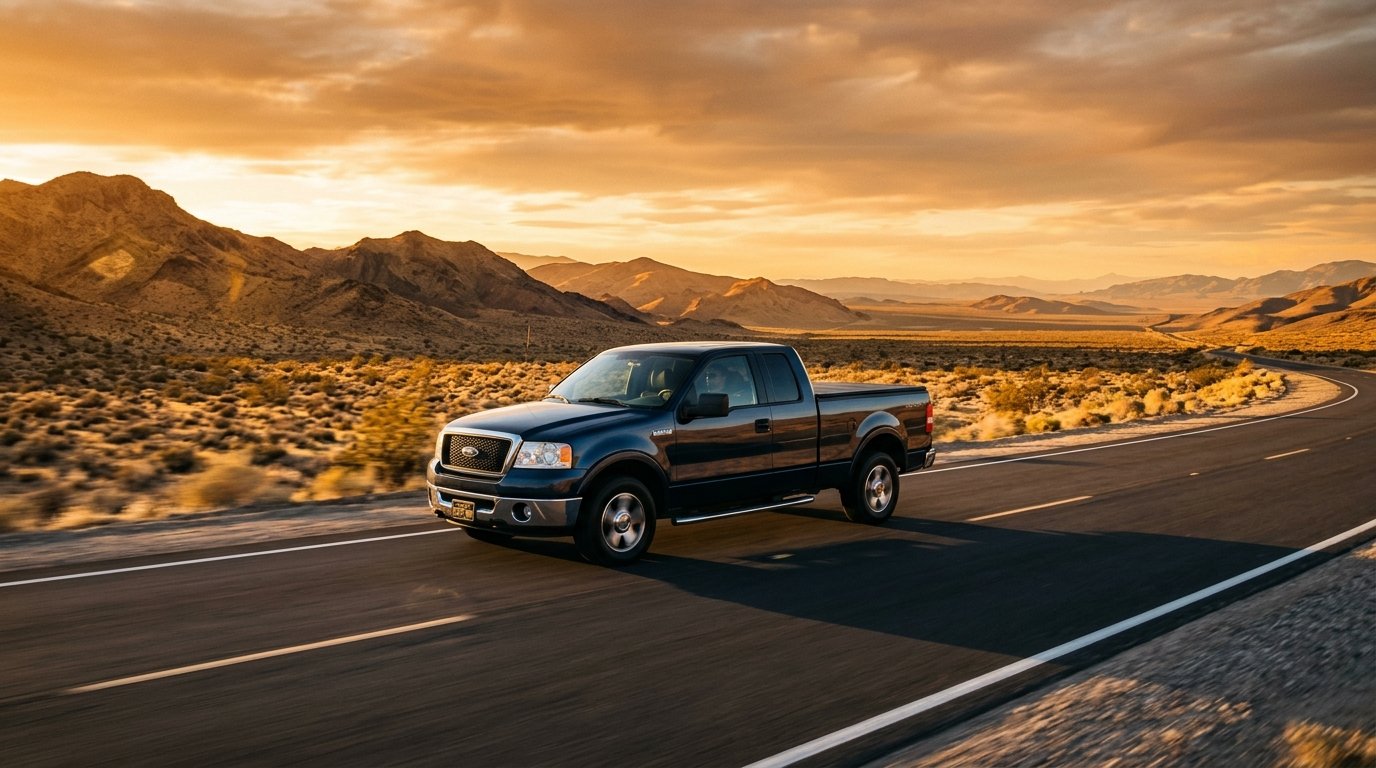
HOW LONG DOES A FORD F-150 LAST? (REAL OWNER DATA)
INTRODUCTION The Ford F-150 consistently ranks as America's best-selling vehicle, a testament to its capability and widespread appeal. However, buying a used F-150 is a significant financial commitment, and not all model years offer the same reliability or long-term value. This article cuts through the marketing to deliver concrete data on F-150 longevity, detailing specific model year strengths and weaknesses, common failure points, typical repair costs, and practical advice for used truck buyers. We aim to equip you with the knowledge to make an informed purchase that stands the test of time and mileage.
WHY THIS MATTERS A reliable used Ford F-150 can serve as a dependable workhorse or family hauler for hundreds of thousands of miles, delivering exceptional value for its purchase price. Conversely, acquiring a problematic model year can quickly drain your wallet, turning an initial savings into ongoing repair bills that far exceed the vehicle's worth. For example, a major engine repair on a troublesome 5.4L Triton can easily run upwards of $4,000, while a new transmission on a faulty 2004-2008 model might cost $3,500 to $5,000. These unexpected costs can rapidly erode any perceived bargain, diminishing resale value and creating significant financial stress. Understanding the nuances of F-150 reliability across different generations is crucial to avoiding these pitfalls and securing a truck that truly lasts.
THE YEARS TO CONSIDER AND THE YEARS TO AVOID
-
2004-2008 Model Years (5.4L Triton Engine) The 5.4L 3-valve Triton V8 engine, prevalent in these years, is notorious for timing chain and cam phaser issues, often appearing between 80,000 and 150,000 miles. Symptoms include a noticeable ticking or knocking sound, especially at idle. Repairing cam phasers and the full timing chain assembly can cost $2,500 to $4,500. Another common failure is the problematic two-piece spark plugs, which can seize or break during removal, leading to costly cylinder head work if not addressed carefully. This generation is also susceptible to rust on the steel frame and cab corners, particularly in areas exposed to road salt. Buyer Tip: Insist on a cold start and listen carefully for engine noise. Check service records for past timing component replacement.
-
2009-2010 Model Years (5.4L Triton Engine) While still using the 5.4L Triton, Ford made some improvements to the spark plug design, reducing the breakage issue. However, timing chain and cam phaser problems persisted, often still emerging in the 100,000 to 180,000-mile range. The 6R80 six-speed automatic transmission was introduced in 2009, generally proving reliable, but early versions can suffer from lead frame failures causing intermittent shifting problems, a repair that can cost $1,200 to $2,000. Frame and body rust remain significant concerns. Buyer Tip: Prioritize trucks with meticulously documented oil changes, as this engine is sensitive to proper lubrication. Inspect the frame thoroughly for deep rust.
-
2011-2014 Model Years (3.5L EcoBoost & 5.0L Coyote Engines) These years introduced the first generation 3.5L EcoBoost V6 and the 5.0L Coyote V8, both generally more robust than the 5.4L. The 3.5L EcoBoost can experience timing chain stretch and cam phaser issues (similar to the Triton but less severe) around 100,000-150,000 miles, costing $2,000 to $3,500. Additionally, intercooler condensation issues can lead to misfires, especially in humid climates, often resolved with a simple catch can or updated programming. The 5.0L Coyote is largely reliable, though some early units experienced minor oil consumption. Four-wheel drive models are prone to Integrated Wheel End (IWE) vacuum leaks, resulting in grinding noises, a $300-$800 repair. Buyer Tip: For the EcoBoost, check for any "check engine" lights related to misfires or rough idling. For the Coyote, ensure regular oil changes have been performed.
-
2015-2017 Model Years (Aluminum Body) The switch to an aluminum body greatly reduced rust concerns on the main panels, though the steel frame can still corrode. The 3.5L EcoBoost and 5.0L Coyote engines continued, largely with the same characteristics as the prior generation, though the EcoBoost saw refinements. The 2015-2017 models generally hold up well, but the 3.5L EcoBoost still has potential for timing chain issues, typically after 120,000 miles. Electric power steering rack failures can occur, manifesting as difficult steering or a loss of assist, a costly repair ranging from $1,800 to $2,500. Buyer Tip: Inspect the body for any signs of poorly repaired accident damage, as aluminum body repairs can be more specialized and expensive. Test the power steering for smooth, consistent operation.
-
2018-2020 Model Years (10-Speed Transmission) These years introduced the 10-speed automatic transmission, which offers improved fuel economy but can have some initial shift logic complaints or occasional rough shifts. The 5.0L Coyote V8 for 2018-2020 models is known for oil consumption issues, sometimes requiring an engine block replacement, potentially a $6,000-$8,000 repair if not covered by warranty. The 3.5L EcoBoost continues to be a strong performer, though cam phaser issues can still manifest, often with a cold start rattle that subsides, costing $2,500-$4,000 for repair. Buyer Tip: For 2018-2020 5.0L trucks, request oil change records and ask the seller about oil consumption. Drive the truck extensively to evaluate the 10-speed transmission's shifting behavior.
WHAT TO CHECK BEFORE YOU BUY
- Check for rust on the frame, cab corners, and wheel wells, especially on 2014 and older models.
- Pull the oil dipstick and look for milky residue or excessively dark, sludgy oil.
- Listen for any persistent ticking, knocking, or rattling sounds from the engine upon a cold start.
- Test the four-wheel drive engagement on 4x4 models, listening for grinding or binding from the front wheels.
- Inspect the steering for any clunking noises or abnormal resistance, indicating power steering rack issues.
- Look under the truck for any signs of fluid leaks around the transmission, differential, or engine.
- Test all power windows, door locks, and climate control functions for proper operation.
COST OF OWNERSHIP OVER 5 YEARS The cost of ownership for a used Ford F-150 can vary significantly based on model year, engine choice, and driving habits. Typical annual maintenance, including oil changes, tire rotations, air filter replacements, and occasional brake service, will average between $500 and $800. Opting for premium synthetic oil, especially with EcoBoost engines, is recommended and can push routine service costs slightly higher.
Major repair risks are the primary variable. A well-maintained F-150 from a generally reliable generation (like later 5.0L Coyote or second-gen EcoBoost) might only incur minor repairs. However, an F-150 with known issues, such as a 5.4L Triton needing cam phasers or a 2018-2020 5.0L consuming oil, could easily incur repair bills ranging from $2,500 to $8,000 or more within a five-year period. Factor in at least $1,000 to $2,000 annually for potential unexpected repairs, or budget for common replacements like suspension components or IWEs that might occur around the 120,000-180,000 mile mark.
Fuel costs are a substantial ongoing expense. A 3.5L EcoBoost might achieve 17-20 MPG combined, while a 5.0L Coyote typically falls in the 15-18 MPG range. Older 5.4L models often see 13-16 MPG. With current fuel prices, expect to spend $2,500 to $4,000 annually on gasoline for average driving. Insurance rates for F-150s vary widely by location, driver history, and coverage, but generally range from $1,200 to $2,500 per year for comprehensive coverage. Considering all factors, a used F-150 can cost anywhere from $5,000 to $10,000 per year to own, excluding financing.
OUR VERDICT For used F-150 buyers, we recommend focusing on 2011-2014 models with the 5.0L Coyote V8, or 2015-2017 models with either the 5.0L Coyote or the 3.5L EcoBoost (provided its specific maintenance needs are met). These generations offer a better balance of modern features, improved reliability, and value compared to the problematic 5.4L Triton era. Avoid the 2004-2010 5.4L Triton engines entirely unless verifiable, extensive engine work has been completed by a reputable shop, and approach 2018-2020 5.0L V8 trucks with caution due to the oil consumption issue. If a truck with excellent service history and a pre-purchase inspection from an independent mechanic is secured, a properly chosen F-150 can easily last well over 200,000 miles.
FREQUENTLY ASKED QUESTIONS
Q: What is a reasonable budget for a reliable used Ford F-150? A: A budget of $15,000 to $25,000 typically allows access to 2011-2017 models with manageable mileage and better overall reliability, offering a good balance of features and longevity. Trucks below this range often come with higher mileage or more inherent risk.
Q: How many miles is too many for a used F-150? A: While many F-150s can exceed 250,000 miles, trucks with 150,000 to 180,000 miles or more should be approached cautiously. Focus less on absolute mileage and more on consistent maintenance records and evidence of major component replacements.
Q: Which specific F-150 years should I avoid? A: The 2004-2010 model years equipped with the 5.4L 3-valve Triton V8 engine are generally best avoided due to pervasive timing chain, cam phaser, and spark plug issues that can be extremely costly to repair. The 2018-2020 5.0L Coyote V8 also carries a significant risk of oil consumption.
Q: What are the most common known issues across F-150 generations? A: Common issues include timing component wear (cam phasers, timing chains) on various V8 and EcoBoost engines, rust on older steel bodies and frames, Integrated Wheel End (IWE) failures on 4WD models, and occasional electric power steering rack issues.
Q: What is the average annual maintenance cost for an F-150? A: Excluding major repairs, expect to pay between $500 and $800 annually for routine maintenance items like oil changes, tire rotations, brake inspections, and filter replacements. This figure can rise if you tackle more involved DIY projects.
Q: Does the F-150 hold its resale value well? A: Yes, the Ford F-150 generally holds its resale value better than many other vehicles due to its strong demand, reputation for capability, and widespread parts availability. Well-maintained examples from preferred model years will depreciate slower.