
How Long Does a Honda Accord Last? (Real Owner Data)
Uncover the real lifespan of a Honda Accord with our in-depth analysis, using authentic owner data to show how long they truly last.
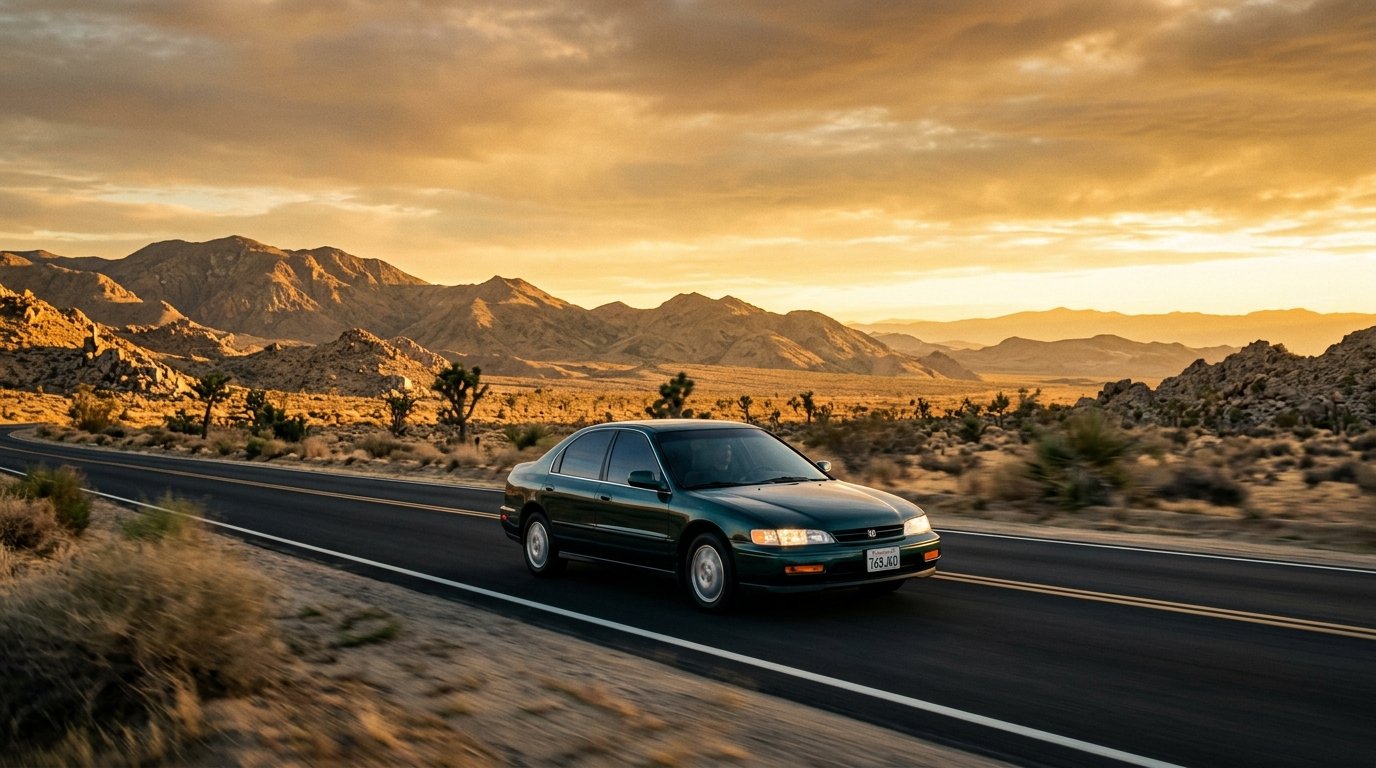
HOW LONG DOES A HONDA ACCORD LAST? (REAL OWNER DATA)
INTRODUCTION Buying a used car is a high-stakes decision, particularly when reliability is paramount and your budget demands every dollar stretch further. A poor choice can lead to a money pit, while a smart one delivers years of dependable transportation. This article delves into the Honda Accord's true longevity, dissecting real owner experiences to highlight which model years offer maximum reliability and which carry significant risks. You will learn about common failure points, typical repair costs, and crucial pre-purchase inspection strategies to secure a trustworthy vehicle.
WHY THIS MATTERS Choosing the right used Honda Accord means the difference between predictable, low-cost ownership and unexpected, budget-busting repairs. A well-researched purchase can save a buyer thousands of dollars over just a few years. For instance, an Accord with a known transmission flaw could necessitate a $2,500 to $4,000 repair at 100,000 to 150,000 miles, completely negating any upfront savings. Conversely, selecting a robust model year can translate to annual maintenance costs averaging $400 to $600, preserving capital for other priorities. The financial risk is real: uninformed buyers often shoulder the previous owner's deferred maintenance or inherent design flaws. Understanding specific model year vulnerabilities or strengths empowers you to invest wisely, ensuring your used Accord is a reliable asset, not a looming liability. This due diligence protects not only your initial investment but also your ongoing operational budget.
THE ACCORD YEARS: BEST AND WORST
-
2003-2007 Honda Accord V6 (Automatic Transmission) This generation, specifically the V6 models equipped with the five-speed automatic transmission, suffered from premature transmission failure. The torque converter or individual clutch packs often failed around 90,000 to 140,000 miles. This is a severe issue, as a full rebuild or replacement transmission typically costs between $2,800 and $4,500. While the V6 engine itself is robust, this transmission flaw is a significant drawback. A practical buyer tip: insist on detailed service records showing prior transmission work or budget for a potential replacement if buying an example without a service history.
-
2003-2007 Honda Accord 4-Cylinder (Manual or Automatic Transmission) The four-cylinder models from this generation generally fared much better than their V6 automatic counterparts. The 2.4-liter K24A engine is known for its durability, often exceeding 200,000 miles with proper maintenance. Common issues were less severe, primarily relating to AC compressor failure around 100,000 to 150,000 miles, costing $800 to $1,200 to replace, and power steering pump leaks, a $400 to $600 repair. A practical buyer tip: listen carefully for unusual noises from the AC compressor clutch upon engagement and inspect the power steering pump and lines for fluid leaks.
-
2008-2012 Honda Accord 4-Cylinder The eighth-generation four-cylinder Accords, particularly the 2.4-liter K24Z engine, are generally strong contenders. However, some 2008-2011 models experienced excessive oil consumption, sometimes starting as early as 70,000 miles. This was often due to piston ring issues, and while Honda extended warranties for some, a repair could involve significant engine work, costing $2,000 to $3,500. AC compressor failures persist in this generation as well. A practical buyer tip: carefully check the oil level on a cold engine and inquire about the frequency of oil top-offs from the seller. Look for records of oil consumption tests or engine work.
-
2008-2012 Honda Accord V6 (with Variable Cylinder Management) These V6 models utilize Variable Cylinder Management (VCM), which deactivates cylinders for improved fuel economy. While intended to be efficient, VCM can lead to spark plug fouling, excessive oil consumption, and premature engine mount failure, often manifesting around 70,000 to 120,000 miles. Repairing fouled spark plugs costs $200 to $400, but engine mount replacement can run $600 to $1,000. An aftermarket VCM disabler module, costing around $150, is a common owner solution. A practical buyer tip: observe the engine at idle and under light acceleration for excessive vibration, which could indicate failed engine mounts or VCM issues. Ask if a VCM disabler has been installed.
-
2013-2017 Honda Accord (All Powertrains) The ninth-generation Accord stands out as one of the most reliable used choices. Both the 2.4-liter four-cylinder and 3.5-liter V6 engines are robust, with fewer widespread issues compared to previous generations. The Continuously Variable Transmission (CVT) in 4-cylinder models generally proved durable, though some owners report minor shuddering at higher mileage (120,000+ miles), which can sometimes be resolved with a fluid flush ($150-$250). V6 models still use VCM, so the same precautions apply. Overall, these are solid, long-lasting cars. A practical buyer tip: look for evidence of regular CVT fluid changes if considering a four-cylinder model, as fluid health is critical for CVT longevity.
-
2018-2022 Honda Accord (All Powertrains) The tenth-generation Accord offers excellent reliability with its turbocharged 1.5-liter and 2.0-liter engines. These are relatively new in the used market, but owner data suggests continued Honda durability. The 1.5-liter engine, shared with the Civic, initially had some concerns about oil dilution in very cold climates, but this was largely addressed by Honda with software updates. Major failure modes are not widespread at typical used mileage ranges. These models also feature modern safety and infotainment. A practical buyer tip: ensure all recall work, particularly any related to software updates for the 1.5T engine, has been completed.
WHAT TO CHECK BEFORE YOU BUY Always arrange a pre-purchase inspection by an independent mechanic you trust. Pull the engine oil dipstick and check for proper level and a clean, golden-brown color; milky residue indicates potential coolant contamination. Inspect the automatic transmission fluid for a reddish-pink color; dark brown or burnt-smelling fluid signals serious internal wear. Start the car cold and listen for any loud whirring or grinding noises from the power steering pump. Visually inspect the undercarriage for any signs of major fluid leaks from the engine, transmission, or differentials. Check the air conditioning system by turning it on full blast; ensure cold air comes out immediately and consistently. Cycle through all windows, door locks, and infotainment features to confirm all electronic components are operational. Look for rust on the subframe, suspension components, and rear wheel arches, especially in regions that use road salt.
COST OF OWNERSHIP OVER 5 YEARS Owning a Honda Accord, especially a well-chosen model year, generally translates to a cost-effective ownership experience over five years. Annual routine maintenance, encompassing oil changes, tire rotations, air filter replacements, and brake inspections, typically ranges from $400 to $600. Major services such as timing belt replacement on older V6 models (every 90,000-105,000 miles) can cost $800 to $1,200, including the water pump. CVT fluid changes, recommended every 30,000-60,000 miles depending on driving conditions, are generally $150 to $250.
The primary risk for major repair costs is concentrated in specific model years and powertrains. As noted, a 2003-2007 V6 automatic transmission failure can be a $2,800 to $4,500 event. Excessive oil consumption on certain 2008-2011 4-cylinders or VCM-related issues on 2008-2017 V6 models can lead to engine work costing $2,000 to $3,500 if unaddressed. Outside of these known pitfalls, major component failures are less common.
Fuel costs will vary significantly based on engine and driving habits. A 4-cylinder Accord typically achieves 25-30 miles per gallon combined, while a V6 model might see 20-25 miles per gallon. Assuming 12,000 miles driven annually and a national average of $3.50 per gallon, a 4-cylinder Accord would incur approximately $1,400 to $1,680 in annual fuel expenses. Insurance premiums are also highly variable but tend to be moderate for Accords, generally ranging from $1,200 to $1,800 per year depending on the driver's profile, location, and coverage choices. Overall, a reliable Accord can be operated for $2,000 to $3,500 annually including maintenance, fuel, and insurance, provided no major unexpected repairs arise.
OUR VERDICT The Honda Accord remains an excellent choice for used car buyers prioritizing longevity and reliability, but careful model year selection is paramount. We recommend focusing on the 2013-2017 generation for its strong balance of modern features, robust powertrains, and proven durability. For buyers on a tighter budget, the 2003-2007 4-cylinder models (especially with manual transmissions) or the 2008-2012 4-cylinder models (with oil consumption verification) offer substantial value. Avoid the 2003-2007 V6 models with automatic transmissions due to their well-documented failure rates, and approach 2008-2017 V6 models with VCM caution, ensuring a VCM disabler is installed or planning for potential issues. While the Toyota Camry and Mazda 6 are strong alternatives, the right Accord offers an engaging driving experience combined with Honda's renowned long-term value.
FREQUENTLY ASKED QUESTIONS
Q: What budget do I need for a reliable used Honda Accord? A: A reliable used Honda Accord typically requires a budget between $7,000 for a well-maintained 2008-2012 model and $18,000 for a 2018-2020 generation. Younger, lower-mileage examples naturally command higher prices but offer more modern features and potentially fewer immediate maintenance needs. Your budget should also include a contingency for unexpected repairs, roughly 10-15 percent of the purchase price.
Q: How many miles is too many for a used Accord? A: For a well-maintained Honda Accord, 150,000 to 200,000 miles is not necessarily "too many." Many Accords, particularly the 4-cylinder models, reliably exceed 250,000 miles with consistent service. The key is thorough service records indicating regular oil changes, transmission fluid flushes, and proactive maintenance, rather than just the odometer reading itself. A higher mileage car with excellent history is often a better buy than a lower mileage one with none.
Q: Which specific Honda Accord model years should I avoid? A: It is generally advisable to avoid the 2003-2007 Honda Accord V6 models equipped with the automatic transmission due to a high rate of premature transmission failure. Additionally, exercise caution with 2008-2011 4-cylinder models that may suffer from excessive oil consumption, and V6 models from 2008-2017 which have Variable Cylinder Management (VCM) related issues unless a VCM disabler is present.
Q: What are the most common known issues across Accord generations? A: Common issues across Accord generations include AC compressor failures, particularly on 2003-2012 models, and aging suspension components like control arm bushings and struts, which are wear items regardless of model. Power steering pump leaks are also prevalent on older hydraulic systems. Specific engine and transmission issues vary by generation and powertrain, as detailed in the "The Accord Years" section.
Q: Is Honda Accord maintenance expensive compared to its rivals? A: Honda Accord maintenance costs are generally on par with or slightly lower than its direct rivals like the Toyota Camry and Nissan Altima. Routine maintenance is affordable, and parts are widely available. Major repairs, when needed, can be comparable to other mid-size sedans, though Honda-specific parts can sometimes be slightly pricier than some domestic brands. Its strong reliability often means fewer unexpected large repair bills.
Q: Do Honda Accords hold their resale value well? A: Yes, Honda Accords are renowned for holding their resale value exceptionally well, often outperforming many competitors in the mid-size sedan segment. This is due to their strong reputation for reliability, fuel efficiency, and comfortable driving dynamics. Well-maintained examples with good service histories command higher prices on the used market.