
How Long Does a Subaru Outback Last? (Real Owner Data)
Uncover the real lifespan of a Subaru Outback! We use actual owner data to show exactly how many miles you can realistically expect from your vehicle.
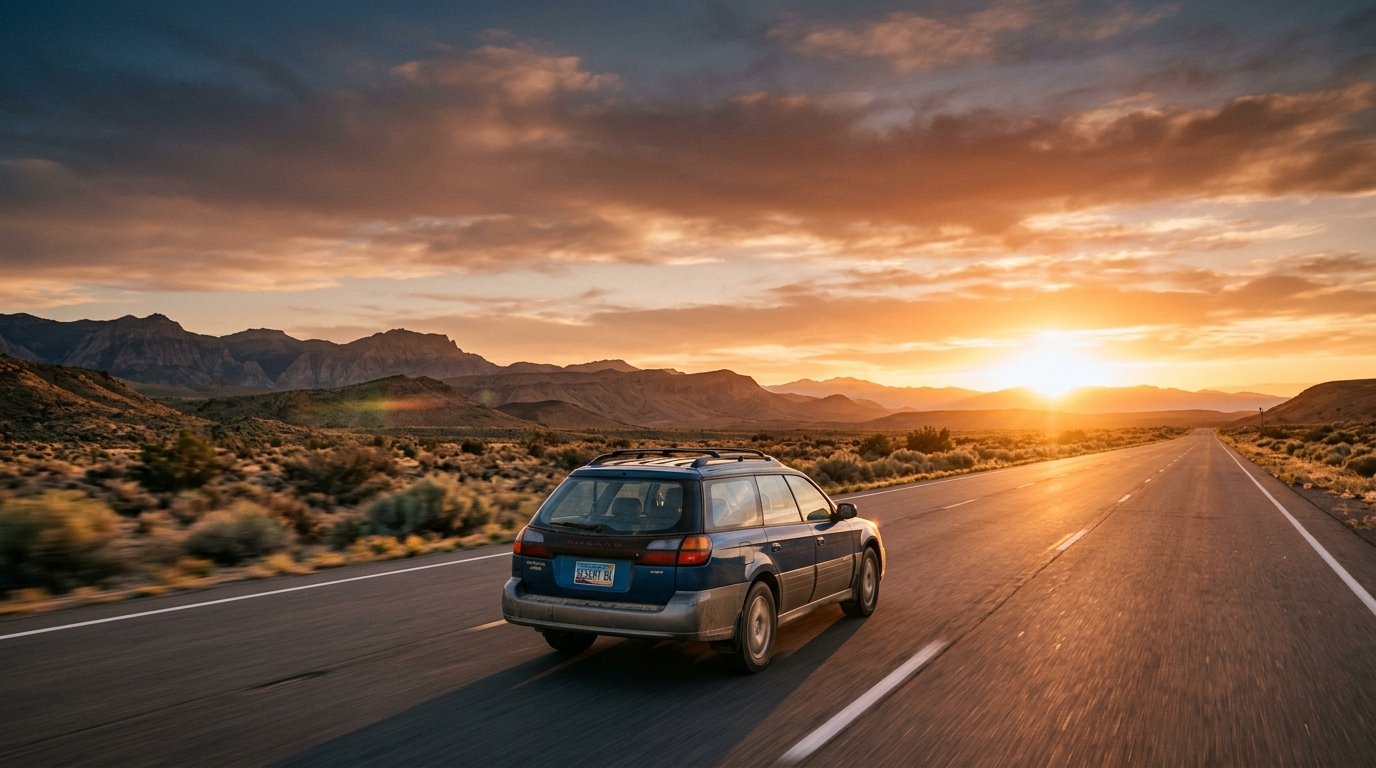
HOW LONG DOES A SUBARU OUTBACK LAST? (REAL OWNER DATA)
INTRODUCTION The decision to buy a used car often hinges on one critical factor: how long will it reliably serve? For prospective Subaru Outback owners, understanding its true longevity is the difference between a smart investment and a money pit. This article dives deep into real owner data, dissecting the Subaru Outback's lifespan across various generations and powertrains. We will pinpoint common failure points, detail associated repair costs, and identify the specific model years that offer the best and worst long-term value.
WHY THIS MATTERS Choosing a used Subaru Outback without understanding its generational reliability quirks can lead to unexpected financial strain. A poorly researched purchase might cost an extra $3,000 to $5,000 in unforeseen repairs within the first two years, easily wiping out any initial savings over buying new. Conversely, selecting a well-regarded model year can deliver 100,000 to 150,000 miles of trouble-free driving beyond your purchase, making it an economical long-term choice. This diligence ensures your investment genuinely provides adventure and utility without becoming a burden, impacting everything from your monthly budget to your ability to afford other life expenses. A reliable vehicle protects not only your wallet from major repair bills but also your time from repeated trips to the mechanic.
THE BEST AND WORST YEARS FOR SUBARU OUTBACK
-
2000-2009 (2.5L EJ25 SOHC Engine) This era is infamous for its external head gasket failures, primarily on the 2.5-liter EJ25 SOHC engine. Coolant and oil seepage often begins around 100,000 to 130,000 miles. Neglecting this leads to engine overheating or total failure. Repair costs typically range from $1,800 to $2,500 at an independent shop, including timing belt replacement. Buyer tip: Always get a pre-purchase inspection that specifically checks for head gasket leaks, even if no visible coolant is present.
-
2010-2012 (2.5L EJ253 SOHC Engine) While head gasket issues improved slightly compared to the prior generation, they were not entirely eliminated. This period also saw increased reports of excessive oil consumption, sometimes requiring top-offs every 1,000-2,000 miles, particularly as mileage approached 80,000 to 100,000 miles. Repair for oil consumption issues, if piston rings are the cause, can exceed $3,000. Buyer tip: Request detailed oil change records and check the dipstick level before and after a test drive.
-
2013-2014 (2.5L FB25 Engine with CVT) This generation introduced the Continuously Variable Transmission (CVT) and the FB25 engine. While the FB25 engine generally saw fewer head gasket issues, the CVT became a significant concern for some owners. Hesitation, shuddering, and complete failure have been reported from 80,000 to 120,000 miles. CVT replacement costs are substantial, often between $6,000 and $8,000. Buyer tip: Pay close attention to the transmission's behavior during the test drive, listening for unusual noises or feeling for jerks.
-
2015-2018 (2.5L FB25 Engine with CVT) These years are generally considered more reliable, with many of the earlier CVT issues addressed through software updates and design refinements. However, some owners still report minor CVT quirks. Wheel bearing failures are also somewhat common in this range, typically appearing between 90,000 and 130,000 miles. A single wheel bearing replacement costs approximately $400 to $600. Buyer tip: Listen for a constant hum that changes with speed during the test drive, indicating a worn wheel bearing.
-
2019-Present (2.5L FB25 or 2.4L FA24 Turbo Engines with CVT) The latest generation Outbacks have largely solidified their reputation for reliability. The CVT has matured significantly. There are fewer widespread powertrain issues reported. The FA24 turbo engine, introduced in 2020, has also shown strong initial reliability. Overall, these models are proving capable of easily exceeding 150,000 miles with proper maintenance. Buyer tip: Focus on documented routine maintenance and look for any signs of neglected oil changes or fluid flushes.
-
2005-2009 Outback XT (2.5L EJ255 Turbo Engine) While powerful, these turbo models can be more demanding to maintain. Turbocharger failures are possible, especially if previous owners neglected oil changes or proper cool-down procedures, often around 120,000 to 160,000 miles. A new turbocharger can cost $1,500 to $2,500 for parts and labor. Buyer tip: Check for excessive smoke from the exhaust or an oil leak around the turbocharger itself, and ensure a full service history is available.
WHAT TO CHECK BEFORE YOU BUY
-
Head Gaskets (Pre-2012 models): Inspect the engine block around the cylinder heads for dried coolant stains, oil residue, or visible seepage. Pull the dipstick and check for milky residue, which indicates coolant in the oil.
-
CVT Fluid Condition (2013-Present): While often a sealed system, if there is a dipstick or service port, check the fluid for dark color or a burnt smell, indicating neglect or internal wear.
-
Wheel Bearings: Jack up each wheel and check for play by wiggling the wheel at 12 and 6 o'clock, and 3 and 9 o'clock. Spin the wheel by hand and listen for grinding or humming.
-
Suspension Components: Look for torn CV axle boots, which will sling grease, or leaking struts indicated by oily residue on the shock body. Listen for clunking noises over bumps during a test drive.
-
Oil Consumption Test (2010-2014 models): Ask the seller if they have performed an oil consumption test or if they frequently add oil between changes. Check the exhaust tailpipe for excessive soot buildup.
-
Rust Inspection: Pay close attention to the rear wheel arches, rocker panels, and the subframe, especially on vehicles from colder, salt-heavy climates. Surface rust is common; significant perforation is a red flag.
COST OF OWNERSHIP OVER 5 YEARS
Owning a Subaru Outback for five years involves predictable costs for maintenance, potential repairs, fuel, and insurance. Routine annual maintenance, including oil changes, tire rotations, air filter replacements, and general inspections, typically averages $600 to $800 per year at an independent shop. Over five years, expect to spend $3,000 to $4,000 on these essential services, assuming no major issues. If the timing belt needs replacing on pre-2010 models, this is a significant expense, often $800 to $1,200 every 105,000 miles.
Major repair risks are highly dependent on the model year. For example, a 2008 Outback could face a $2,000 head gasket repair, while a 2013 model might require a $7,000 CVT replacement. Averaging these risks, it is prudent to budget an additional $500 to $1,000 annually for potential unexpected repairs, bringing the total five-year repair contingency to $2,500 to $5,000. This is an average, with some years being far riskier than others.
Fuel costs for a Subaru Outback typically range from $2,000 to $2,800 annually, assuming 12,000 miles driven per year with current gasoline prices and an average of 25 MPG. This totals $10,000 to $14,000 over five years. Insurance premiums vary widely based on driver age, location, and coverage, but generally range from $1,200 to $1,800 per year for comprehensive coverage, adding $6,000 to $9,000 to the five-year total. Total ownership costs, excluding depreciation, can therefore range from $21,500 to $32,000 over five years, underscoring the importance of selecting a reliable model year to mitigate the repair portion of these expenses.
OUR VERDICT
For buyers seeking reliable, long-term ownership, the 2015-2019 Subaru Outback models with the 2.5L FB25 engine are the strongest recommendation. These years offer a well-sorted CVT and significantly reduced risk of major engine issues compared to earlier generations. While earlier models can be tempting due to lower purchase prices, the potential for head gasket or CVT failures introduces substantial financial risk. Alternatives like the Toyota RAV4 or Honda CR-V offer competitive reliability, but often lack the Outback's superior ground clearance and all-wheel-drive capability for rougher terrain.
FREQUENTLY ASKED QUESTIONS
Q: How many miles can a Subaru Outback realistically last on a budget? A: With diligent maintenance, a Subaru Outback can reliably reach 200,000 to 250,000 miles. On a budget, target a well-maintained 2015-2019 model with around 100,000 miles, as these often have a solid 100,000+ miles left before major component overhaul.
Q: Are there specific years of the Subaru Outback to avoid when buying used? A: Yes, specific years to approach with caution include 2000-2009 for persistent head gasket issues, and 2013-2014 for early CVT transmission concerns. The 2010-2012 models with the 2.5L engine also face higher risks of excessive oil consumption.
Q: What are the most common known issues with the Subaru Outback? A: Historically, the most common issues include external head gasket leaks on 2.5L engines prior to 2010, excessive oil consumption on 2010-2014 2.5L engines, and earlier generation CVT transmission failures (2013-2014). Wheel bearing failures are also a recurring, though less costly, concern across several generations.
Q: How much should I expect to pay for maintenance on a Subaru Outback annually? A: For routine maintenance such as oil changes, tire rotations, and general inspections, expect to pay approximately $600 to $800 annually at an independent shop. This figure does not include major repairs or wear items like tires and brakes, which can significantly increase costs in certain years.
Q: Does the Subaru Outback hold its resale value well? A: Yes, the Subaru Outback generally holds its resale value very well due to its reputation for safety, all-wheel drive capability, and strong demand in the used market. Well-maintained examples, especially later generations, command strong prices, often losing less value than many competitors over time.
Q: What is the ideal mileage for buying a used Subaru Outback? A: The ideal mileage depends on your budget and risk tolerance. For optimal value and remaining life, look for Outbacks in the 60,000 to 100,000 mile range. Vehicles under 60,000 miles will be pricier, while those over 120,000 miles might require more immediate attention to wear items like suspension components.