
How Long Does a Toyota RAV4 Last? (Real Owner Data)
Uncover the real lifespan of a Toyota RAV4 with insights from actual owner data, showing exactly how many miles these popular SUVs truly endure.
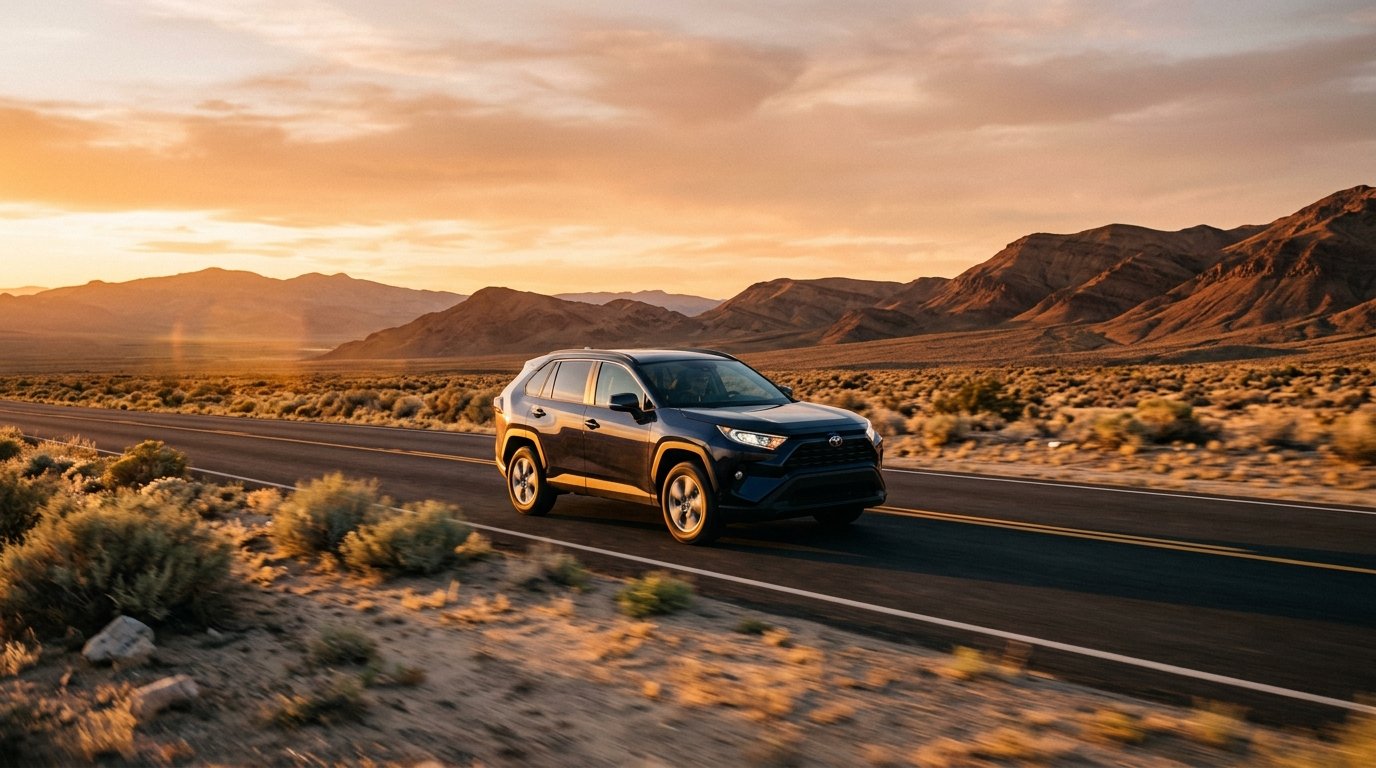
INTRODUCTION Purchasing a used vehicle represents a significant financial commitment, one that can either provide years of reliable transportation or become an expensive liability. When considering a compact SUV, the Toyota RAV4 consistently appears on buyers' shortlists due to its reputation for dependability. This article delves into real-world owner data to determine precisely how long a Toyota RAV4 can be expected to last, outlining specific model year strengths and weaknesses. We will equip you with the detailed knowledge necessary to make an informed buying decision, ensuring your next used car purchase delivers true value and longevity.
WHY THIS MATTERS A reliable used vehicle is an asset that appreciates in value through peace of mind and minimal unexpected costs. Conversely, a vehicle plagued by recurring issues can quickly drain savings, with repair bills often exceeding the vehicle's market value. For a used Toyota RAV4 buyer, understanding the longevity and common failure points by specific model year means the difference between a smart investment and a costly gamble. A well-maintained RAV4 from a robust generation can easily surpass 200,000 miles with only routine maintenance, translating into several years of transportation for an average annual ownership cost under $1,000 for repairs alone. However, choosing a less reliable year, particularly one with known transmission or engine defects, could lead to unexpected outlays of $3,000 to $5,000 or more for major component replacement, effectively eroding any initial purchase savings. Informed decisions about specific model years directly impact your long-term financial stability and daily convenience.
THE YEARS: RAV4 RELIABILITY BY GENERATION
-
First Generation (1996-2000) These early RAV4 models are mechanically simple and remarkably robust, often exceeding 250,000 miles with diligent maintenance. The 2.0-liter 3S-FE four-cylinder engine is a workhorse. Common issues at high mileage typically involve age-related wear such as failing catalytic converters, often appearing after 180,000 miles, with replacement costs ranging from $800 to $1,500. Suspension components like control arm bushings and struts also show wear after 150,000 miles, costing $400 to $700 per axle for replacement. Practical Buyer Tip: Focus on rust inspection, particularly on the subframe and rear suspension mounts, as body integrity often outlasts mechanicals.
-
Second Generation (2001-2005) The 2001 to 2003 RAV4 models are notorious for automatic transmission failures, specifically the U140F unit. This issue often manifests as erratic shifting, slipping, or complete failure, typically between 80,000 and 120,000 miles. A complete transmission rebuild or replacement can cost $2,500 to $4,000. The 2004-2005 models saw improvements, but the risk remains. Minor issues include rear differential noise. Practical Buyer Tip: Prioritize detailed service records for transmission fluid changes. During a test drive, pay extremely close attention to smooth, consistent shifts in all gears.
-
Third Generation (2006-2012) This generation offers two distinct engine choices: a 2.4-liter or 2.5-liter four-cylinder and a robust 3.5-liter V6. The four-cylinder engines, particularly in 2006-2008 models, are known for excessive oil consumption due to piston ring design flaws. This issue typically appears after 80,000 miles and can lead to engine damage if not constantly monitored and topped off. Addressing it requires a costly engine rebuild or replacement, often exceeding $4,000. The V6 engine is exceptionally reliable and less prone to major faults. Practical Buyer Tip: If considering a four-cylinder model from this era, perform an immediate oil consumption test. For V6 models, ensure power steering pump noise is not present, a common issue with a $600 to $900 repair.
-
Fourth Generation (2013-2018) Generally a very reliable generation, building on Toyota's reputation. Early 2013-2014 models experienced some complaints regarding the 6-speed automatic transmission exhibiting harsh or delayed shifts, though this was less widespread than previous generation issues. These could often be resolved with software updates or minor component replacements, costing $300 to $800. Some owners report minor issues with HVAC blend door actuators after 70,000 miles, a $400 to $600 repair. Practical Buyer Tip: Focus on models from 2015 onwards for slightly improved transmission performance. Inspect the HVAC system thoroughly by testing all fan speeds and temperature settings.
-
Fifth Generation (2019-Present) This generation introduced significant styling and powertrain updates, including a strong emphasis on hybrid variants. While still new, some 2019-2020 models were subject to a recall for fuel pump failures, which caused vehicles to stall. This issue was typically addressed under warranty, but verify if the recall service was performed if buying one of these model years. Infotainment system glitches are also reported but are generally minor and often resolved by software updates. Practical Buyer Tip: Verify all recalls, especially the fuel pump recall for 2019-2020 models, have been completed. Ensure the infotainment system functions without freezing or lagging.
WHAT TO CHECK BEFORE YOU BUY
- Engine Oil Dipstick: Pull the dipstick, check the oil level, and examine the oil for milky residue indicating coolant contamination or excessive darkness indicating neglected changes.
- Transmission Fluid: If equipped with a dipstick, check for bright red, clear fluid. Brown or burnt-smelling fluid signals potential transmission distress.
- Underbody Rust: Inspect the frame rails, suspension components, and exhaust system for significant corrosion, especially if the vehicle spent time in rust-belt regions.
- Suspension Noise: Drive over uneven surfaces at low speed and listen for clunks, squeaks, or rattles from the suspension, indicating worn bushings or struts.
- HVAC Operation: Test all fan speeds and ensure both hot and cold air blow strongly from all vents. Check for unusual clicking noises from behind the dashboard.
- Brake System: Inspect brake pads for wear and rotors for deep grooves or excessive rust. Listen for grinding or squealing during a test drive.
- Check Engine Light: Ensure the Check Engine Light illuminates when the key is turned to accessory, then extinguishes after the engine starts. Any persistent illumination warrants a diagnostic scan.
COST OF OWNERSHIP OVER 5 YEARS The long-term cost of owning a Toyota RAV4 is generally below average for its class, primarily due to its strong reliability record. Typical annual maintenance, including oil changes, tire rotations, filter replacements, and basic inspections, usually falls within the range of $350 to $600 for a well-maintained example. As the vehicle ages beyond 100,000 miles, additional items like spark plugs, drive belts, and brake system overhauls may push annual maintenance closer to $700 to $1,000.
Major repair risk is a key differentiator. For the more reliable generations (First, Fourth, and V6 Third Gen), the risk of a major, unexpected repair (over $1,500) within a five-year ownership period is relatively low, perhaps 15-20%. However, for generations with known issues like the Second Gen transmission or specific Third Gen four-cylinder oil consumption, that risk jumps significantly to 40-50% without prior remedy, easily adding $2,500 to $5,000 in repair costs.
Fuel costs for a RAV4 average around 25-30 miles per gallon combined. Assuming 12,000 miles driven annually and a national average of $3.50 per gallon, annual fuel expenses would be approximately $1,400 to $1,700. Insurance costs are highly variable based on location, driver history, and coverage, but generally range from $1,200 to $2,000 per year for a typical policy on a used RAV4. Over five years, total ownership costs, excluding purchase price, can realistically range from $15,000 to $25,000 depending on mileage, specific repairs, and driving habits.
OUR VERDICT A Toyota RAV4 is an exceptionally strong buy in the used market, provided you approach the purchase with informed caution regarding specific model years. Our data firmly supports the RAV4's reputation for longevity, with many examples easily surpassing 200,000 miles when properly maintained. We specifically recommend targeting First, Fourth, and V6-equipped Third Generation models for their outstanding reliability and lower risk of major powertrain issues. While the Second Generation and four-cylinder Third Generation models can be found at lower prices, the potential for expensive transmission or engine repairs makes them a less advisable choice unless their specific known issues have been verifiably addressed. For consistent, reliable transportation without excessive repair bills, a used RAV4 is a top-tier choice, often outperforming competitors like the Ford Escape or Nissan Rogue in long-term durability.
FREQUENTLY ASKED QUESTIONS
Q: How much should I budget for a used Toyota RAV4? A: A realistic budget for a well-maintained used Toyota RAV4 ranges from $6,000 for older, higher-mileage models (2006-2012) up to $20,000 or more for recent fourth-generation models (2015-2018). First generation models (1996-2000) can be found for $3,000-$5,000 if condition is prioritized over age.
Q: What is the maximum mileage I should consider on a used RAV4? A: With a strong service history, a Toyota RAV4 can be a reliable purchase even at 150,000 to 180,000 miles, particularly for the more robust generations. Many owners report trouble-free operation well past 200,000 miles. Focus on documented maintenance rather than mileage alone.
Q: Which specific RAV4 model years are the most reliable? A: The First Generation (1996-2000) models are mechanically very simple and reliable. The V6-equipped Third Generation (2006-2012) RAV4s are also excellent choices. The Fourth Generation (2013-2018), especially from 2015 onwards, generally exhibits strong long-term reliability.
Q: Are there any common issues I should be aware of across all RAV4 generations? A: No single issue plagues all generations. However, common Toyota longevity concerns like minor suspension wear, aging rubber components, and potential catalytic converter issues on older models are typical. Specific powertrain issues are usually generation-dependent, as detailed in this article.
Q: What are the typical annual maintenance costs for a RAV4? A: Typical annual maintenance for a Toyota RAV4, including oil changes, tire rotations, and general inspections, usually runs between $350 and $600. For older or higher-mileage vehicles requiring more significant parts replacement, this can increase to $700-$1,000 annually.
Q: How does the RAV4's resale value hold up over time? A: The Toyota RAV4 consistently maintains one of the highest resale values in the compact SUV segment. Its reputation for reliability and durability makes it highly sought after in the used market, often depreciating slower than many competitors. This strong resale value makes it a smart long-term investment.