
How Long Does a Toyota Tacoma Last? (Real Owner Data)
Discover the true lifespan of a Toyota Tacoma! Our in-depth analysis of extensive real owner data reveals how many miles these legendary trucks truly last.
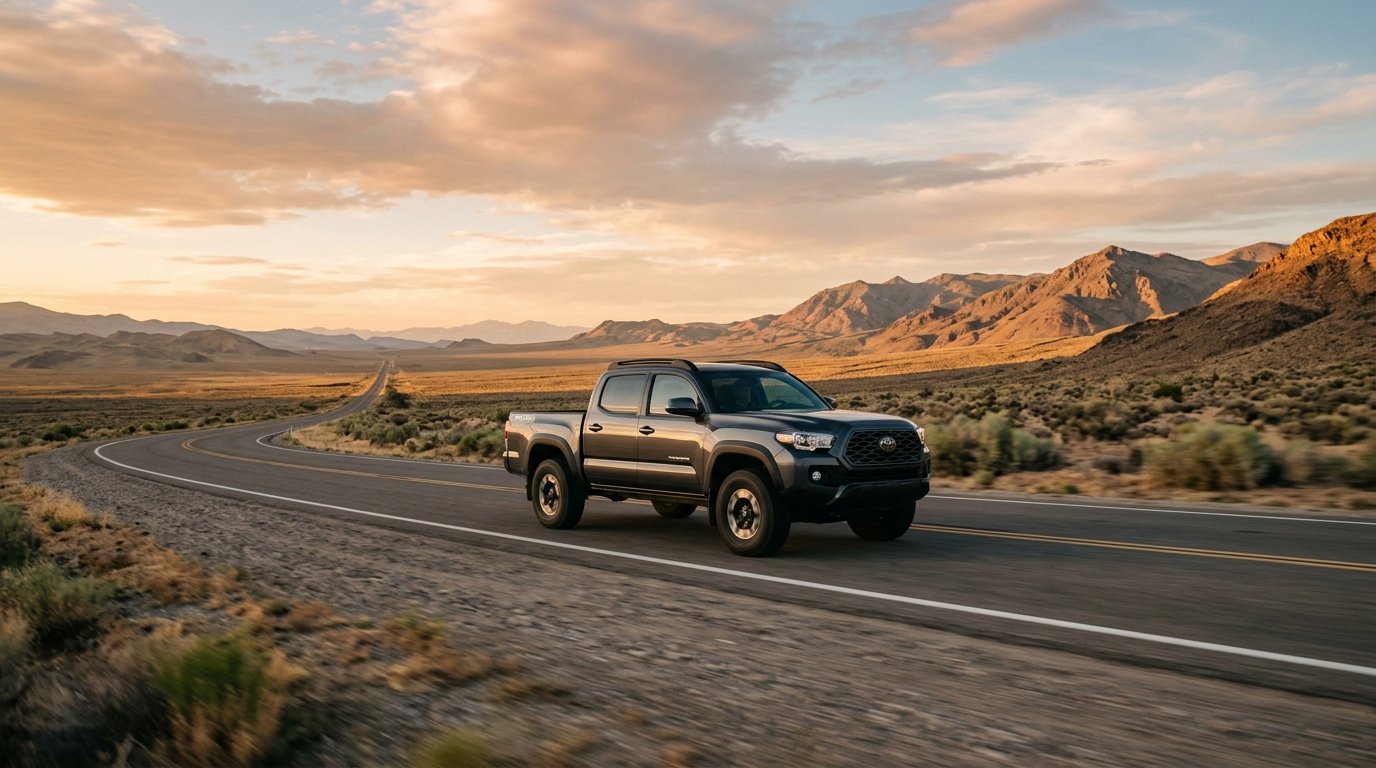
HOW LONG DOES A TOYOTA TACOMA LAST? (REAL OWNER DATA)
INTRODUCTION Purchasing a used Toyota Tacoma represents a significant investment, one that could secure years of reliable service or burden an owner with unforeseen repair bills. Understanding the true longevity and common pitfalls of specific Tacoma generations is crucial for any shrewd buyer. This article delves into real-world owner data, dissecting the lifespan expectations, common failure points across different model years, and the practical costs associated with Tacoma ownership. It provides actionable advice to help potential buyers navigate the used market confidently, ensuring their next truck is a sound financial decision.
WHY THIS MATTERS A used vehicle's longevity directly translates to its value proposition. A Toyota Tacoma that reliably serves its owner for 200,000 to 300,000 miles can save thousands in vehicle replacement costs, offering unparalleled return on investment. Conversely, purchasing a model year plagued by a specific, expensive fault can quickly turn a perceived bargain into a financial drain. For instance, a frame rust issue, common on some second-generation Tacomas, can effectively total a truck worth $15,000 to $25,000 if not addressed under recall or if repairs exceed several thousand dollars. Understanding these risks upfront allows buyers to allocate their budget effectively, prioritize pre-purchase inspections, and potentially avoid a $5,000 to $10,000 repair that could have been identified or avoided with proper research. The difference between a well-researched $20,000 Tacoma and a poorly chosen one could easily be $10,000 in saved repair and depreciation costs over five years.
THE YEARS
-
First Generation (1995-2004) The original Tacoma earned its reputation for ruggedness, but older models have specific vulnerabilities. Frame rust is a pervasive issue, particularly in rust-belt states, leading to significant structural compromise. While some were subject to a limited recall, many were not, or the issue resurfaced. Expect frame rust to become critical around 150,000 to 200,000 miles if not properly cared for. Repair can range from $500 for minor spot welding to $10,000 for a full frame replacement, making the latter uneconomical. Lower ball joints are another common failure point, typically failing between 100,000 and 150,000 miles. Replacement of both front lower ball joints usually costs $500 to $900. Buyer tip: Thoroughly inspect the frame with a hammer and screwdriver, especially near mounting points for the suspension and body. Look for bubbling paint or soft spots indicating deep rust.
-
Second Generation (2005-2015) This generation is highly popular but carries its own set of concerns. Frame rust remained a significant problem, leading to an expanded recall program where Toyota either repaired or bought back affected vehicles. Even with the recall, buyers should verify the frame's condition and check for documentation of any rust treatment or replacement. Automatic transmission issues, particularly "hunting" for gears or a shudder at certain speeds, can appear between 60,000 and 120,000 miles. Often, a transmission fluid flush and software update (costing $300 to $500) resolves this, but a worn torque converter can necessitate a $2,000 to $3,500 repair. Sagging rear leaf springs, especially on trucks that regularly carried heavy loads, are common after 80,000 miles; replacement costs $700 to $1,200. Buyer tip: Check service records for frame treatments and transmission fluid changes. Drive the truck extensively at various speeds to feel for transmission shudder or excessive gear hunting.
-
Third Generation (2016-Present) The current generation largely maintains Toyota's reliability ethos but has faced criticism for its 3.5-liter V6 engine and six-speed automatic transmission tuning. Many owners report the transmission frequently hunts for gears, particularly on inclines or at highway speeds. Toyota released software updates that improved the situation for many, but some still find it noticeable. This is not typically a mechanical failure but a drivability characteristic. Rear differential whine or hum has been reported by a subset of owners, sometimes as early as 30,000 to 80,000 miles. Repairing differential bearings can cost $800 to $1,500. The fuel pump recall affecting 2019-2020 models should also be verified. Buyer tip: Test drive thoroughly, paying close attention to transmission shift patterns. Listen for any persistent whining noises from the rear axle during acceleration and deceleration.
-
4.0L V6 Engine (2005-2015) The 4.0-liter 1GR-FE V6 engine found in the second generation is renowned for its durability. While generally stout, some units, particularly those with neglected coolant changes, can develop water pump leaks between 120,000 and 180,000 miles. A new water pump assembly, including labor, typically costs $500 to $800. Spark plug replacement, often overlooked, is due every 30,000 miles on this engine; a neglected spark plug replacement can lead to reduced fuel economy and misfires. Buyer tip: Inspect the front of the engine for any signs of pink crusty residue, indicating a past or present coolant leak from the water pump. Verify service records for timely spark plug changes.
-
2.7L I4 Engine (All Generations) The 2.7-liter 2TR-FE four-cylinder engine is a workhorse, often outlasting the rest of the truck. Its simpler design inherently leads to fewer complex failure points compared to the V6. Common issues are minimal, primarily limited to routine maintenance items. However, valve cover gasket leaks can develop after 150,000 miles, leading to oil seepage. This repair is relatively minor, costing $200 to $400. Oxygen sensors and catalytic converters can fail on high-mileage examples (200,000+ miles), costing $200-$400 for an O2 sensor and $1,000-$2,000 for a catalytic converter replacement. Buyer tip: Check for any oil stains or wetness around the valve cover. Be aware that the four-cylinder offers less towing capacity and acceleration than the V6.
WHAT TO CHECK BEFORE YOU BUY
- Inspect the frame meticulously for rust or corrosion, especially near suspension mounts and under the bed. Use a small hammer to tap suspicious areas for structural integrity.
- Check for active recalls by entering the VIN on the manufacturer's website. Pay particular attention to the frame, fuel pump, and leaf spring recalls.
- Examine the underside for fluid leaks from the engine, transmission, and differential. Look for wet spots or drips indicating seals or gaskets may be failing.
- Pull the engine oil dipstick and check the oil color and consistency. Milky residue suggests a coolant leak into the oil, indicating a serious engine problem.
- Operate all windows, locks, and climate control functions. Ensure the air conditioning blows cold and the heater blows hot.
- Test drive the vehicle thoroughly, including highway speeds, to evaluate transmission shifting, engine performance, and listen for abnormal noises like diff whine or suspension clunks.
COST OF OWNERSHIP OVER 5 YEARS The cost of owning a Toyota Tacoma over five years can vary significantly based on model year, initial purchase price, and driving habits. For a well-maintained second or third-generation model, owners can expect average annual maintenance costs ranging from $400 to $600. This includes routine oil changes, tire rotations, filter replacements, and brake service. Major repairs are less frequent on Tacomas than on many other trucks, but when they do occur, they can be substantial. For example, a new alternator or starter might cost $500 to $900, while a larger repair like a clutch replacement on a manual transmission could be $1,200 to $1,800. These figures exclude the specific large repair costs for issues like frame rust or major transmission work mentioned earlier.
Fuel costs are a notable factor. Second and third-generation Tacomas with the V6 engine typically achieve 18 to 22 miles per gallon combined. Assuming an average of 15,000 miles driven annually and a national average gasoline price of $3.50 per gallon, annual fuel costs would range from $2,380 to $2,900. Over five years, this equates to $11,900 to $14,500. Four-cylinder models might offer a slight improvement but are not dramatically more fuel-efficient in real-world driving.
Insurance premiums for a Tacoma generally fall into a moderate range compared to other trucks, often between $1,200 and $1,800 annually for full coverage, depending on driver age, location, and driving history. Over five years, this totals $6,000 to $9,000. Combined with maintenance and fuel, the total operating cost for a reliable Tacoma over five years, excluding major unforeseen repairs, typically ranges from $20,000 to $25,000, not including the initial purchase price. This emphasizes the importance of a solid pre-purchase inspection to avoid significant repair outlays.
OUR VERDICT A used Toyota Tacoma is generally a solid "buy" recommendation, especially for those prioritizing reliability and long-term value. While earlier models carry frame rust risks and later models have minor transmission quirks, the overall build quality and robust powertrains mean a well-inspected Tacoma will likely outlast many alternatives. However, the critical caveat is the pre-purchase inspection. Buyers must prioritize due diligence, focusing on frame integrity for 1st and 2nd generation models and evaluating transmission behavior for 2nd and 3rd generation models. For maximum peace of mind, consider a late 2nd generation model (2012-2015) with documented frame recall work, or a 3rd generation (2016-present) after its initial software updates, if the transmission behavior is acceptable to the buyer.
FREQUENTLY ASKED QUESTIONS
Q: How many miles is too many for a used Toyota Tacoma? A: While many Tacomas reliably reach 250,000 to 300,000 miles, the "too many" threshold depends on the model year and maintenance history. A well-maintained 200,000-mile Tacoma with verifiable service records is often a better purchase than a neglected 120,000-mile example. Focus on condition and history, not just the odometer reading.
Q: Which specific years of Toyota Tacoma are most reliable? A: The 2012-2015 second-generation models, particularly those with documented frame rust remediation, generally represent a strong balance of proven reliability and modern features. The 2000-2004 first-generation models are also very durable but are more prone to severe frame rust and may lack desired safety features.
Q: What are the most common known issues with Toyota Tacomas? A: The primary known issues vary by generation: severe frame rust (1995-2015 models), lower ball joint failures (1995-2004), automatic transmission gear hunting/shudder (2005-present), and rear leaf spring sagging (2005-2015). A pre-purchase inspection should specifically address these points.
Q: What is the average annual maintenance cost for a Tacoma? A: Owners can expect to pay between $400 and $600 annually for routine maintenance on a Toyota Tacoma. This covers oil changes, tire rotations, air filters, and occasional minor services. Major repairs, if needed, are additional and can significantly increase annual costs.
Q: Do Toyota Tacomas hold their resale value well? A: Yes, Toyota Tacomas are renowned for exceptional resale value, often retaining 60% or more of their original value after five years. This strong depreciation resistance is a major benefit of ownership, offsetting some of the initial purchase price and operating costs over time.
Q: Is a high-mileage Tacoma a good budget buy? A: A high-mileage Tacoma can be an excellent budget buy, provided it passes a thorough pre-purchase inspection and has a complete service history. Its inherent durability means many components can last far beyond typical expectations, offering reliable transportation at a lower entry cost than newer models.