
How to Replace a Fuse and Read a Fuse Diagram
Learn how to replace a fuse and read a fuse diagram easily with our step-by-step guide. Discover the essentials to get your car back in top shape today!
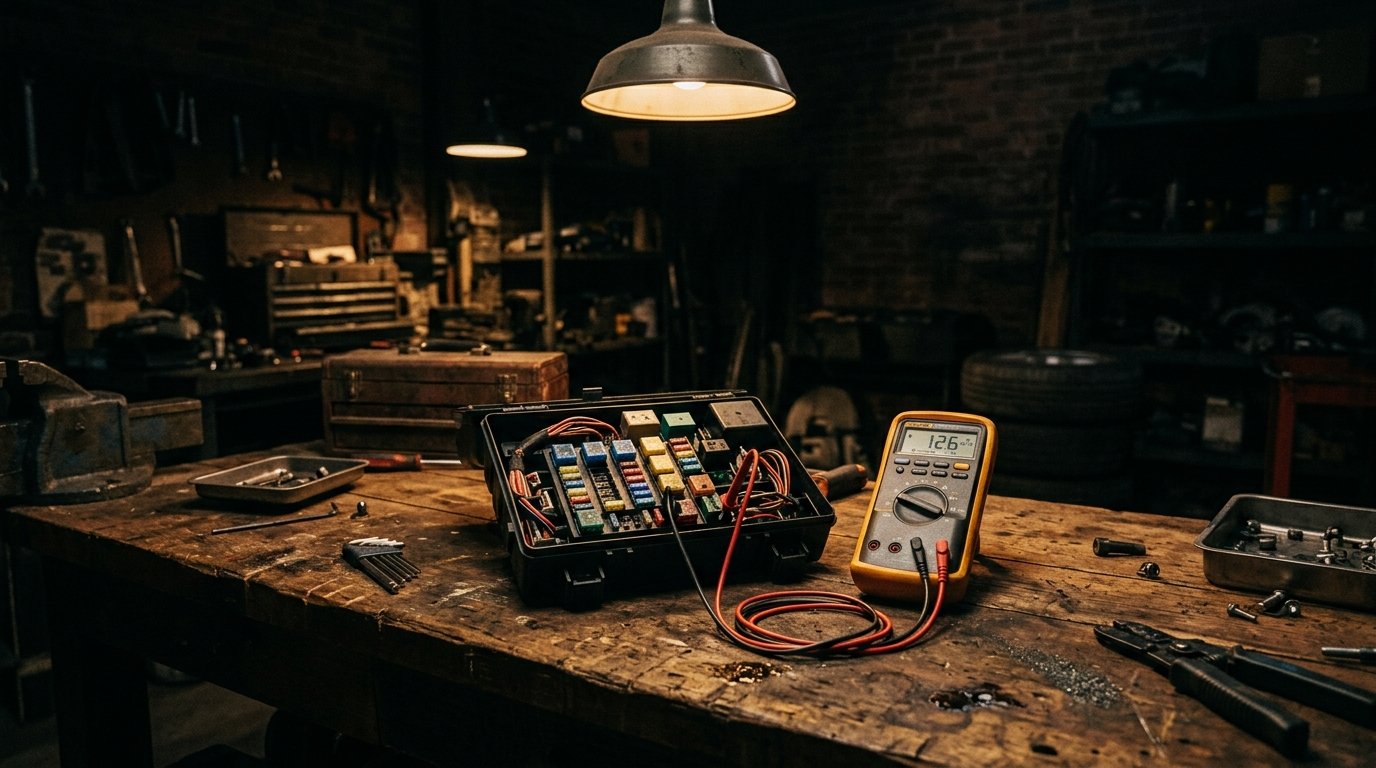
What You'll Need (Tools and Parts)
Replacing a fuse and deciphering a fuse diagram is a task most vehicle owners can handle with some patience and the right tools. Here’s what you’ll need to ensure a smooth process:
Tools
- Fuse Puller or Needle-Nose Pliers: Ideally, your car's fuse box will have a fuse puller inside, but if not, needle-nose pliers work fine. (Approx. $5-$10)
- Multimeter: For testing fuses if you suspect an issue beyond visual inspection. (Approx. $15-$50)
- 12V Test Light: Useful for circuit testing before and after fuse replacement. (Approx. $10-$20)
Parts
- Replacement Fuses: Ensure you have the correct amperage rating. Fuses are usually available in 5A, 10A, 15A, 20A, and so on. (Varies by type; Approx. $0.50-$1 per fuse)
- Fuse Kit: Contains a variety of fuse types and amperages. Good to have on hand for future needs. (Approx. $10-$25)
Specialty Tools
- Fuse Check Adapter Kit: Allows quick checking of various fuse types without removal. Can be rented at most auto parts stores if you're doing an extensive check. (Approx. $25-$60, rentals available)
Difficulty Level & Time Estimate
- Difficulty Level: Beginner
- Estimated Time:
- First-Timer: 30 mins
- Experienced DIYer: 10-15 mins
- When to Consider the Shop: If the fuse blows repeatedly, further diagnostics beyond a fuse change are warranted. You might need to consult a professional for potential short circuits or component faults.
Safety First
- Specific Safety Precautions:
- Disconnect Battery: Before diving into the fuse box, disconnect the negative battery terminal to avoid accidental short circuits.
- Avoid Contact with Metal Tools While Replacing: A stray tool can create an unintended circuit path if it bridges connections.
- Required PPE:
- Safety Glasses: Protect your eyes from potential sparks.
- Gloves: Insulated or rubber gloves to prevent electric shocks.
Step-by-Step Instructions
-
Locate the Fuse Box: Typically found under the dashboard near the driver's side, under the hood, or in the trunk.
- Pro Tip: Check your vehicle’s manual for exact locations. On some models, like the 2008 Honda Accord, you'll find the main box under the hood.
-
Consult the Fuse Diagram: Usually on the fuse box cover or in the owner's manual. Identify the function of each fuse.
- Common Mistake: Misinterpreting the diagram. Ensure you're matching the right fuse to the circuit it’s protecting.
-
Remove the Faulty Fuse: Using a fuse puller or pliers, gently extract the faulty fuse.
- Pro Tip: If the metal strip inside the fuse is broken, it’s a clear sign of a blown fuse.
-
Test the Fuse (Optional): Use a multimeter to check for continuity. A good fuse will show zero or close to zero resistance.
-
Replace with the Correct Fuse: Insert a new fuse of the same amperage rating and type—check the markings carefully.
- Common Mistake: Using a higher amperage fuse to prevent future blowouts can risk a significant electrical fire.
-
Reconnect Battery and Test: Turn on the vehicle's ignition and test the component associated with the replaced fuse.
- Pro Tip: If the new fuse also blows immediately, there's a deeper issue to investigate.
How to Know It's Done Right
- Post-Replacement Check: Ensure the electrical component or system connected to the fuse works as intended.
- Test Drive: If the fuse controls major systems like lights or wipers, a brief drive can validate your work.
No break-in period necessary, but monitor closely for that first week to ensure the issue isn't recurring.
Common Mistakes to Avoid
- Using the Wrong Fuse Type: Different vehicles require different types of fuses (mini, standard, maxi). Always match to the original.
- Ignoring Repeated Failures: If a new fuse blows, it's symptomatic of a bigger issue like a short circuit, and further diagnostics are required.
When to Replace vs Repair
- Decision Framework: If your vehicle components are repeatedly causing fuse failures, replacement of related parts like bulbs or motors might be necessary.
- Cost Comparison:
- DIY: Minimal cost if only replacing fuses.
- Shop: Can vary; diagnostics and repairs might run $100-$300 depending on the issue.
Frequently Asked Questions
Q: How do I determine which fuse to replace if multiple components fail?
A: Check the fuse diagram for circuits connecting those components. Some vehicles, like the Toyota Camry 2017, have fuses that control multiple functions.
Q: Can I use a higher amperage fuse to prevent blowouts?
A: Absolutely not. Doing so might prevent short-term issues but risks severe wire damage or fires.
Q: Why does my vehicle have multiple fuse boxes?
A: To separate circuitry for specific purposes. A 2015 Ford F150, for instance, places high-demand fuses in an engine compartment box, while interior accessories are handled inside the cabin.
Q: How often should I inspect my fuses?
A: Annually or when experiencing electrical issues, especially in older vehicles or those used for towing.
Q: Can a fuse partially fail, affecting performance but not blowing entirely?
A: Fuses are typically binary in function—either operational or blown. Performance issues usually stem from connections, not the fuse itself.
For complete vehicle-specific maintenance tips, OwnerKeep.com provides detailed guides tailored to your make and model. Keep them handy for any unexpected troubleshooting adventures.