
How to Replace Ball Joints
Learn the step-by-step process to replace ball joints safely and efficiently. Boost your car's performance and save on repair costs—start your DIY journey now!
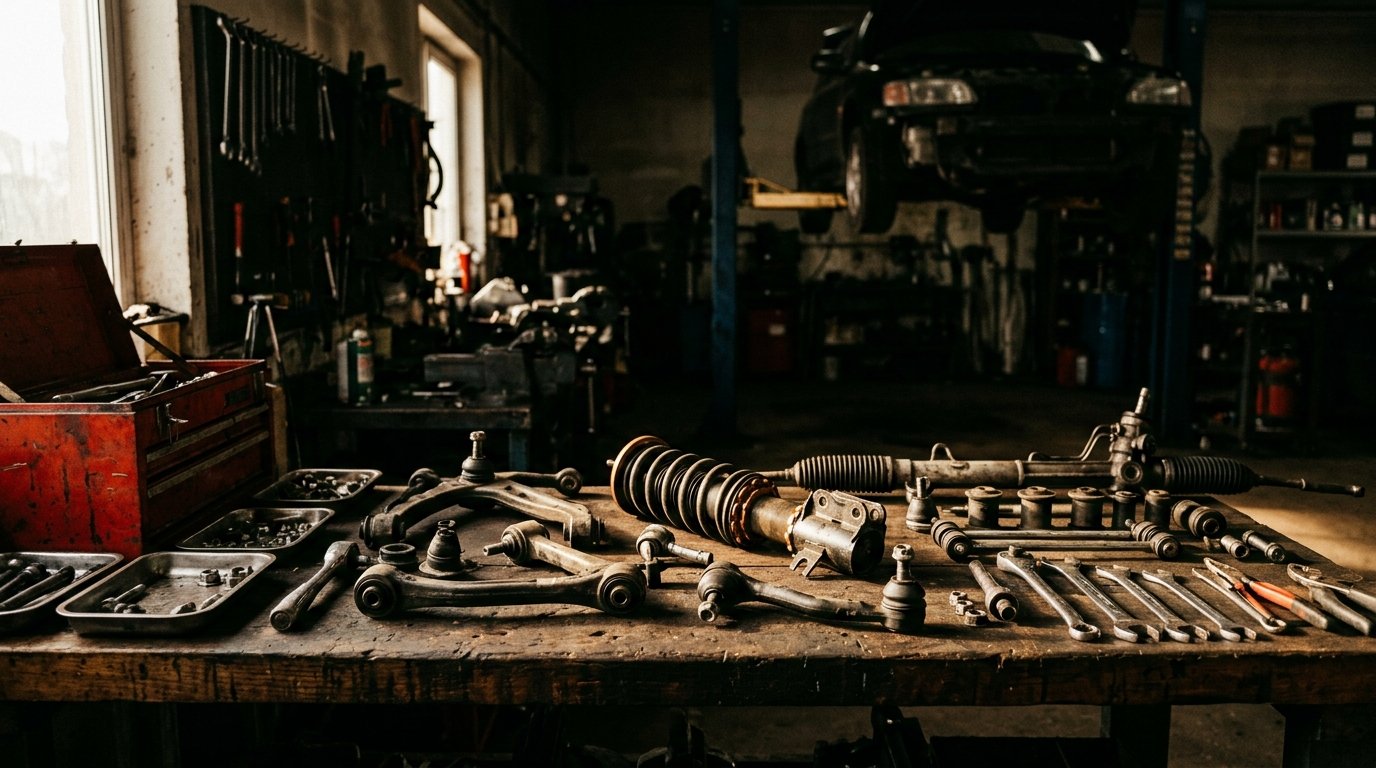
What You'll Need (Tools and Parts)
Before you dive into replacing your ball joints, gather the right tools and parts. Trust me, having everything on hand before you start can save you a good chunk of time and frustration.
Tools:
- Ratchet Set: 10mm, 12mm, 14mm, and 17mm sockets for most vehicles.
- Torque Wrench: Essential for tightening the new ball joint to spec. Look for one with a capacity up to 150 ft-lbs.
- Ball Joint Separator: Like the OEMTOOLS 25219, which you can usually rent from auto parts stores.
- Pry Bar: A must for dislodging stubborn ball joints.
- Jack and Jack Stands: Rated for your vehicle's weight.
- Breaker Bar: For those tenacious bolts that refuse to budge.
Parts:
- Ball Joint: Quality matters. Brands like MOOG (part numbers vary, check for your specific vehicle model) usually run around $40-$100 each.
- New Cotter Pins: Never reuse these. A set typically costs under $5.
- Grease: High-performance lithium grease like Mobil 1 Synthetic Grease is excellent for the new joint.
Specialty Tools:
- Torque Wrench: If you don't own one, I recommend renting it. Accurate torque is crucial for suspension work.
- Ball Joint Press Kit: Especially if you're working on a pressed ball joint system, this is indispensable. Local stores like AutoZone often have rental options.
Difficulty Level & Time Estimate
Level: Intermediate
This is definitely not a beginner's job. It requires some familiarity with suspension systems and a bit of muscle.
Time Estimate:
- First-Timer: 4-6 hours. Expect some hiccups.
- Experienced DIYer: 2-3 hours.
When to Opt for a Pro:
If anything in the suspension looks heavily rusted or you don’t have access to a ball joint press, consider heading to a professional. Rust can lead to more complex issues that require tools like a torch or a powerful impact wrench.
Safety First
Suspension work can be hazardous if you're not careful. Here’s how to keep it safe:
- Protective Gear: Safety glasses and gloves are non-negotiable. Metal shards and grease can get everywhere.
- Vehicle Stability: Ensure the car is stable on jack stands before you go anywhere near those joints. Never rely on a car jack alone.
- Secure Loose Items: Make sure your work area is clear to prevent tripping over tools or parts.
Step-by-Step Instructions
-
Lift and Support the Vehicle:
- Pro Tip: Park on a level surface and use wheel chocks on the opposite end of your work area.
- Raise the front end with a hydraulic jack and support it securely on jack stands.
-
Remove the Wheel:
- Use a breaker bar to loosen the lug nuts beforehand if needed, then remove the wheel completely.
-
Disconnect the Control Arm:
- Locate the ball joint connecting to the control arm and remove the cotter pin securing the castle nut. Use a 17mm socket to remove the nut.
- Common Mistake: Using the wrong size socket can round off the nut, making removal a nightmare.
-
Press Out the Old Ball Joint:
- Attach the ball joint separator and use it to break the ball joint free from the control arm.
- Pro Tip: Apply a small amount of penetrating oil to ease the process.
-
Install the New Ball Joint:
- Position the new ball joint and press it into the control arm, ensuring it is aligned correctly.
- Hand-tighten the castle nut, then use your torque wrench to tighten to manufacturer specs—usually between 45 and 70 ft-lbs.
- Replace the cotter pin.
-
Re-assemble:
- Place the wheel back on, apply torque to the lug nuts in a criss-cross pattern to roughly 80-100 ft-lbs.
- Lower the vehicle carefully.
How to Know It's Done Right
After you button everything up, you'll want to ensure that the job is complete.
- Check Movement: There should be no free play in the ball joint.
- Test Drive: Start with slow turns to feel for any odd noises or vibrations.
- Break-In Period: Typically, a short drive is all that's needed to seat new components.
Common Mistakes to Avoid
Replacing ball joints isn't rocket science, but there are common pitfalls:
- Not Checking Torque: Under-torquing nuts can lead to failure; over-torquing can damage new parts.
- Ignoring Alignment: Any time you’ve worked on the suspension, check the alignment afterward. Ignoring this can lead to uneven tire wear.
- Reusing Old Parts: Cotter pins are one-time use. Replace them to avoid unintentional disasters.
If you slip up on torque settings, consult your manual for specs and retighten.
When to Replace vs Repair
Ball joints often don't warrant a repair — replacement is key:
- Decision Framework: If you hear clunking noises, or the car pulls to one side, it’s time to replace.
- Cost Comparison:
- DIY: Approx. $150 per side on average.
- Professional: Could exceed $300 per side depending on vehicle complexity.
Frequently Asked Questions
Q: How often should ball joints be replaced? A: Typically, they last between 70,000 to 150,000 miles. If you notice any handling issues like uneven tire wear or noise, investigate sooner.
Q: Can ball joints be lubricated? A: Most modern ball joints are sealed and maintenance-free. If your vehicle has serviceable joints, apply grease with a grease gun regularly as per your maintenance schedule.
Q: What noise does a failing ball joint make? A: You'll typically hear a clunking noise, especially when going over bumps, or notice uneven tire wear.
Q: Are upper and lower ball joints always replaced together? A: Not necessarily. It depends on wear. If one is failing, it’s wise to check the other.
Q: Is a ball joint the same for all cars? A: No, ball joints vary significantly. Always check your car's specifications before purchasing.
Replacing ball joints can seem daunting, but with the right tools and steps, it's entirely manageable. For complete vehicle-specific maintenance guides, head to OwnerKeep.com, your go-to for keeping your vehicle running smoothly.