
Jeep Grand Cherokee Years to Avoid (Worst to Best Ranked)
Before you buy, discover which Jeep Grand Cherokee years to avoid and the most reliable models in our definitive worst-to-best guide.
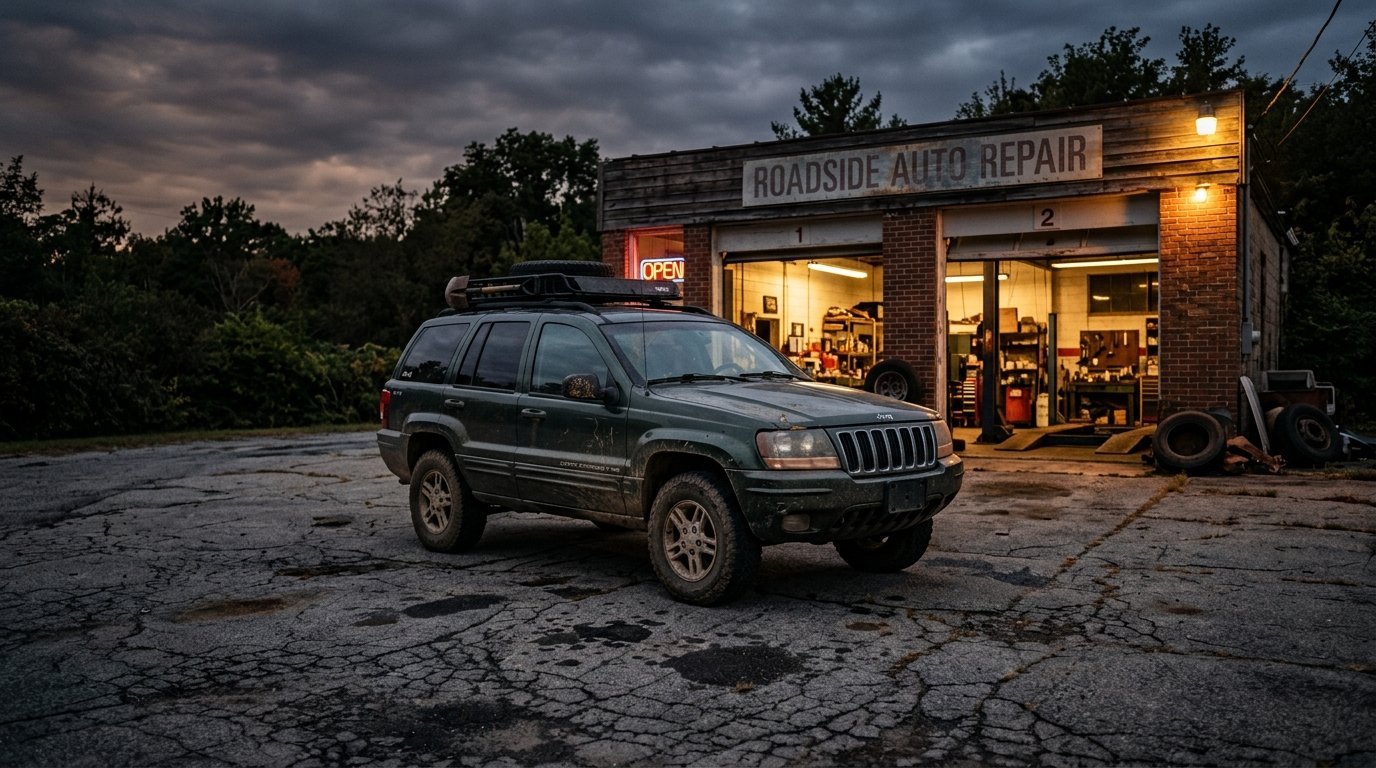
Jeep's Grand Cherokee has long captivated buyers with its blend of rugged capability, upscale amenities, and family-friendly versatility. However, not all Grand Cherokees are created equal when it comes to long-term reliability. Choosing the wrong model year can lead to significant financial strain and frustrating ownership experiences, while a smart selection can deliver years of dependable service. This guide rigorously ranks Grand Cherokee model years from the least reliable to the most robust, detailing common failure points, typical repair costs, and essential buying tips for each.
WHY THIS MATTERS
Investing in a used Grand Cherokee without proper research carries substantial financial risk. A seemingly good deal on an unreliable year can quickly turn into a money pit, with major repairs costing thousands of dollars, eroding any initial savings. For instance, a failing air suspension system on a 2014 WK2 model can demand upwards of $2,500 to $4,000 for replacement components and labor, while a transmission rebuild on an earlier WK can easily exceed $3,500 to $5,000. Conversely, selecting a proven, reliable year means predictable maintenance costs and fewer unexpected breakdowns, preserving your budget and ensuring your vehicle serves its intended purpose without constant visits to the repair shop. Understanding these nuances is the difference between a smart purchase and a costly mistake.
THE RANKINGS: GRAND CHEROKEE YEARS FROM WORST TO BEST
-
2011-2014 WK2 (Early Third Generation) These early WK2 models, particularly the 2011 and 2012 model years, suffered from numerous teething problems. The Totally Integrated Power Module (TIPM) is a notorious culprit, causing intermittent electrical failures affecting fuel pumps, headlights, and wipers. Air suspension systems (Quadra-Lift) are also highly prone to failure, manifesting as uneven ride height or compressor noise. TIPM replacement can cost $1,200 to $2,000. Air suspension repairs, often involving multiple components, range from $2,500 to $4,000. Practical buyer tip: Thoroughly test all electrical functions and inspect the vehicle's stance for any sagging.
-
2005-2007 WK (Second Generation Initial Years) The initial WK generation, especially the 2005 and 2006 models, introduced more complex electronics and powertrains that presented reliability challenges. Common issues include front differential failures, often around 90,000 to 120,000 miles, costing $1,500 to $2,500. Electrical gremlins, including faulty window regulators and instrument cluster malfunctions, are also prevalent. The 5.7L Hemi V8 in these years can also experience Multi-Displacement System (MDS) lifter failures, leading to costly engine work upwards of $3,000. Practical buyer tip: Listen for ticking noises from the engine and check for any differential fluid leaks.
-
1999-2001 WJ (First Generation Initial Years) The earliest WJ models are plagued by interior component failures and chronic heating and air conditioning blend door issues. The plastic blend doors can break, leading to inconsistent cabin temperatures, a repair that often requires removing the entire dashboard and costs $1,000 to $1,500 due to labor intensity. Early 4.7L V8 engines can develop "sludge" issues if oil changes were neglected, leading to engine wear around 100,000 to 150,000 miles, potentially requiring a $4,000 to $6,000 engine replacement. Practical buyer tip: Cycle the HVAC system through all temperature and vent settings, ensuring even air distribution.
-
2008-2010 WK (Second Generation Later Years) While improving slightly over the earlier WK models, these years still carry a risk of electrical issues and powertrain concerns. The 3.7L V6 engines can suffer from valve seat issues, and transmission hard shifting or delayed engagement remains a complaint, with rebuilds costing $3,000 to $4,500. Fuel system problems, including fuel pump failures, are also noted around 100,000 miles, typically a $800 to $1,200 repair. Practical buyer tip: Pay close attention to transmission performance during a test drive; look for smooth and timely shifts.
-
2002-2004 WJ (First Generation Final Years) The later WJ models benefited from incremental refinements, making them a more stable choice within their generation. While blend door issues persisted, other critical system reliability improved. The 4.0L inline-six engine is generally robust but can suffer from oil leaks and occasional premature crank sensor failure, costing around $300 to $500. Rust on the unibody and suspension components becomes a more significant concern for these older models, potentially requiring expensive frame repairs if severe. Practical buyer tip: Inspect the underside thoroughly for rust, especially near suspension mounting points and brake lines.
-
2015-2017 WK2 (Third Generation Mid-Cycle) These years saw improvements in the ZF 8-speed automatic transmission and a general reduction in TIPM-related electrical issues. However, the Quadra-Lift air suspension remains a potential liability, with components nearing their lifespan around 80,000 to 120,000 miles. The 5.7L Hemi V8 still presented occasional MDS lifter failure concerns. HVAC blend door actuators could also fail, a $300 to $500 repair for each actuator. Practical buyer tip: Verify the vehicle's service history, especially for air suspension maintenance or prior replacements.
-
2018-2021 WK2 (Third Generation Final Years) The most refined and reliable of the WK2 generation, these models feature a matured ZF 8-speed transmission and significantly fewer electrical and air suspension complaints. Most major design flaws from earlier years were resolved or improved. While routine maintenance costs are still present, the risk of catastrophic system failures is considerably lower. The 3.6L Pentastar V6 is a robust engine in these years. Practical buyer tip: These years represent the best balance of modern features and reliability; prioritize examples with complete service records.
WHAT TO CHECK BEFORE YOU BUY
- Inspect all fluids: Pull the engine oil dipstick for color and level; check transmission fluid for clarity and smell; verify coolant level and color for any unusual residue.
- Assess for rust: Examine the frame, rocker panels, wheel wells, and brake lines for surface rust or more severe corrosion.
- Test electrical systems: Operate every window, door lock, all lights, the radio, navigation, and HVAC controls to ensure full functionality.
- Examine suspension: For models with air suspension, check if the vehicle sits level after being parked overnight; listen for compressor noise when starting the vehicle.
- Listen for engine sounds: Pay attention to any ticking, knocking, or unusual noises, especially from Hemi V8 engines during startup and idle.
- Perform a thorough test drive: Note transmission shift quality, steering responsiveness, brake feel, and listen for any clunks or rattles over bumps.
- Review service records: Verify consistent maintenance, especially oil changes, transmission fluid services, and any significant repairs that have been addressed.
COST OF OWNERSHIP OVER 5 YEARS
Owning a Jeep Grand Cherokee for five years involves a range of costs beyond the purchase price. Typical annual maintenance, covering oil changes, tire rotations, brake pad replacements, and fluid top-offs, averages between $600 and $900. This assumes adherence to the manufacturer's recommended service schedule and no major unforeseen repairs.
However, the risk of major repairs significantly elevates the cost of ownership, particularly for less reliable model years. A transmission replacement could cost upwards of $4,000 to $5,000, air suspension system overhauls can range from $2,500 to $4,000, and engine issues such as Hemi lifter failures might exceed $3,000 to $6,000. These substantial repairs can occur at mileages between 80,000 and 150,000 miles, adding considerable financial burden.
Fuel costs for a Grand Cherokee are also a significant factor. With average fuel economy ranging from 17-22 MPG combined, and assuming 12,000 miles driven annually at a national average gasoline price of $3.50 per gallon, annual fuel expenses could be between $1,900 and $2,500. Over five years, this totals $9,500 to $12,500. Insurance premiums vary widely based on driver age, location, and coverage, but a Grand Cherokee typically falls into a mid-range category, costing an estimated $1,400 to $2,200 annually, totaling $7,000 to $11,000 over five years.
OUR VERDICT
For used Grand Cherokee buyers prioritizing long-term reliability and lower ownership costs, the 2018-2021 WK2 models are the clear recommendation. These later third-generation vehicles benefited from extensive platform refinement, resolved many earlier electrical and transmission issues, and offer a robust overall package. While no vehicle is entirely problem-free, this specific range minimizes the risk of expensive, systemic failures common in earlier generations. Buyers seeking a more budget-friendly alternative should consider the 2002-2004 WJ models, provided a thorough inspection for rust and blend door issues is conducted. For those demanding absolute reliability above all else, alternatives like the Toyota 4Runner or Honda Pilot might offer a less adventurous, but generally more dependable, ownership experience.
FREQUENTLY ASKED QUESTIONS
Q: What is the best budget Grand Cherokee to buy? A: The 2002-2004 WJ models represent the best value in the budget segment. They are older, but their fundamental design, particularly with the 4.0L inline-six engine, proved more resilient than some of the early WK or WK2 generations.
Q: What mileage is too high for a used Grand Cherokee? A: Mileage itself is less critical than a verifiable maintenance history. While examples over 150,000 miles require more scrutiny, a well-maintained Grand Cherokee can offer many more miles, provided age-related wear on suspension and ancillary components is anticipated.
Q: Are specific Grand Cherokee years known for transmission problems? A: Yes, the 2005-2010 WK generation, particularly the early models, and the 2011-2014 WK2s with their initial ZF 8-speed integration, had more reported transmission issues than later models. Hard shifts, delayed engagement, and outright failures were more common.
Q: What are the most common known issues across all Grand Cherokee generations? A: Persistent issues across generations include electrical gremlins, particularly related to switches and modules, HVAC blend door failures leading to poor climate control, and wear-and-tear items like suspension bushings and wheel bearings. Hemi MDS lifter failures are specific to the V8 engines.
Q: How much does Grand Cherokee maintenance cost annually? A: Expect routine annual maintenance to cost between $600 and $900 for typical services like oil changes, tire rotations, and minor inspections. However, factoring in potential major repairs, the annual average can easily escalate to over $2,000 in certain problem years.
Q: Does the Grand Cherokee hold its resale value well? A: Grand Cherokees generally hold their value reasonably well, especially well-maintained examples of the more reliable model years. However, they typically do not command the same strong resale premiums as some top-tier Japanese SUVs like the Toyota 4Runner.