
Jeep Wrangler vs Toyota 4Runner: Which Lasts Longer?
Get the definitive answer: Which truly lasts longer, the Jeep Wrangler or Toyota 4Runner? Our comparison reveals their long-term durability.
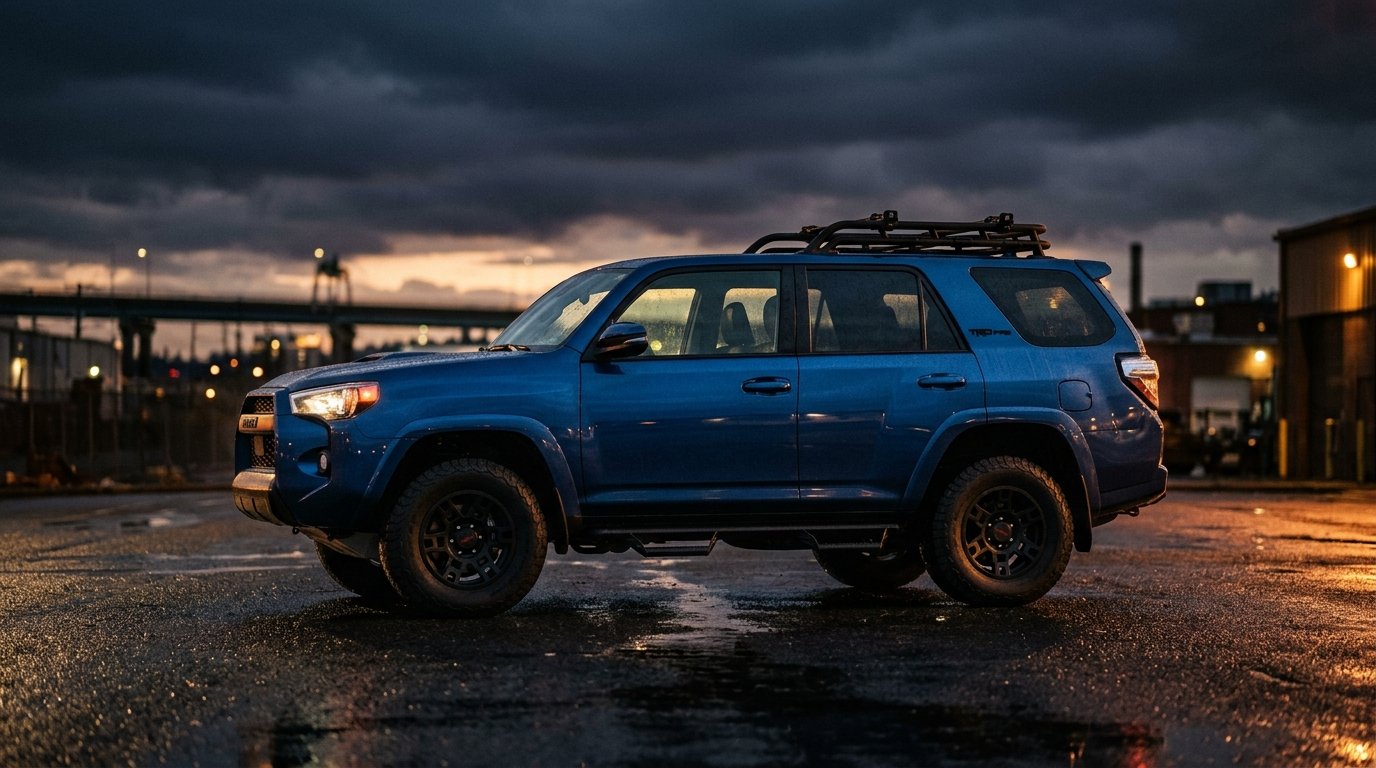
Jeep Wrangler vs Toyota 4Runner: Which Lasts Longer?
INTRODUCTION Choosing between a used Jeep Wrangler and a used Toyota 4Runner means deciding between rugged individualism and legendary dependability, with long-term financial implications at stake. This article systematically dissects the reliability records of both iconic SUVs, examining common failure points, typical repair costs, and ownership expenses across key generations. Potential buyers will gain specific insights into which vehicle offers a more predictable and cost-effective journey to high mileage. Understanding these differences is crucial for any used car purchaser seeking to minimize unexpected repair bills and maximize years of trouble-free service.
WHY THIS MATTERS The decision between a Wrangler and a 4Runner is not merely about brand preference; it is a significant financial commitment that can easily cost a buyer tens of thousands of dollars over several years. A reliable vehicle can save an owner upwards of $1,000 to $3,000 annually in unexpected repairs and downtime, a sum that quickly compounds. Conversely, choosing a less dependable model risks major component failures like a transmission replacement costing $3,000 to $6,000, or extensive rust remediation reaching $2,000 to $5,000, turning a bargain into a money pit. Factoring in depreciation, maintenance, and fuel, the difference in total cost of ownership over five years can exceed $10,000. For the buyer focused on maximizing vehicle lifespan and minimizing financial surprises, understanding these long-term reliability trends is paramount to securing a wise investment rather than a persistent liability.
THE RELIABILITY ROUNDUP
-
Jeep Wrangler JK (2007-2011) This generation, particularly with the 3.8L V6 engine, is notorious for high oil consumption and can develop cylinder head issues, leading to misfires and poor performance. The automatic transmissions from these years also exhibit premature wear and shifting problems. Oil consumption typically manifests around 70,000 to 120,000 miles, potentially requiring constant topping off or, in severe cases, an engine rebuild or replacement costing $3,500 to $5,500. Transmission overhauls often fall in the $2,800 to $4,000 range. Buyer Tip: Always perform a thorough pre-purchase inspection that includes a compression test and a check of the service history for regular oil changes.
-
Jeep Wrangler JK (2012-2018) With the introduction of the 3.6L Pentastar V6 engine, some significant improvements were made, but it is not without its own specific concerns. Early Pentastar engines in this range (2012-2013) were known for cylinder head issues, though less common than the 3.8L's problems. More prevalent across the entire range are oil cooler housing leaks, which occur from 60,000 to 100,000 miles, allowing coolant and oil to mix. Repair costs for an oil cooler housing range from $600 to $1,000 due to labor intensity. Rust on the frame and suspension components also remains a consistent concern, especially in northern climates. Buyer Tip: Examine the underside extensively for rust, particularly on suspension mounts, and check for any sweet smell or oil leaks around the oil filter housing.
-
Jeep Wrangler TJ (1997-2006) The TJ, particularly with the revered 4.0L inline-six engine, is mechanically robust. However, its primary Achilles' heel is body and frame rust. The frames are prone to rot, especially around the control arm mounts and skid plate areas, making these critical inspection points. Rust can compromise structural integrity and make repairs difficult or impossible. Power steering pump and hose leaks are also common, appearing around 100,000 miles, with repairs costing $300 to $600. The "death wobble" a violent shaking of the steering wheel at highway speeds is often caused by worn steering components like ball joints, tie rods, and track bar bushings, typically needing attention around 80,000 to 120,000 miles for $500 to $1,500 in parts and labor. Buyer Tip: Spend significant time inspecting the entire frame with a flashlight and screwdriver, probing for soft spots, especially near suspension attachment points.
-
Toyota 4Runner 4th Generation (2003-2009) The 4th Gen 4Runner, whether equipped with the 4.0L V6 or the 4.7L V8, offers exceptional powertrain reliability. The primary major concern for this generation is frame rust, identical to the issue found on contemporary Tundras and Tacomas. Vehicles from salt-heavy regions can suffer severe frame degradation, potentially leading to structural failure. Exhaust manifold cracks on the V8 engines are also common, producing an audible ticking sound, typically appearing after 100,000 miles. Replacing an exhaust manifold can cost $800 to $1,500 per side. The V8 also has a known starter motor issue, which, due to its location under the intake manifold, is an expensive $800 to $1,200 repair often needed past 150,000 miles. X-REAS suspension on Limited models can leak, requiring replacement of the entire system for $2,000 to $3,000 if not replaced with conventional shocks. Buyer Tip: Prioritize a rust-free frame above all else. Use a boroscope to inspect the inside of frame rails if possible.
-
Toyota 4Runner 5th Generation (2010-Present) The 5th Gen 4Runner maintains Toyota's reputation for reliability, largely carrying over the proven 4.0L V6 from the previous generation. There are very few widespread, systemic issues with this generation. Minor concerns include premature wear of the front brake rotors and pads, requiring replacement every 30,000 to 50,000 miles at a cost of $400 to $700 per axle. Some owners report minor interior rattles as mileage increases, but these are generally cosmetic. The drivetrain is known to easily exceed 200,000 to 300,000 miles with routine maintenance. Buyer Tip: Focus on consistent maintenance records, specifically fluid changes and timing belt if applicable, and inspect for any signs of neglect.
-
Toyota 4Runner 3rd Generation (1996-2002) This generation is renowned for its durability, particularly the 3.4L V6 engine. The most critical failure point is the lower ball joint, which can catastrophically separate, leading to loss of steering and control if not replaced proactively. This issue typically becomes a concern after 100,000 miles. Replacing both lower ball joints costs approximately $300 to $600. Frame rust is a significant problem on this generation as well, similar to the 4th Gen. Head gasket failures on the 3.4L V6 are far less common than earlier Toyota V6s but can still occur, typically beyond 200,000 miles, a repair costing $1,500 to $2,500. Buyer Tip: Replace the lower ball joints immediately after purchase as a preventative measure if there is no proof of recent replacement. Thoroughly inspect the frame for rust.
WHAT TO CHECK BEFORE YOU BUY
- Inspect the frame rails: Use a strong flashlight and a small hammer to gently tap along the entire frame, especially near control arm mounts and crossmembers, listening for dull thuds indicating rust-through or feeling for soft spots.
- Review service records: Look for consistent oil changes, transmission fluid services, and documented repairs. Missing records are a red flag.
- Check for fluid leaks: Look under the vehicle after a test drive. Pay attention to the oil pan, transmission bell housing, transfer case, and differentials for any drips or wet spots.
- Examine the cooling system: Pull the dipstick and look for milky residue, which indicates coolant in the oil. Check the coolant reservoir for oil contamination or unusual colors.
- Test the steering and suspension: Drive over bumps and uneven surfaces. Listen for clunks or rattles. Perform the "death wobble" test on Wranglers by hitting a bump at highway speed to check for excessive steering wheel shake.
- Look for interior water intrusion: Check the carpets, especially in the footwells and under the rear seats of Wranglers, for dampness, mold, or mildew smells, which can indicate pervasive water leaks.
COST OF OWNERSHIP OVER 5 YEARS The financial landscape for owning a used Wrangler versus a used 4Runner over five years presents a stark contrast in predictability and potential expenditure. For a Toyota 4Runner, typical annual maintenance for fluids, filters, and minor wear items will average $400 to $600. Major repair risk for a well-maintained 4Runner is low, with few systemic issues. However, if a major component like a frame needs remediation, costs can surge to $2,000 to $5,000. Fuel costs, assuming 12,000 miles per year and an average of 18-20 MPG at $3.50 per gallon, amount to $2,100 to $2,333 annually. Insurance premiums for a 4Runner are generally moderate, ranging from $1,200 to $1,800 per year depending on coverage, location, and driver profile.
In contrast, a Jeep Wrangler owner should anticipate higher annual maintenance, averaging $600 to $1,000 due to more frequent minor repairs and the need for more specialized off-road component maintenance if used as intended. The risk of major repairs is considerably higher, with potential for issues like engine oil consumption or transmission failure costing $2,500 to $5,500 at some point within the five-year period, especially for the 2007-2011 JK models. Frame rust repair for TJs and JKs in affected regions can also represent a significant, multi-thousand-dollar burden.
Fuel economy for a Wrangler, averaging 16-18 MPG, results in annual fuel costs of $2,333 to $2,625 for 12,000 miles. Insurance premiums for a Wrangler tend to be higher than a 4Runner, often falling between $1,500 and $2,200 annually, reflecting higher theft rates and repair costs. Over a five-year period, the cumulative cost of ownership for a 4Runner could range from $20,000 to $30,000, assuming no major component failures. For a Wrangler, this figure could easily climb to $25,000 to $40,000, with a much higher probability of hitting the upper end due to more frequent and costly repairs. The upfront purchase price will also dictate the total expense, but the operational costs demonstrate a significant divergence in long-term financial predictability.
OUR VERDICT For the used car buyer prioritizing longevity, predictable costs, and minimal headaches, the Toyota 4Runner is the unequivocal superior choice. Its legendary powertrain reliability, robust construction, and a track record of exceeding 200,000 to 300,000 miles with routine maintenance make it an ideal long-term investment. While frame rust is a serious consideration for older 4Runner generations, a rust-free example offers a foundation for decades of dependable service. The Jeep Wrangler, while iconic and incredibly capable off-road, consistently demonstrates higher rates of significant mechanical failures, particularly with engine and transmission issues across several generations, leading to substantially higher and less predictable ownership costs.
FREQUENTLY ASKED QUESTIONS
Q: What is a good budget for a reliable used Wrangler or 4Runner? A: For a reliable Toyota 4Runner, expect to spend $15,000 to $25,000 for a 4th or early 5th generation model in good condition. A reliable Jeep Wrangler TJ or later JK will typically cost $10,000 to $20,000, but be prepared for potentially higher repair budgets.
Q: How many miles can a Jeep Wrangler and Toyota 4Runner last? A: A well-maintained Toyota 4Runner can routinely exceed 250,000 to 300,000 miles. While a Jeep Wrangler can reach 200,000 miles, it often requires more frequent and significant component replacements along the way compared to a 4Runner.
Q: Which specific years of the 4Runner are most reliable? A: The 5th generation 4Runner (2010-present) is exceptionally reliable. For older models, the 3rd generation (1996-2002) with the 3.4L V6 is a strong contender, provided its critical lower ball joints have been addressed.
Q: What are the biggest known issues for the Jeep Wrangler? A: Common issues for Wranglers include significant frame and body rust on TJs and JKs, oil consumption and transmission problems on 2007-2011 JK 3.8L engines, and oil cooler leaks on 2012-2018 JK Pentastar engines, alongside persistent water leaks into the cabin.
Q: What is the average maintenance cost difference between the two? A: Over five years, a Toyota 4Runner owner can expect to spend $2,000 to $3,000 on routine maintenance, plus potential major repair contingency. A Jeep Wrangler owner should anticipate $3,000 to $5,000 in routine maintenance, with a higher likelihood of incurring several thousand dollars in major repair costs.
Q: Which vehicle holds its resale value better? A: Both vehicles hold their value exceptionally well, a testament to their strong demand. However, the Toyota 4Runner typically maintains a slightly stronger resale percentage, especially for higher mileage examples, due to its reputation for bulletproof reliability and lower long-term ownership costs.