
Toyota 4Runner Common Problems and Repair Costs
Is your Toyota 4Runner acting up? Discover common problems and their typical repair costs to save money and keep your SUV running smoothly.
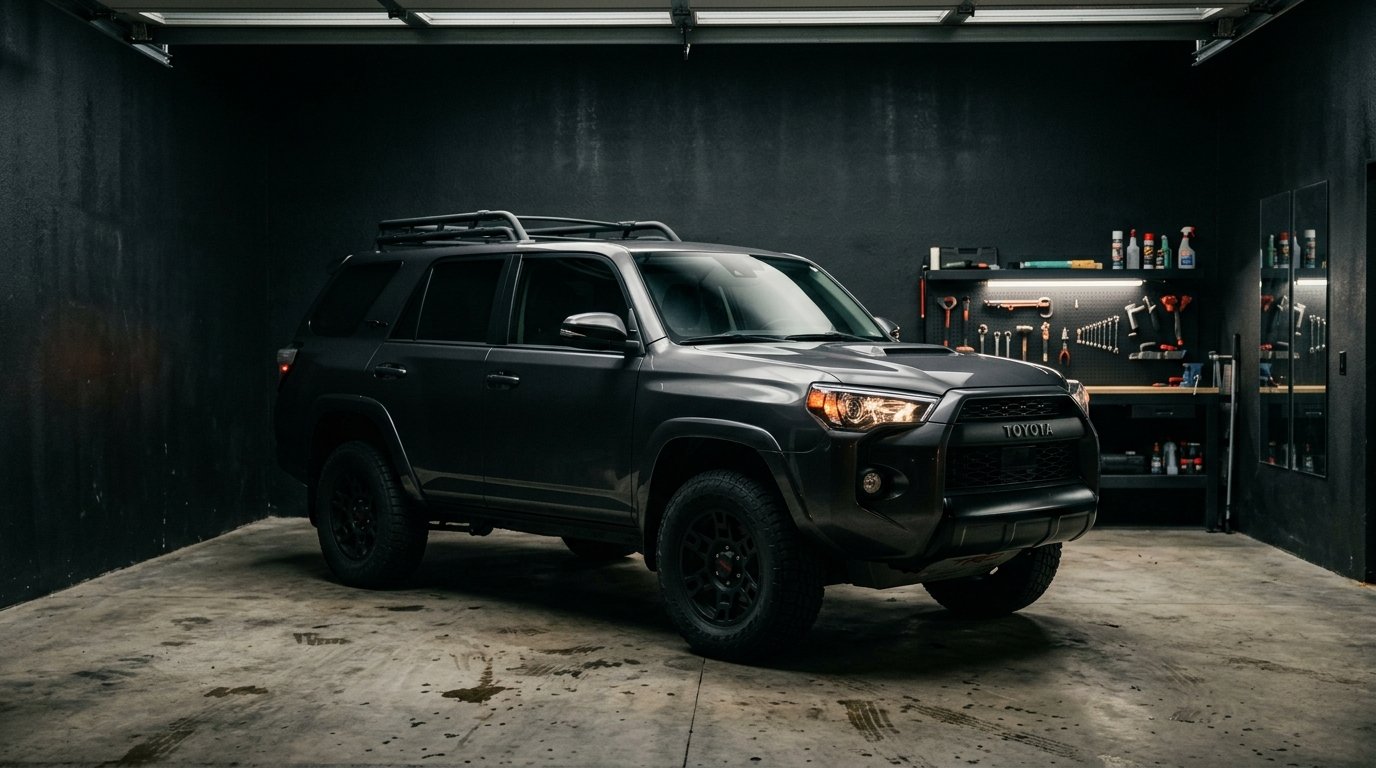
Toyota 4Runner Common Problems and Repair Costs
INTRODUCTION Buying a used Toyota 4Runner is often seen as a shrewd move, an investment in legendary durability. However, even the most robust vehicles have their Achilles' heels, and overlooking them can turn a smart purchase into a financial burden. This comprehensive guide uncovers the most common issues plaguing various 4Runner generations, from frame rust to suspension woes, alongside realistic repair cost estimates. Prospective buyers will gain the specific knowledge needed to evaluate a used 4Runner and avoid costly surprises, ensuring their investment holds its value and delivers years of reliable service.
WHY THIS MATTERS A used Toyota 4Runner commands a premium for its reputation, but that premium is quickly eroded by unexpected, major repairs. For instance, a 2005 4Runner with significant frame rust could require welding and extensive undercoating at a cost upwards of $2,000 to maintain structural integrity, or face immediate rejection at a state inspection. Similarly, a 2008 4Runner Limited with failing X-REAS shock absorbers could demand a $1,800 to $2,500 replacement for the specialized system, or force a complete conversion to conventional suspension costing $1,200 to $1,500, diminishing its factory ride quality. Ignoring a potential "Pink Milkshake" issue in a 2003-2009 4Runner V6, where transmission fluid mixes with coolant, leads directly to a transmission failure and a $3,500 to $5,000 replacement. These are not minor inconveniences; they are significant financial liabilities. Understanding these specific vulnerabilities beforehand allows a buyer to negotiate a fair price, budget for preventative maintenance, or simply walk away from a problematic vehicle, preserving thousands of dollars in potential repair costs and ensuring a truly reliable ownership experience.
THE TOP 5 / THE RANKINGS / THE YEARS
-
Frame Rust (Primarily 3rd and 4th Generation, Early 5th Gen) The ladder frame on 1996-2009 4Runners, and to a lesser extent 2010-2015 models, is highly susceptible to severe corrosion, particularly in regions where road salt is used. Rust often starts near the rear control arm mounts, the fuel tank crossmember, and above the rear axle, compromising structural integrity. This is typically observed on vehicles exceeding 100,000 miles, but can appear earlier with poor maintenance. Repair Cost: Minor surface rust treatment may cost $300-$600. Significant rust requiring plating or welding of critical areas can range from $1,500 to $4,000, or render the vehicle unsafe and uneconomical to repair. Buyer Tip: Inspect the frame thoroughly with a flashlight and a small hammer. Pay close attention to welds, control arm mounts, and crossmembers for flaking or soft spots.
-
Lower Ball Joint Failure (3rd Generation 1996-2002) The front lower ball joints on the 3rd generation 4Runner are a critical weak point, known to fail catastrophically without warning, leading to wheel detachment. This issue is most prevalent on vehicles around 150,000 to 200,000 miles, especially if they have seen extensive off-road use or neglect. Toyota issued a recall for some Lexus GX models with similar parts, but not for the 4Runner. Repair Cost: Replacement of both front lower ball joints typically costs $500-$900 using quality OEM or reputable aftermarket parts, including an alignment. Catastrophic failure can cause additional damage to fenders, brakes, and suspension components, escalating costs significantly. Buyer Tip: During a pre-purchase inspection, have a mechanic lift the vehicle and check for excessive play in the lower ball joints by prying against the lower control arm.
-
"Pink Milkshake" Transmission Fluid Contamination (4th Generation V6/V8 2003-2009) This issue refers to internal corrosion within the original equipment radiator, causing engine coolant to mix with automatic transmission fluid. The contaminated fluid, which takes on a pinkish hue, rapidly degrades the transmission, leading to premature failure. This often manifests between 120,000 and 180,000 miles. Repair Cost: Replacing the radiator before contamination costs around $400-$600. If contamination has occurred, a transmission flush may be attempted for $300-$500, but a new or rebuilt transmission is often required, costing $3,500 to $5,000. Buyer Tip: Check the transmission fluid on the dipstick for any discoloration, cloudy appearance, or pink tint. A clear, reddish-brown fluid is normal. Consider proactively replacing the radiator on any 4th generation model.
-
X-REAS Suspension Leaks (4th Generation Limited and Sport Edition 2003-2009) The X-REAS (Cross-Relative Absorber System) suspension, standard on Limited and Sport Edition 4Runners, uses hydraulic lines connecting diagonally opposed shock absorbers. Over time, these lines or the shock bodies themselves can leak, leading to a degraded ride quality, poor handling, and ultimately, system failure. This usually occurs after 100,000 miles. Repair Cost: Replacing a single X-REAS shock is complex and often requires replacing the entire system or converting to a conventional suspension. A full X-REAS replacement can cost $1,800 to $2,500. A conversion to standard shocks and springs typically costs $1,200 to $1,500 parts and labor. Buyer Tip: Test drive the vehicle thoroughly. Listen for clunking noises over bumps and observe for excessive body roll. Visually inspect the shocks for fluid leaks and have a mechanic check the X-REAS lines.
-
Exhaust Manifold Cracks (4th Generation V8 2005-2009) The 4.7L V8 engine in the 4th generation 4Runner is prone to cracking exhaust manifolds, primarily on the passenger side. This issue creates a distinct ticking or clicking sound, especially noticeable on cold starts, which often subsides as the engine warms up. It typically appears after 150,000 miles. Repair Cost: Replacing one cracked exhaust manifold, including new gaskets, typically costs $800-$1,400 due to labor involved in accessing the bolts, which can often break. Replacing both can push costs higher. Buyer Tip: Listen carefully for a ticking sound from the engine bay, particularly on startup. It may sound like a valvetrain issue but is usually an exhaust leak. Have a mechanic confirm the source during a pre-purchase inspection.
WHAT TO CHECK BEFORE YOU BUY
- Inspect the Frame: Lie on your back and crawl under the vehicle, thoroughly examining the entire frame for deep rust, flaking, or previous patch welds. Pay critical attention to control arm mounts and body mount points.
- Test the Suspension: Push down on each corner of the vehicle. It should rebound once or twice and settle. Listen for squeaks, clunks, or groans during a test drive, especially over bumps and uneven surfaces.
- Check for Fluid Leaks: Look under the vehicle after it has been sitting for a while for any drips or stains on the ground. Pull the oil dipstick and check the color and consistency; also, check the transmission fluid for a pinkish hue.
- Examine the Interior: Look for excessive wear on seats, steering wheel, and pedals which can indicate higher mileage than shown. Check all power windows, locks, and climate control functions.
- Engine Bay Scrutiny: Inspect belts and hoses for cracks or fraying. Look for signs of oil leaks around the valve covers or head gaskets. Note any unusual smells, like burning oil or coolant.
- Test Drive Thoroughly: Accelerate firmly, brake smoothly and firmly, and turn the wheel fully left and right. Listen for any grinding, popping, or whining noises, especially from the drivetrain.
COST OF OWNOWNERSHIP OVER 5 YEARS Owning a Toyota 4Runner is generally a predictable experience, but budgeting for common issues is crucial. Typical annual maintenance, excluding major repairs, averages between $400 and $700 for oil changes, tire rotations, filter replacements, and brake inspections. Over five years, this amounts to $2,000 to $3,500. However, depending on the generation and specific issues, major repairs can significantly inflate this figure. For instance, a 4th generation 4Runner that experiences the "Pink Milkshake" issue and requires a transmission replacement could add $3,500 to $5,000 to the repair budget within the first few years. Similarly, significant frame rust remediation on an older model might cost $2,000 to $4,000, negating its initial affordability.
Fuel costs are a substantial factor for any 4Runner owner. The 4Runner is not known for its fuel efficiency, with most generations averaging 16-20 miles per gallon combined. Assuming 12,000 miles driven annually and an average fuel price of $3.50 per gallon, annual fuel costs could range from $2,100 to $2,600. Over five years, this equates to $10,500 to $13,000. These figures are higher than many crossover SUVs but comparable to other body-on-frame SUVs.
Insurance premiums vary widely based on driver age, location, and coverage, but a used 4Runner typically falls into a moderate cost bracket. Owners can expect to pay between $1,200 and $1,800 annually for full coverage. Over five years, this is an additional $6,000 to $9,000. While the 4Runner's reliability often keeps premiums stable, repair costs for major incidents can still be considerable. Factoring in all these elements, the total cost of ownership over five years for a used 4Runner, excluding initial purchase price, could realistically range from $20,000 to $30,000, emphasizing the importance of a thorough pre-purchase inspection and a robust maintenance fund.
OUR VERDICT A used Toyota 4Runner can be an outstanding purchase, offering unmatched durability and capability, particularly for buyers seeking a long-term investment. The recommendation is a cautious buy, specifically for well-maintained 4th and 5th generation models. Prioritize vehicles with comprehensive service records and a documented history of rust prevention, as frame integrity remains the most critical long-term concern. While the 4Runner maintains strong resale value, its specific known issues, if unaddressed, can lead to substantial repair bills. Buyers seeking a trouble-free experience without intensive pre-purchase scrutiny might consider alternatives like the Toyota Highlander for a more car-like ride, or a Subaru Outback for better fuel economy and softer ownership costs, sacrificing some off-road prowess.
FREQUENTLY ASKED QUESTIONS
Q: What is a reasonable budget for a reliable used Toyota 4Runner? A: For a truly reliable model with fewer major issues, expect to budget $15,000 to $30,000 for a 4th or 5th generation. Older 3rd generation models under $10,000 can be reliable but require more diligent inspection for frame rust and ball joint issues.
Q: How many miles is too many for a used 4Runner? A: A well-maintained 4Runner can easily surpass 250,000 to 300,000 miles. Focus less on the absolute mileage number and more on consistent maintenance records, a clean frame, and the absence of the specific common issues detailed in this guide.
Q: Are there specific 4Runner model years to avoid? A: While no year is inherently "bad," exercise extra caution with 1996-2002 3rd generation models regarding lower ball joint integrity and frame rust. For 2003-2009 4th generation models, be vigilant about frame rust, X-REAS suspension leaks, and the "Pink Milkshake" radiator issue.
Q: What are the most common known issues with the 4Runner? A: The most frequent problems include frame rust, particularly on 3rd and 4th generations, lower ball joint failures on 3rd generations, and the "Pink Milkshake" radiator issue affecting 4th generation V6/V8 models. X-REAS suspension leaks on 4th gen Limited/Sport trims and exhaust manifold cracks on 4th gen V8s are also notable.
Q: How much should I expect to spend on annual maintenance for a 4Runner? A: Routine annual maintenance, including oil changes, tire rotations, and general inspections, typically ranges from $400 to $700. This estimate does not include major repairs or unexpected issues, for which a separate fund should be established.
Q: Does the Toyota 4Runner hold its resale value well? A: Yes, the Toyota 4Runner consistently holds its value exceptionally well, often outperforming many competitors. Its reputation for reliability and durability makes it highly desirable on the used market, contributing to slower depreciation compared to other SUVs.