
Toyota 4Runner Years to Avoid (Worst to Best Ranked)
Buying a Toyota 4Runner? See our expert ranking of every model year, from those with major issues to the most dependable, helping you choose wisely.
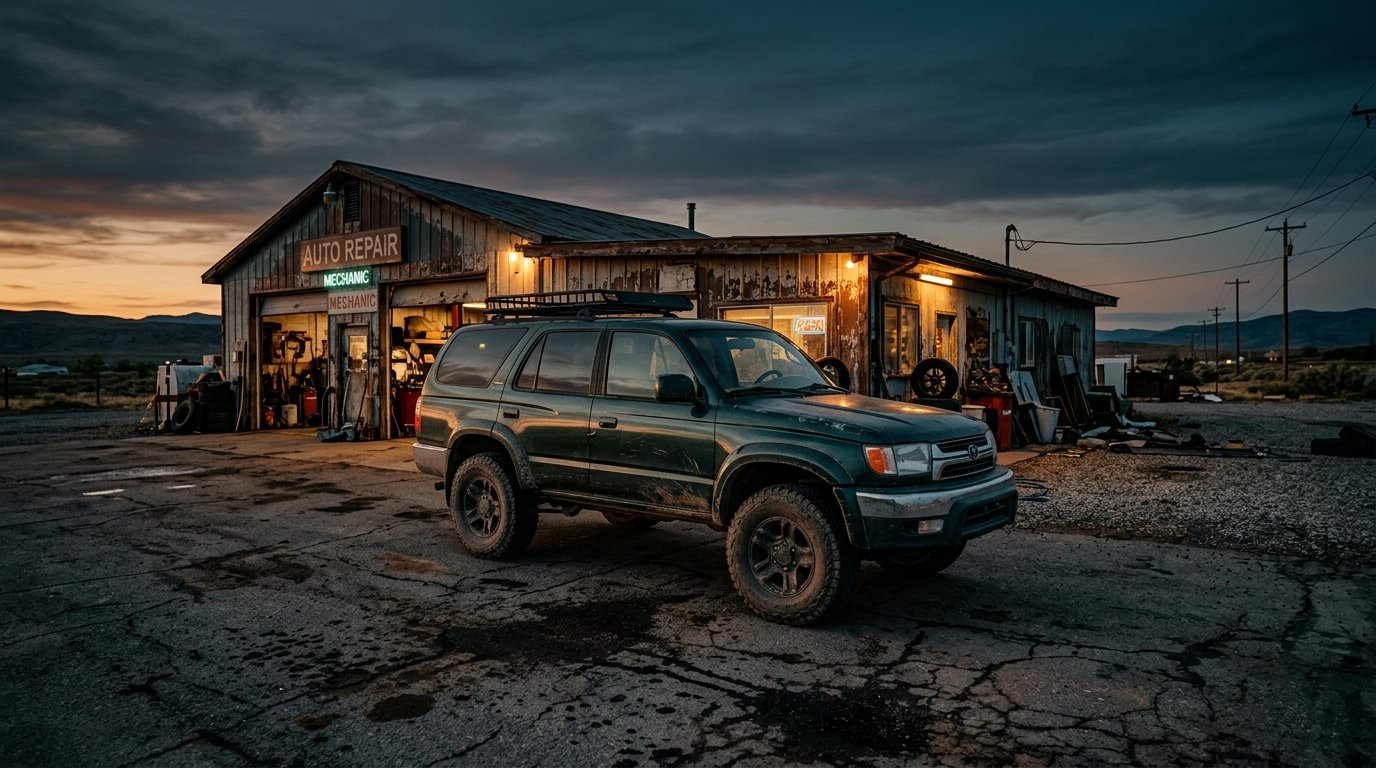
TOYOTA 4RUNNER YEARS TO AVOID (WORST TO BEST RANKED)
INTRODUCTION Buying a used Toyota 4Runner is often considered a safe bet, but even legendary vehicles have their less-than-stellar years. Making an informed choice can be the difference between years of dependable adventure and unexpected, costly repairs. This article meticulously analyzes the Toyota 4Runner’s various generations and specific model years, identifying those with known vulnerabilities, detailing typical failure modes, and ranking them from the most problematic to the most reliable. We provide crucial insights, specific repair cost estimates, and practical advice for every prospective buyer.
WHY THIS MATTERS A used Toyota 4Runner can be an exceptional investment, delivering decades of service and holding its value remarkably well. However, overlooking critical model year distinctions or common faults can turn a wise purchase into a financial drain. For instance, addressing a V6 head gasket failure on a 2003-2005 model can easily exceed 3,000 to 4,500 dollars. Similarly, neglected lower ball joints on a 3rd generation model, typically failing around 120,000-180,000 miles, could lead to catastrophic wheel separation and repair bills upwards of 1,500 dollars, not to mention safety risks. Understanding these nuances protects your wallet from unforeseen repairs that can quickly negate any initial savings on the purchase price. A well-chosen 4Runner, conversely, can reliably serve for hundreds of thousands of miles with minimal financial impact beyond routine maintenance and fuel.
THE RANKINGS: WORST TO BEST 4RUNNER YEARS
-
WORST: 2003-2005 4TH GENERATION (V6 ENGINE HEAD GASKET, EARLY FRAME RUST) These early 4th generation models, particularly those equipped with the 4.0L V6 1GR-FE engine, are notorious for head gasket failures. This issue typically surfaces between 150,000 and 200,000 miles, manifesting as coolant loss, milky oil, or white exhaust smoke. The repair is extensive, often costing 3,000 to 4,500 dollars due to the labor involved in engine disassembly. Additionally, vehicles from northern states or coastal regions from these years are highly susceptible to severe frame rust, particularly on the rear cross member and control arm mounting points, which can compromise structural integrity. Buyers should prioritize a comprehensive pre-purchase inspection by a Toyota specialist and specifically scrutinize the engine and undercarriage.
-
PROBLEMATIC: 1996-2002 3RD GENERATION (LOWER BALL JOINTS, FRAME RUST) The 3rd generation 4Runner is revered for its robustness, but two significant issues demand attention. The front lower ball joints are a known weak point, prone to failure, particularly on vehicles with 120,000 to 180,000 miles. A catastrophic failure can lead to wheel separation, costing 1,500 to 2,500 dollars in repairs and presenting a severe safety hazard. Owners often replace them proactively as a preventative measure. Frame rust is also a major concern, particularly on vehicles from salted road environments, with severity increasing closer to 2002 as the body-on-frame design aged. Thoroughly inspect the frame, especially around the rear control arms and gas tank skid plate.
-
PROCEED WITH CAUTION: 2010-2013 5TH GENERATION (MINOR ISSUES, PAINT QUALITY) The first few years of the 5th generation 4Runner are generally reliable, benefiting from a well-proven drivetrain. However, some owners report early paint quality concerns, particularly chipping on the front fascia and hood, requiring touch-ups or resprays costing 500 to 1,500 dollars if left unaddressed. Minor issues such as noisy or failing automatic running board motors are also more prevalent in these initial years, with replacement units costing around 300 to 600 dollars per side. Frame rust, while less severe than on older generations, still requires careful inspection on vehicles exposed to corrosive environments, specifically around the rear suspension components.
-
GENERALLY SOLID: 2006-2009 4TH GENERATION (V8 OPTION IS KEY, V6 STILL RISKY) The later 4th generation models saw improvements, and critically, retained the excellent 4.7L 2UZ-FE V8 engine option. This V8 is widely regarded as one of Toyota's most durable engines, largely devoid of the V6 head gasket issues. While the V6 in these years still carries a risk of head gasket failure, it is less common than in the earlier 2003-2005 models. The X-REAS sport suspension system, optional on some models, can develop leaks around 100,000-150,000 miles, leading to a degraded ride and requiring replacement, often at a cost of 1,500 to 2,500 dollars if converted to a conventional suspension. Seek out a well-maintained V8 model for the best long-term reliability.
-
VERY RELIABLE: 2014-2016 5TH GENERATION (PROVEN, MINIMAL MAJOR ISSUES) These years represent a sweet spot for the 5th generation 4Runner, offering a refreshed interior and exterior while retaining the robust, long-proven 4.0L V6 engine and five-speed automatic transmission. Most of the minor teething issues from the earlier 5th generation years were ironed out. Major mechanical failures are rare, with typical maintenance being the primary concern. Buyers should still conduct a thorough frame inspection, especially if the vehicle spent time in a rust belt, as localized surface rust can still form on components. Focus on regular service records, as these models are prime for high mileage and continued dependability.
-
THE GOLD STANDARD: 2017-PRESENT 5TH GENERATION (MOST REFINED, EXCELLENT RELIABILITY) The latest 5th generation 4Runners build upon an already established reputation for bulletproof reliability. By these model years, the platform is thoroughly refined with minimal reported common issues. While a newer model means a higher purchase price, the likelihood of unexpected mechanical failures is exceptionally low, justifying the premium for many buyers seeking ultimate peace of mind. Regular maintenance remains crucial, but major repair risks are nearly non-existent outside of accidents or severe neglect. These vehicles consistently demonstrate their capability of exceeding 300,000 miles with proper care, making them an excellent long-term investment for those with the budget.
WHAT TO CHECK BEFORE YOU BUY
- FRAME RUST: Get under the vehicle with a bright flashlight. Inspect the frame rails, especially around the rear coil spring perches, control arm mounting points, and the area above the spare tire. Tap suspicious spots with a hammer to check for soft metal.
- LOWER BALL JOINTS: For 3rd generation models, jack up the front of the vehicle, grab the wheel at 12 and 6 o'clock, and push/pull firmly. Any noticeable play indicates worn ball joints requiring immediate replacement.
- COOLANT RESERVOIR: Check the coolant level and color. Look for any oil residue or a "milkshake" appearance, which can indicate a V6 head gasket failure in 4th generation models.
- TRANSMISSION FLUID: Pull the transmission dipstick (if equipped) with the engine warm and running. The fluid should be bright red or pink, not dark brown or black, and it should not smell burnt.
- 4WD OPERATION: Test engagement of both 4-High and 4-Low. Listen for unusual grinding or clunking noises. Ensure the dashboard indicator lights for 4WD activate and deactivate properly.
- X-REAS SHOCKS: On 4th generation models equipped with X-REAS, visually inspect each shock absorber for fluid leaks. A leaky shock means the system is compromised and will need attention.
- STEERING RACK: Inspect the steering rack boots for tears and look for any fluid weeping or leaks around the steering rack itself. Power steering fluid leaks are common on higher mileage vehicles.
COST OF OWNERSHIP OVER 5 YEARS Owning a Toyota 4Runner is generally a predictable and cost-effective endeavor compared to many other SUVs, but annual expenses can still add up. Typical annual maintenance costs, including oil changes, tire rotations, air filters, and occasional fluid flushes, usually range from 400 to 800 dollars. This figure can climb to 1,000 to 1,500 dollars in years requiring more significant service like brake replacements, spark plugs, or timing belt service on older V8 models.
Major repair risks are heavily dependent on the model year selected. For example, a 3rd generation 4Runner could face 1,000 to 2,500 dollars in lower ball joint and suspension component replacements. A 4th generation V6 might require a 3,000 to 4,500 dollar head gasket repair. More modern 5th generation models typically avoid these large-scale mechanical issues, keeping major repair costs much lower, usually limited to wear items or less critical component failures.
Fuel costs are a significant factor given the 4Runner’s truck-based platform. Average combined fuel economy across all generations typically ranges from 16 to 20 miles per gallon. Assuming 12,000 miles driven annually and an average fuel price of 3.50 dollars per gallon, expect to spend between 2,100 and 2,600 dollars per year on gasoline. Insurance costs vary widely based on location, driver history, and vehicle year, but a used 4Runner typically falls into a moderate range, with annual premiums often between 1,200 and 2,000 dollars. Over five years, total ownership costs, excluding the purchase price and major unforeseen repairs, could realistically range from 20,000 to 35,000 dollars.
OUR VERDICT For buyers prioritizing unwavering reliability and minimal long-term hassle, the 2014-present 5th generation Toyota 4Runner models are the clear recommendation. While they command a higher initial purchase price, their proven mechanicals and lack of widespread common issues provide exceptional peace of mind. Buyers with a tighter budget should carefully consider the 2006-2009 4th generation, specifically targeting models equipped with the durable V8 engine. Avoid the early 4th generation V6 models (2003-2005) and rigorously inspect any 3rd generation model for frame rust and lower ball joint integrity to prevent unexpected expenses and safety hazards.
FREQUENTLY ASKED QUESTIONS
Q: What is a reasonable budget for a reliable used 4Runner? A: A reliable used 4Runner generally starts around 10,000 to 15,000 dollars for well-maintained 3rd or 4th generation models. For a 5th generation model in excellent condition, expect to pay 20,000 to 40,000 dollars or more, depending on year and trim level.
Q: What mileage is too high for a used 4Runner? A: A Toyota 4Runner is known for its longevity, so high mileage is less of a concern than with other vehicles. A well-maintained 4Runner with 180,000 to 220,000 miles can still offer many years of service. Comprehensive service records are more important than the odometer reading alone.
Q: Are there any specific years that are universally considered bad? A: The 2003-2005 model years, specifically those with the V6 engine, are often considered the most problematic due to a higher incidence of head gasket failures and early frame rust issues. These years require the most diligent pre-purchase inspection.
Q: What are the most common known issues across all 4Runner generations? A: Frame rust, particularly on older models from salted road environments, is a pervasive concern. Other common issues include lower ball joint wear on 3rd generations, V6 head gasket failures on 4th generations, and occasionally failing X-REAS suspensions on those so equipped.
Q: How much does a 4Runner typically cost to maintain annually? A: Routine annual maintenance for a 4Runner typically ranges from 400 to 800 dollars for basic services like oil changes and tire rotations. This figure can increase to 1,000 to 1,500 dollars in years requiring more extensive service such as brake work or larger fluid flushes.
Q: Do 4Runners hold their value well? A: Yes, Toyota 4Runners are renowned for their exceptional resale value, often retaining 70-80 percent of their original value after five years, significantly outperforming many competitors. This strong retention makes them an attractive long-term investment, mitigating depreciation costs.