
Toyota Camry vs Honda Accord: Which Should You Buy?
Struggling to choose between the Toyota Camry and Honda Accord? Our expert comparison details features, performance, and value, helping you buy the best sedan.
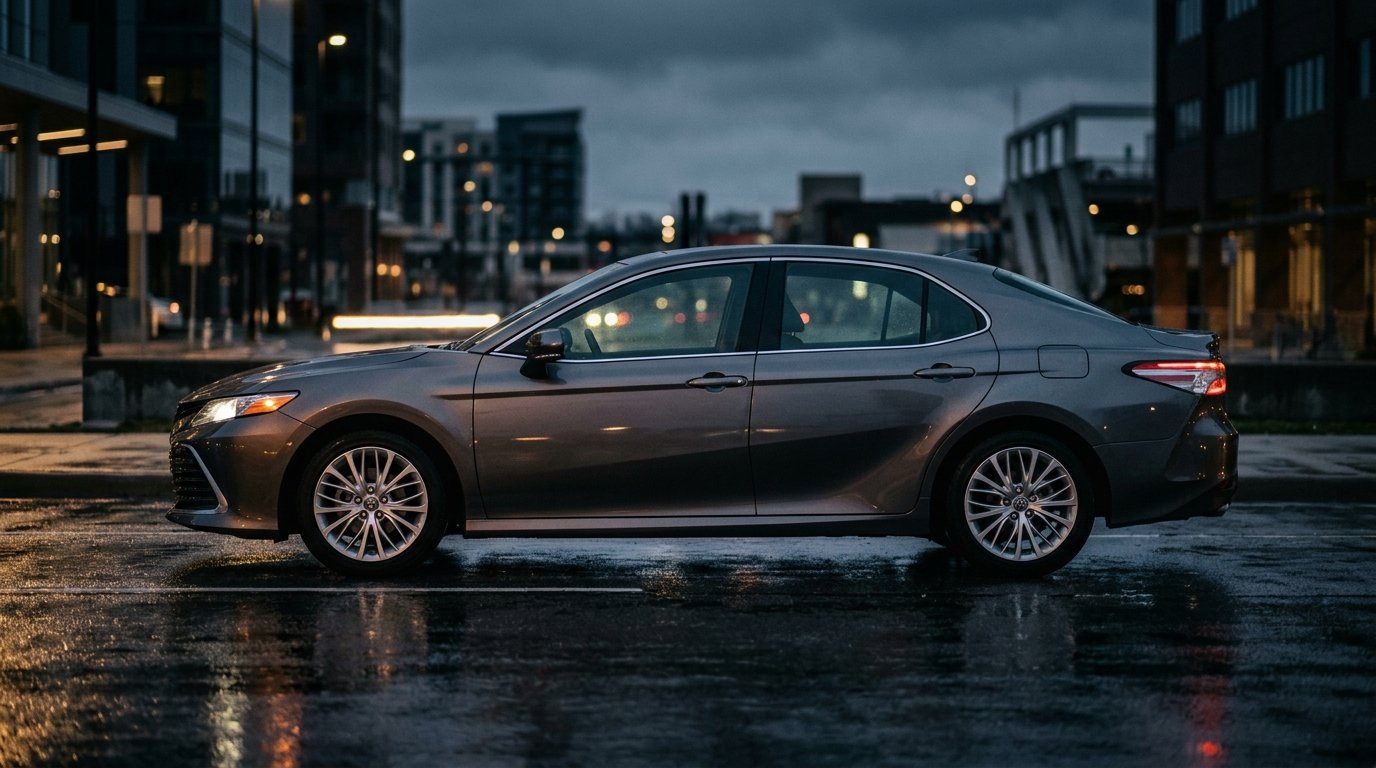
Toyota Camry vs Honda Accord: Which Should You Buy?
INTRODUCTION Deciding between a used Toyota Camry and a Honda Accord is a quintessential dilemma for used car buyers seeking enduring reliability and value. These two stalwarts have dominated the midsize sedan segment for decades, earning reputations for longevity and low ownership costs. This article provides a definitive, data-driven comparison, dissecting specific model years, common failure points, repair costs, and critical inspection tips to guide your next vehicle purchase. OwnersKeep details exactly which generation offers the most peace of mind and the best financial return, ensuring you make an informed decision for years of dependable driving.
WHY THIS MATTERS Choosing the right used vehicle represents a significant financial commitment, often second only to a home purchase. A reliable car minimizes unexpected repair bills, which can easily total $1,500 to $4,000 in a single incident, turning a good deal into a money pit. Beyond direct repair costs, frequent breakdowns lead to lost time, rental car expenses averaging $50-75 per day, and a significant drop in resale value. A shrewd purchase, like a well-researched Camry or Accord, offers more than just transportation; it provides financial stability, predictable maintenance, and the peace of mind that comes from knowing your vehicle will start reliably every morning. Over five years, the difference between a high-reliability model and one prone to common failures can easily amount to $5,000 or more in combined repair and inconvenience costs.
THE YEARS TO CONSIDER
-
2007-2011 Toyota Camry 2.4L (XV40 Generation) The 2AZ-FE 2.4-liter four-cylinder engine in these models is notorious for excessive oil consumption, primarily due to faulty piston rings. This issue typically manifests between 80,000 and 120,000 miles, requiring owners to frequently top off the oil. A complete piston ring replacement or engine rebuild, which addresses the root cause, can cost between $1,800 and $2,800. Buyer Tip: Insist on thorough service records to confirm regular oil changes. During a test drive, check the oil level before and after, and look for signs of heavy carbon buildup on the tailpipe.
-
2012-2014 Toyota Camry 2.5L (XV50 Generation) This generation, specifically with the 2.5-liter four-cylinder engine and 6-speed automatic transmission, represents a highly reliable era for the Camry. Widespread mechanical failures are uncommon, and the powertrain is known for its durability. Issues typically involve only standard wear items. Expect to budget for brake pads and rotors at approximately $400-600 per axle, and a new set of tires ranging from $600-1,000, usually needed around 50,000-70,000 miles. Buyer Tip: Look for evidence of diligent transmission fluid changes, ideally every 60,000 miles, to ensure the transmission operates smoothly well into high mileage.
-
2015-2017 Toyota Camry 2.5L or 3.5L (Refreshed XV50 Generation) Toyota further refined the XV50 platform in these later years, enhancing an already solid package. Both the 2.5-liter four-cylinder and the powerful 3.5-liter V6, paired with the 6-speed automatic, offer exceptional reliability. These models often exceed 200,000 miles with only routine maintenance. Major repair risk is exceedingly low. Anticipate costs for spark plug replacement at $200-400 and suspension components like struts, which may need replacing around 100,000-120,000 miles, costing $600-1,000 per axle. Buyer Tip: These years provide an excellent balance of modern features and proven reliability. Prioritize lower mileage examples with verifiable service histories for the best long-term value.
-
2008-2012 Honda Accord V6 (8th Generation J35 Engine) The 3.5-liter V6 engine in these Accords is prone to Variable Cylinder Management (VCM) related oil consumption and fouled spark plugs. This typically manifests between 70,000-120,000 miles. Furthermore, the automatic transmission is a significant weak point, frequently failing due to torque converter clutch issues. VCM-related repairs can cost $500-2,000, while a transmission replacement or rebuild is a substantial $2,500-4,000, often appearing from 90,000-150,000 miles. Buyer Tip: If considering a V6, search for vehicles where the VCM system has been professionally disabled (a "VCM muzzler") and ensure the transmission shifts flawlessly without hesitation or shuddering during the test drive.
-
2008-2012 Honda Accord 4-cylinder (8th Generation K24 Engine) While the K24 2.4-liter engine is remarkably robust, the 5-speed automatic transmission paired with it is a common failure point. Owners frequently report issues with torque converters and internal clutch packs, leading to slipping or complete failure. These transmission problems typically emerge between 90,000 and 140,000 miles. A transmission rebuild or replacement for this model is a costly fix, ranging from $2,200 to $3,800. Buyer Tip: During a test drive, be hyper-vigilant for any shuddering, delayed shifts, or slipping from the transmission. Insist on service records proving consistent transmission fluid changes using Honda's genuine DW-1 fluid.
-
2013-2017 Honda Accord 4-cylinder (9th Generation K24 Engine with CVT) The K24 engine continues its tradition of reliability in this generation. However, the Continuously Variable Transmission (CVT) requires meticulous fluid maintenance for long-term durability. Some early 9th-generation CVTs exhibited minor software quirks or occasional judder, often rectifiable with software updates. If neglected, CVT issues typically appear over 100,000 miles. A CVT fluid change costs approximately $150-250, but a full replacement CVT can run $3,000 to $5,000. Buyer Tip: Demand service records unequivocally proving the CVT fluid was changed every 30,000 to 50,000 miles using genuine Honda HCF-2 fluid. A healthy CVT should operate seamlessly and quietly.
WHAT TO CHECK BEFORE YOU BUY
- Review the vehicle's full service history: Look for consistent oil changes, transmission fluid services, and documented repairs or recalls.
- Inspect the engine bay for fluid leaks: Check for oil residue around the valve cover gasket and any dampness indicating coolant or power steering fluid leaks.
- Pull the engine oil dipstick: Look for proper oil level, clear amber color, and absence of milky residue which could indicate coolant contamination.
- Test drive thoroughly, paying attention to the transmission: Ensure smooth, predictable shifts without any hesitations, clunks, or slipping.
- Check all electronic accessories: Verify the functionality of power windows, door locks, climate control, and infotainment system components.
- Examine the tires and brakes: Uneven tire wear indicates alignment issues, while warped brake rotors cause pulsation during braking.
- Inspect for rust: Look closely at the rocker panels, wheel wells, and subframe for excessive corrosion, especially in regions with road salt.
COST OF OWNERSHIP OVER 5 YEARS The cost of ownership for both a used Toyota Camry and Honda Accord is generally among the lowest in the midsize segment, assuming a well-maintained example is purchased. Typical annual maintenance, including oil changes, tire rotations, and air filter replacements, will average $300 to $500 for either vehicle. This figure can increase if spark plugs, brake components, or suspension parts are needed, often totaling $700-1,200 in a year when such services are due around the 100,000-mile mark.
Major repair risk is where careful model year selection pays dividends. For highly reliable years, like the 2015-2017 Camry or 2013-2017 Accord 4-cylinder with documented CVT service, the risk of a four-figure repair in five years is minimal, perhaps 10-20 percent. For models with known issues, such as the 2008-2012 Accord V6 or 2.4L Camry, the probability of a $2,000-$4,000 repair (transmission, VCM, or engine rebuild) can climb to 40-60 percent within five years of ownership, especially if the car is already over 80,000 miles at purchase.
Fuel costs will vary depending on engine choice and driving habits. A 4-cylinder model from either brand typically achieves 25-30 miles per gallon combined, leading to approximately $1,500-$1,800 in annual fuel costs for 12,000 miles of driving at $3.50 per gallon. V6 models will consume 10-20 percent more fuel. Insurance rates are highly variable by driver, location, and coverage, but generally, both models fall into lower-risk categories, with average annual premiums ranging from $1,200 to $2,000 for standard coverage.
OUR VERDICT For the used car buyer prioritizing maximum reliability and minimal long-term financial risk, the Toyota Camry is the marginally safer choice. Specifically, focus on the 2012-2017 Toyota Camry 2.5-liter four-cylinder models. These years consistently demonstrate exceptional durability with very few widespread, costly issues, representing the pinnacle of Toyota's long-standing reputation for reliability. While the Honda Accord offers a more engaging driving experience, its history of automatic transmission and VCM issues in specific generations presents a higher risk of significant repair costs.
FREQUENTLY ASKED QUESTIONS
Q: Which car is better on a tight budget? A: For a tight budget, the 2012-2014 Toyota Camry 2.5L offers the best balance of low purchase price and minimal repair risk. Its proven reliability means fewer unexpected costs, making it a sound financial choice even if the initial outlay is slightly higher than an older, riskier Accord.
Q: What is the ideal mileage for a used Camry or Accord? A: The ideal mileage for purchase is generally between 60,000 and 100,000 miles. At this range, depreciation has stabilized, and the vehicle still has many years of life ahead, provided it has a comprehensive service history. Avoid models over 150,000 miles unless the price is exceptionally low and you have a repair fund.
Q: Are there any specific years of Camry or Accord that should be avoided entirely? A: For the Toyota Camry, exercise caution with the 2007-2011 2.4L models due to potential oil consumption. For the Honda Accord, we strongly advise avoiding 2008-2012 V6 models unless the VCM system has been disabled and the transmission thoroughly inspected by a trusted mechanic.
Q: What are the most common known issues for both vehicles? A: Common issues for the Camry generally involve the 2007-2011 2.4L engine's oil consumption. For the Accord, the 2008-2012 automatic transmissions (both 4-cylinder and V6) and the VCM system on the V6 engines are recurring concerns. Newer generations have largely addressed these issues.
Q: Which car has lower maintenance costs over the long term? A: On average, the Toyota Camry tends to have slightly lower long-term maintenance costs, particularly due to the Accord's specific transmission and VCM issues in certain generations. Both are known for affordable parts and widespread service availability, but the Camry's simpler mechanical design in its most reliable years often translates to fewer unexpected expenses.
Q: How do their resale values compare? A: Both the Toyota Camry and Honda Accord generally hold their resale value exceptionally well, consistently ranking among the best in their class. The Camry often maintains a slight edge in some markets, particularly for well-maintained examples of its most reliable years, but both are strong performers in the used car market.