
Toyota Camry Years to Avoid (Worst to Best Ranked)
Uncover the Toyota Camry years to avoid and the top models for reliability and value. Our guide ranks every generation from worst to best.
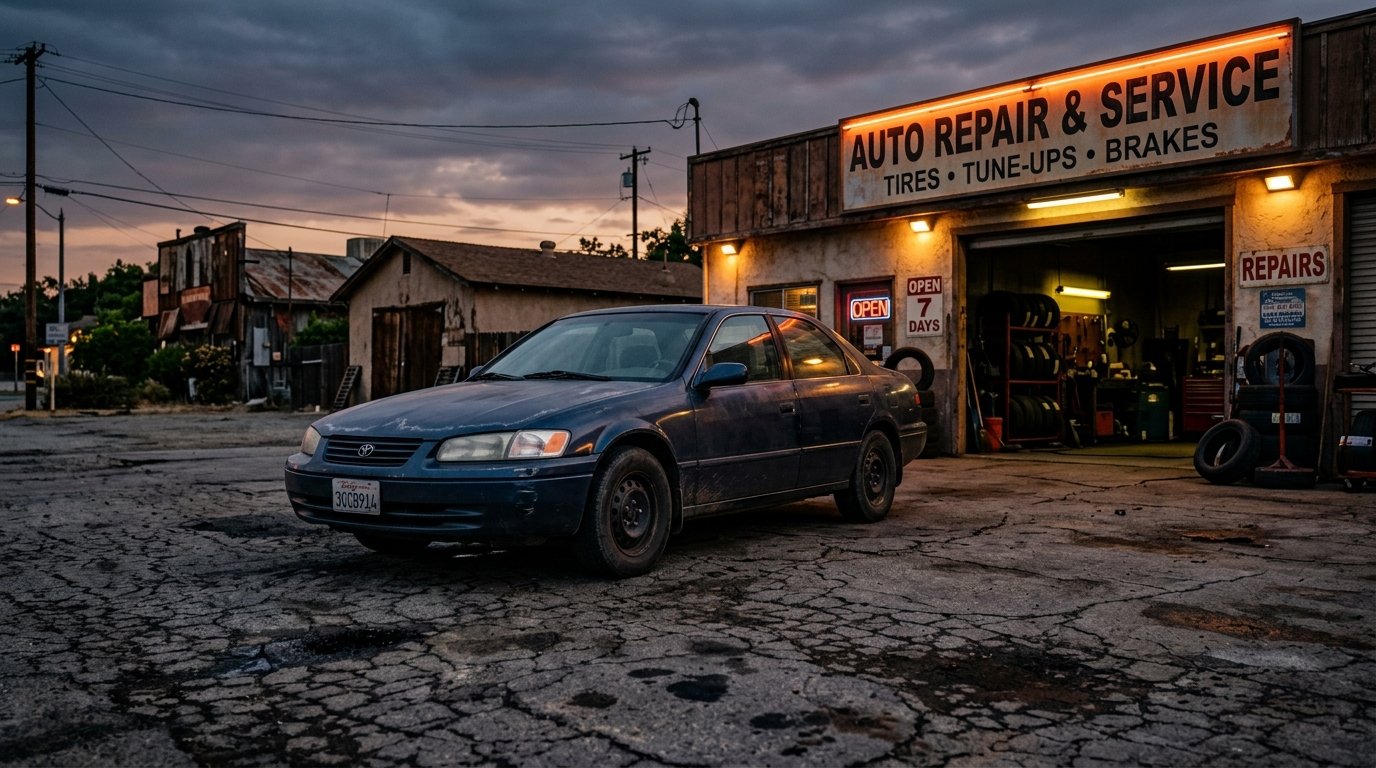
Toyota Camry Years to Avoid (Worst to Best Ranked)
INTRODUCTION The Toyota Camry casts a long shadow in the automotive world, revered for its legendary reliability and sensible value. But even icons have their weak points, and overlooking specific model years can transform a smart purchase into a financial headache. This comprehensive guide dissects the Camry’s track record, pinpointing which model years to steer clear of due to significant mechanical flaws and which represent the pinnacle of Toyota engineering. We provide specific details on failure modes, typical mileage, and repair costs, arming used car buyers with the definitive information needed to make an informed decision.
WHY THIS MATTERS Choosing the wrong used Toyota Camry can cost thousands of dollars beyond the purchase price, eroding its famed value proposition. While a well-maintained Camry typically offers annual ownership costs between $450 and $600 for routine maintenance and minor repairs, acquiring a model known for prevalent, costly issues can easily double or triple that figure in a single year. For instance, an engine replacement due to excessive oil consumption can cost anywhere from $3,000 to $5,500, while a transmission overhaul might set you back $2,500 to $4,000. These unexpected expenses not only deplete savings but also lead to significant downtime and diminished resale value. Conversely, selecting a top-tier Camry model year can lock in years of trouble-free driving, predictable maintenance, and strong residual value, saving you thousands in repair bills and preserving your investment. Understanding these critical distinctions is the difference between smart stewardship and buyer's remorse.
THE RANKINGS / THE YEARS
-
2007-2009 Toyota Camry (2.4L Four-Cylinder Engine) - AVOID The 2007-2009 Camry models equipped with the 2.4-liter 2AZ-FE four-cylinder engine are widely recognized for a severe issue: excessive oil consumption. This defect stems from poorly designed piston rings that fail to properly scrape oil from the cylinder walls, leading to oil burning and often requiring owners to add a quart or more of oil every 1,000 miles. This issue typically surfaces between 70,000 and 120,000 miles. Ignoring it can lead to engine damage from low oil levels. The long-term fix, often requiring a short block or engine replacement, can cost between $3,000 and $5,500. Buyer Tip: Absolutely avoid any 2007-2009 2.4L Camry without documented evidence of an engine replacement performed by a Toyota dealership or reputable independent shop.
-
2000-2001 Toyota Camry (2.2L Four-Cylinder Engine) - CAUTION While generally robust, the 2000-2001 Camrys with the 2.2-liter 5S-FE four-cylinder engine faced a vulnerability to engine oil sludge if owners neglected regular oil changes. Sludge buildup can restrict oil flow, leading to premature wear and eventual engine failure. This was less a design flaw and more a sensitivity to poor maintenance practices. Symptoms often appeared after 100,000 miles. Rectifying severe sludge can require extensive engine cleaning, potentially costing $500 to $1,500, or a full engine replacement if damage is extensive. Buyer Tip: Request meticulous service records. If oil change intervals are sparse or inconsistent, exercise extreme caution or pass on the vehicle entirely.
-
2012-2014 Toyota Camry (Early 7th Generation) - GENERALLY GOOD The initial years of the seventh-generation Camry generally offer solid reliability, though some owners reported minor issues that were mostly resolved in later years. The 2.5-liter four-cylinder and 3.5-liter V6 engines are strong performers. Early models experienced some isolated reports of minor transmission shudder or infotainment glitches, but these were not widespread systemic failures. Most issues were addressed under warranty or with minor software updates. Expected repairs are typically routine maintenance items. Buyer Tip: Focus on models with complete service histories. Check for any unresolved recall notices, particularly for power window switches or brake vacuum pumps that affected some units.
-
2004-2006 Toyota Camry (Late 5th Generation) - EXCELLENT VALUE The tail end of the fifth-generation Camry is often considered a high point for reliability and value. Both the 2.4-liter four-cylinder (before the oil consumption issues of later years) and the potent 3.3-liter V6 engines are durable and efficient. The automatic transmissions are smooth and long-lasting with proper fluid changes. Major mechanical failures are rare. Common issues at high mileage are typically wear items like suspension components, which might cost $400 to $800 per axle. Buyer Tip: Look for examples with solid maintenance records. A pre-purchase inspection should focus on suspension bushings and power steering pump leaks, which can develop after 150,000 miles.
-
2010-2011 Toyota Camry (Mid 6th Generation) - RELIABILITY RESTORED Toyota significantly addressed the oil consumption issues prevalent in the earlier 2.4L 2AZ-FE engine by either revising the 2.4L engine or transitioning to the more robust 2.5L 2AR-FE engine (depending on the market and specific trim). These models are a return to the Camry's reliable roots, offering strong performance and improved long-term durability. Transmission performance also saw refinements. Expect primarily routine maintenance. Buyer Tip: These years often represent an excellent sweet spot for value and reliability. Ensure the specific engine is the 2.5L 2AR-FE for maximum peace of mind regarding oil consumption.
-
2015-2017 Toyota Camry (Refreshed 7th Generation) - NEAR PERFECTION Toyota’s significant refresh of the seventh-generation Camry in 2015 brought improved styling, a more refined interior, and continued mechanical excellence. The 2.5-liter four-cylinder and 3.5-liter V6 engines are exceptionally reliable, pairing well with the smooth six-speed automatic transmission. These vehicles are known for low maintenance needs and minimal unexpected repairs, embodying the Camry’s best attributes. Any repairs are typically wear items or minor electrical components. Buyer Tip: These models are a prime choice for buyers seeking long-term, trouble-free ownership. Prioritize models with lower mileage and documented dealer service history. Expect to pay a premium for their proven reliability.
WHAT TO CHECK BEFORE YOU BUY
- Engine Oil Dipstick: Pull the dipstick and check oil level and condition. Look for black, gritty residue (sludge) or milky discoloration (coolant contamination). Ensure the oil level is correct.
- Coolant Reservoir: Inspect the coolant level and color. Brown or sludgy coolant indicates neglected maintenance or potential head gasket issues.
- Transmission Fluid: If equipped with a dipstick, check the transmission fluid. It should be bright red or pink, not brown or black, and should not smell burnt.
- Test Drive Thoroughly: Pay attention to any transmission hesitations, hard shifts, or clunking noises. Listen for unusual engine noises like ticking, knocking, or excessive valvetrain noise.
- Check for Warning Lights: Ensure no check engine light, ABS light, or airbag light remains illuminated after starting the vehicle. Utilize an OBD-II scanner if possible.
- Tire Condition and Wear: Inspect all four tires for even wear. Uneven wear can indicate alignment issues or worn suspension components.
- Rust Inspection: Pay close attention to wheel arches, rocker panels, and the undercarriage for excessive rust, especially in regions with heavy road salt usage.
COST OF OWNERSHIP OVER 5 YEARS The Toyota Camry is renowned for its low cost of ownership, but this varies based on the specific model year and how well it has been maintained. For a well-chosen Camry (e.g., 2004-2006 or 2015-2017), expect annual routine maintenance to average $450 to $600. This typically covers oil changes, tire rotations, air filter replacements, and occasional brake pad and rotor replacements. Over five years, these costs would total approximately $2,250 to $3,000.
Major repair risks are significantly lower for recommended years. A well-maintained engine and transmission should last well beyond 200,000 miles without catastrophic failure. However, even the best cars will eventually need repairs like a starter ($400-$600), alternator ($500-$750), or control arm replacement ($300-$500 per side). Budgeting an additional $500 per year for unexpected minor repairs or an eventual larger component replacement is a prudent approach. For years to avoid, like the 2007-2009 2.4L, the risk of a $3,000-$5,500 engine repair significantly skews this average, potentially costing an extra $1,000 per year just for that single issue.
Fuel costs are generally moderate. A four-cylinder Camry typically achieves 25-30 miles per gallon combined, while V6 models usually fall between 22-26 miles per gallon. Assuming 12,000 miles driven annually and an average fuel price of $3.50 per gallon, a four-cylinder model would cost around $1,400 to $1,680 per year in fuel, totaling $7,000 to $8,400 over five years. Insurance premiums vary widely based on driver age, location, and driving record, but a used Camry usually falls into a lower to mid-range cost bracket, typically between $1,200 and $1,800 annually for full coverage. Over five years, this equates to $6,000 to $9,000. Total five-year ownership costs, excluding purchase price and for a good model year, could range from $16,000 to $20,000.
OUR VERDICT For used car buyers prioritizing long-term reliability and predictable ownership costs, the 2015-2017 Toyota Camry is the unequivocal top recommendation. These model years represent the pinnacle of the Camry's traditional strengths, offering robust powertrains, excellent build quality, and minimal systemic issues. While they command a slightly higher price, the investment is justified by nearly bulletproof dependability. Conversely, we strongly advise avoiding the 2007-2009 Toyota Camry with the 2.4L four-cylinder engine due to the prevalent and expensive oil consumption defect. Buyers on a tighter budget should focus on the 2004-2006 or 2010-2011 models, which offer an outstanding balance of reliability and value.
FREQUENTLY ASKED QUESTIONS
Q: What is a good budget for a reliable used Toyota Camry? A: A budget of $12,000 to $18,000 will typically secure a well-maintained 2015-2017 Camry, offering the best combination of modern features and proven reliability. Older, but still reliable, 2010-2011 models can be found in the $8,000 to $11,000 range.
Q: How many miles are too many for a used Camry? A: Toyota Camrys are known to last well over 200,000 miles with proper maintenance. For a good model year, a Camry with 120,000 to 150,000 miles can still offer many years of reliable service, provided it has a clean maintenance history and passes a pre-purchase inspection.
Q: Which specific Camry years are the most reliable? A: The 2004-2006, 2010-2011, and especially 2015-2017 model years consistently rank as the most reliable. These years exhibit minimal widespread mechanical defects and uphold the Camry’s reputation for durability.
Q: Are there any known issues with the Camry’s V6 engine? A: The V6 engines offered in the Camry, such as the 3.3L and 3.5L units, are generally very robust and less prone to the specific oil consumption issues seen in some four-cylinder variants. Some earlier 3.5L V6 engines in other Toyota models had water pump issues, but this was less prevalent in Camrys.
Q: How much should I expect to pay annually for maintenance? A: For a reliable Camry model year, expect to pay approximately $450 to $600 annually for routine maintenance, including oil changes, tire rotations, and general inspections. This figure can increase if major wear items like brakes or tires need replacement.
Q: Does a Camry hold its resale value well? A: Yes, the Toyota Camry consistently demonstrates strong resale value, especially for well-maintained examples of reliable model years. This strong retention is a testament to its reputation for dependability and widespread appeal, making it a sound long-term investment.