
Toyota Tacoma vs Chevy Colorado: Reliability Compared
Explore a head-to-head reliability comparison of the Toyota Tacoma vs. Chevy Colorado. Discover which truck truly stands out for long-term dependability.
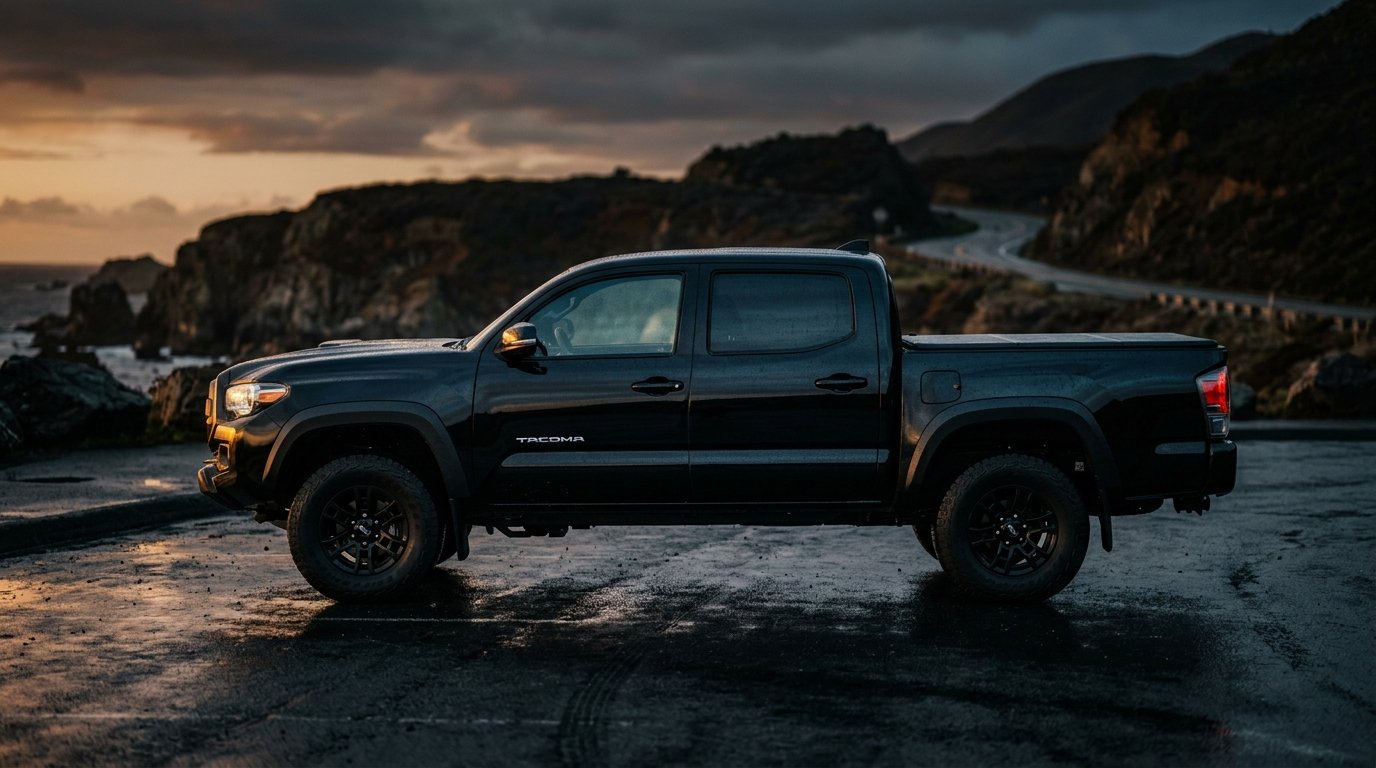
TOYOTA TACOMA VS CHEVY COLORADO: RELIABILITY COMPARED
INTRODUCTION The decision between a used mid-size pickup can either lock you into years of dependable service or bury you under a mountain of unexpected repair bills. For many buyers, the choice between a Toyota Tacoma and a Chevrolet Colorado represents this critical crossroads of long-term reliability and ownership cost. This article systematically unpacks the durability track records of both popular trucks, identifying specific model years, common mechanical weaknesses, and the typical expenses associated with their resolution. Readers will gain the specific, actionable intelligence necessary to navigate the used truck market with confidence, ensuring their investment performs reliably for years to come.
WHY THIS MATTERS Purchasing a used truck is a significant financial commitment, and an unforeseen major repair can quickly obliterate any initial savings. Imagine saving $3,000 on a used Chevrolet Colorado only to face a $4,500 transmission replacement within the first year of ownership. Similarly, an older Toyota Tacoma with severe frame rust could be a safety hazard requiring upwards of $7,000 in repair or deeming the vehicle a total loss. Beyond the purchase price, total cost of ownership over five years can differ by $8,000 or more between a highly reliable truck and one plagued by common issues, accounting for maintenance, major repairs, and depreciation. Understanding these risks and opportunities empowers used car buyers to make an economically sound decision, protecting both their wallet and their peace of mind. A prudent buyer meticulously vets a vehicle's known weaknesses to secure a dependable workhorse, not a money pit.
THE TOP 5 / THE YEARS
-
TOYOTA TACOMA 2ND GENERATION (2005-2015) The infamous frame rust issue plagues these otherwise robust trucks, particularly in regions that use road salt. This is not surface rust; it is deep, structural corrosion that compromises the frame's integrity, especially around the rear leaf spring hangers and crossmembers. Issues typically become severe after 100,000 miles, but careful inspection is needed on any model. Repairing a heavily rusted frame can cost between $2,000 and $7,000, depending on the extent, or render the vehicle unsafe and uneconomical to repair. Buyers must perform a thorough physical inspection of the frame from front to back, tapping suspicious areas with a small hammer to detect softness.
-
TOYOTA TACOMA 3RD GENERATION (2016-2019) While mechanically sound, the early 3rd Generation Tacomas are known for a particularly irksome characteristic of their 6-speed automatic transmission: excessive hunting and hesitation. This is not a failure mode but a persistent driveability complaint where the transmission struggles to find the correct gear, particularly on inclines or at highway speeds. This behavior is present from new and does not typically worsen with mileage. Remediation usually involves an aftermarket ECU tune, costing $500 to $800, which can significantly improve shift logic. An extended test drive, including highway and varied terrain, is essential to assess if this characteristic is tolerable.
-
CHEVROLET COLORADO 1ST GENERATION (2004-2012) The 2.8L and 3.5L Atlas inline-five cylinder engines in these Colorados frequently suffer from head gasket failures. Symptoms include engine misfires, coolant loss without visible leaks, and sometimes white smoke from the exhaust. This issue typically surfaces between 100,000 and 150,000 miles. Repairing a blown head gasket usually costs $1,500 to $2,500. Prospective buyers should check the engine oil for milky residue indicating coolant contamination and scrutinize the coolant reservoir for oil film.
-
CHEVROLET COLORADO 2ND GENERATION V6 (2017-2022) The 8L45 and 8L90 automatic transmissions paired with the V6 engine in these models are notorious for torque converter shudder. This manifests as a vibration or shudder, often felt between 30 and 50 MPH, and can eventually lead to transmission damage. The issue commonly appears between 50,000 and 100,000 miles. An initial repair might involve a transmission fluid flush and software update for around $1,500, but a full torque converter or transmission replacement can cost $3,000 to $4,500. During a test drive, pay close attention to the transmission's behavior, especially under light acceleration at mid-range speeds.
-
TOYOTA TACOMA 2.7L 4-CYLINDER (ALL GENERATIONS) This powertrain combination represents the pinnacle of simplicity and enduring reliability within the mid-size truck segment. The 2.7-liter 2TR-FE engine, combined with either the 5-speed manual or 4-speed automatic, has fewer complex components than its V6 counterparts, translating to fewer potential failure points. These engines are consistently reported to exceed 250,000 to 300,000 miles with basic, consistent maintenance. The primary cost savings come from a significantly reduced risk of major, unexpected engine or transmission repairs. For buyers prioritizing sheer mechanical longevity over maximum power or towing capacity, the 4-cylinder Tacoma is an exceptional choice.
-
CHEVROLET COLORADO DURAMAX DIESEL (2016-2022) While offering impressive torque and fuel economy, the 2.8L Duramax diesel engine models are susceptible to common diesel-specific emissions system failures. The Exhaust Gas Recirculation (EGR) valve and Diesel Particulate Filter (DPF) are frequent culprits, especially in trucks used for short trips. Failures typically begin around 60,000 to 120,000 miles. Replacing an EGR valve can cost $800 to $1,500, while a DPF replacement can range from $2,500 to $4,000. It is crucial to obtain complete service records detailing diesel system maintenance and consider a pre-purchase inspection by a diesel specialist.
WHAT TO CHECK BEFORE YOU BUY
Inspect the frame for rust: Get underneath the truck with a bright flashlight and closely examine the entire frame, especially on 2nd generation Tacomas. Look for deep, flaky, or perforated rust around suspension mounting points, crossmembers, and the rear section near the spare tire.
Check for differential fluid leaks: Look for fluid weeping around the front and rear differential seals and the transfer case. While minor residue can be normal, active drips or significant staining on the differential housing or surrounding components indicate a potential seal failure.
Test the 4WD system: Engage 4-high and 4-low on a loose surface like dirt or gravel. Drive a short distance to ensure the system engages smoothly without any grinding, clunking, or binding sensations, then disengage and verify the indicator lights operate correctly.
Listen to the engine at cold start: With the engine completely cold, start it and listen carefully for any persistent rattles, ticks, or knocks that do not subside within a few seconds. These noises could signal timing chain wear, valve lifter issues, or other internal engine problems.
Examine transmission fluid: If a dipstick is present, with the engine warm and running, pull the transmission dipstick. The fluid should be red or dark red, not brown or black, and should not emit a burnt odor. Burnt fluid indicates excessive heat and potential transmission damage.
Check for service records: Always request comprehensive maintenance history from the seller. Look for regular oil changes, transmission fluid services, differential fluid changes, and any documented repairs, paying close attention to recommended factory intervals.
Test all electrical accessories: Cycle through all power windows, door locks, radio functions, air conditioning and heating, wipers, and all interior and exterior lights. Faulty electrical components can be expensive to diagnose and repair, or they can indicate general vehicle neglect.
COST OF OWNERSHIP OVER 5 YEARS The overall cost of ownership for a used mid-size truck extends far beyond the initial purchase price, encompassing routine maintenance, potential major repairs, fuel, and insurance. Both the Toyota Tacoma and Chevrolet Colorado require standard maintenance such as oil changes, tire rotations, and fluid flushes, which typically cost between $500 and $900 annually. However, the probability and cost of major, unexpected repairs diverge significantly between the two models.
For a well-maintained Toyota Tacoma, annual unscheduled repair costs tend to be lower, often totaling less than $300 beyond routine maintenance, assuming no frame rust issues. In contrast, the Chevrolet Colorado, particularly certain model years and powertrains, presents a higher risk of costly repairs such as transmission overhauls ($3,000-$4,500) or head gasket replacements ($1,500-$2,500). This higher risk means a Colorado owner should realistically budget an additional $500 to $1,000 per year for potential major repair fund contributions, especially for models known for specific weaknesses.
Fuel costs for both trucks are comparable for their V6 gasoline variants, averaging around 18-20 miles per gallon combined. Driving 12,000 miles annually at an average fuel price of $3.50 per gallon would result in approximate annual fuel costs of $2,100 to $2,300. The Colorado Duramax diesel offers better fuel economy but diesel fuel is typically more expensive, and its specific maintenance requirements can offset some of the savings. Insurance premiums vary widely by driver and location, but expect to pay between $1,200 and $2,000 annually for comprehensive coverage on either truck, with the Tacoma's higher resale value potentially leading to slightly elevated comprehensive rates.
OUR VERDICT For buyers prioritizing absolute long-term dependability and minimal unforeseen repair costs in a used mid-size truck, the Toyota Tacoma consistently proves to be the superior choice. While specific generations have their known issues, such as 2nd Gen frame rust, the core mechanicals, particularly the 2.7L 4-cylinder engine and the V6 post-2018, offer remarkable longevity and a low-risk ownership experience. The Chevrolet Colorado, while often providing a more comfortable ride and sometimes a lower entry price, demands a more rigorous pre-purchase inspection and a larger contingency fund for potential major repairs, especially concerning first-generation head gaskets and second-generation 8-speed automatic transmissions. A meticulously inspected Tacoma offers unparalleled peace of mind and higher resale value, making it the more financially sound long-term investment.
FREQUENTLY ASKED QUESTIONS
Q: What budget is ideal for a reliable used mid-size truck? A: A budget ranging from $15,000 to $25,000 generally provides access to robust second-generation Tacomas (2010-2015) or newer second-generation Colorados (2015-2018) that have either proven their durability or had initial production issues addressed. Aiming closer to $20,000-$25,000 typically secures lower mileage and better overall condition for either model, reducing immediate repair concerns.
Q: How many miles are too many for a used Tacoma or Colorado? A: For a Toyota Tacoma, 150,000 to 200,000 miles can be perfectly acceptable if a complete service history is available and a thorough pre-purchase inspection passes without significant issues. A Chevrolet Colorado with similar mileage carries a higher risk profile, particularly for first-generation models, where critical components like the engine and transmission may be nearing the end of their service life without major overhauls.
Q: Which specific years of Tacoma are most reliable? A: The 2010-2015 Toyota Tacoma models equipped with the 2.7L four-cylinder engine are widely regarded as exceptionally reliable, provided the vehicle does not exhibit significant frame rust. For the V6, 2018 and newer third-generation models received critical software updates that substantially improved the behavior of the 6-speed automatic transmission, enhancing their driveability and overall ownership experience.
Q: What are the most common known issues for a Colorado? A: First-generation Chevrolet Colorados (2004-2012) are frequently plagued by head gasket failures in their inline-five engines and various electrical system gremlins. Second-generation models (2015-2022) are most notable for torque converter shudder and other reliability concerns with the 8-speed automatic transmission, necessitating diligent scrutiny during pre-purchase evaluations.
Q: How much should I budget for annual maintenance on these trucks? A: For a well-maintained Toyota Tacoma, expect to allocate $500 to $800 annually for routine maintenance, including oil changes, tire rotations, and minor wear item replacements. A Chevrolet Colorado might demand a slightly higher budget of $600 to $900 annually for basic services, with a greater likelihood of needing to set aside additional funds for larger, more expensive repairs like transmission services or diesel emissions system components.
Q: Do these trucks hold their resale value well? A: Toyota Tacomas are legendary for their exceptional resale value, consistently outperforming nearly all other vehicles on the market, even with high mileage. Chevrolet Colorados also maintain strong resale values compared to other domestic trucks, but they typically do not command the same premium as Tacomas over the long term.