
Toyota Tacoma Years to Avoid (Worst to Best Ranked)
Don't buy a Tacoma without this guide! Discover the absolute worst Toyota Tacoma years to avoid and the top-rated models for reliability.
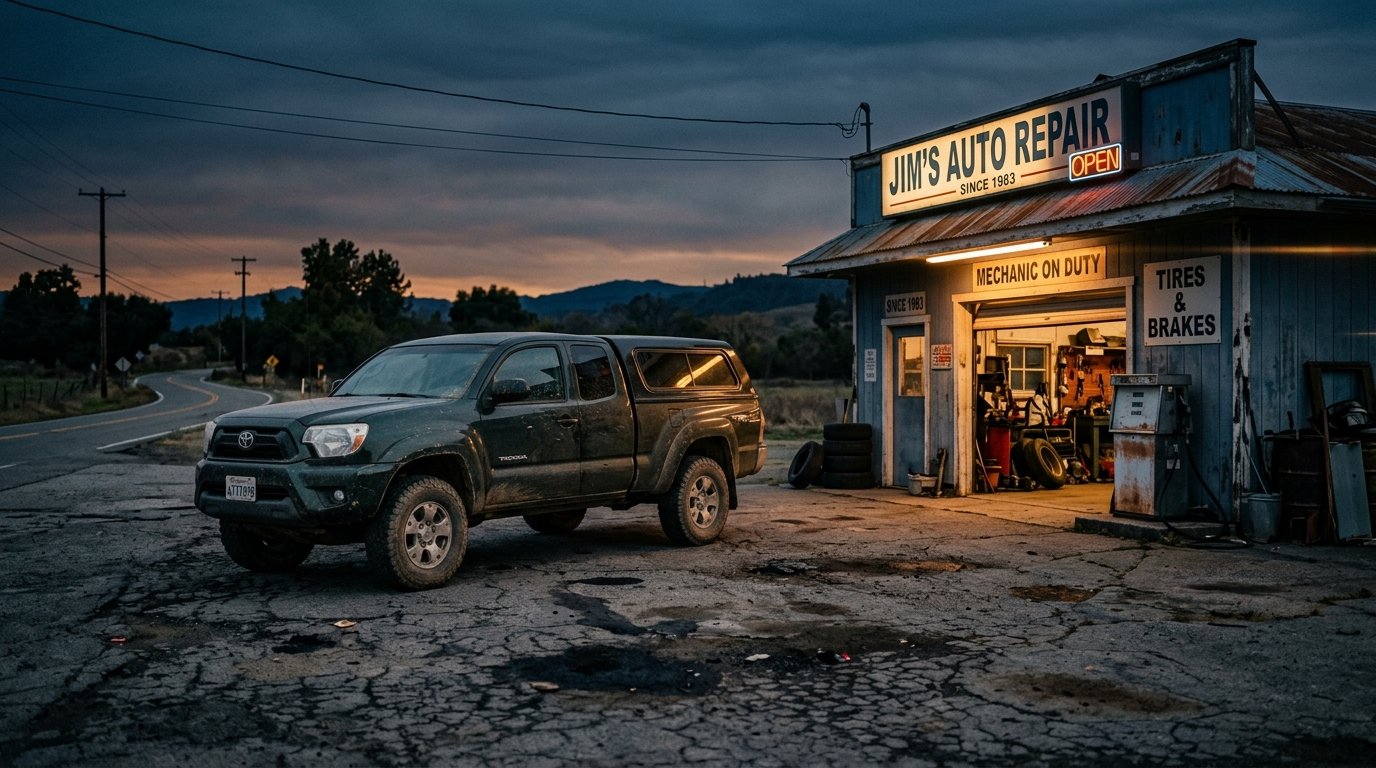
Toyota Tacoma Years to Avoid (Worst to Best Ranked)
INTRODUCTION Buying a used Toyota Tacoma often feels like a safe bet, given its legendary reputation for durability. However, not all Tacoma model years offer the same peace of mind, and selecting the wrong one can lead to significant financial strain and unexpected breakdowns. This comprehensive guide will dissect the Tacoma's generational quirks, pinpointing specific model years that present the highest risk of costly repairs and identifying the standout years that uphold the truck's robust legacy, all to help you make an informed purchase decision.
WHY THIS MATTERS The Toyota Tacoma consistently commands a premium in the used truck market, making a poor purchase decision particularly impactful. A problematic year can mean the difference between reliable ownership and sinking thousands of dollars into preventable repairs. For instance, severe frame rust on an early second generation Tacoma can render the vehicle unsafe and effectively worthless, costing you the entire purchase price which can range from $10,000 to $20,000. Conversely, choosing a well-sorted model year ensures you retain a high resale value and experience minimal unexpected expenses beyond routine maintenance. Understanding these distinctions protects your investment, which for a used Tacoma can easily exceed $25,000 for a newer model, while avoiding common failure modes that could quickly add $1,500 to $4,000 in repair bills, often exceeding the truck's actual value in extreme cases.
THE RANKINGS
-
2005-2009 Toyota Tacoma (Worst: Frame Rust Catastrophe) These early second generation models are notorious for severe frame rust. The issue stems from inadequate rustproofing during manufacturing, leading to corrosion from the inside out. Owners reported advanced deterioration typically starting around 80,000 to 120,000 miles, with rust perforating the frame rails, especially near the rear leaf spring mounts and control arm attachments. Toyota initiated a massive recall and buyback program, even offering frame replacements for some vehicles, but many trucks either missed the window or developed new rust. A frame replacement can cost upwards of $15,000 if not covered by a recall. BUYER TIP: Thoroughly inspect the entire frame, especially inside the C-channels and near all suspension mounting points, using a hammer to tap for weak spots. Any significant rust is a deal breaker.
-
2016-2017 Toyota Tacoma (Early Third Generation: Transmission Frustrations and Differential Noise) The first two years of the third generation brought a new 3.5L V6 engine paired with a 6-speed automatic transmission that quickly became a source of widespread frustration. Owners frequently reported the transmission "hunting" for gears, particularly on inclines or at highway speeds, feeling hesitant and unresponsive. While often a software issue addressed by subsequent updates and not a catastrophic failure, it significantly impacts the driving experience. Additionally, some vehicles experienced rear differential howling or whining, typically audible between 40-60 mph, often manifesting around 30,000 to 70,000 miles. A differential rebuild can cost $1,500 to $3,000. BUYER TIP: Take an extended test drive on various road types, paying close attention to the automatic transmission's shifting behavior. Listen for any persistent whine or hum from the rear end.
-
2010-2011 Toyota Tacoma (Mid-Second Generation: Improved, But Not Perfect) These years represent a slight improvement over their earlier second generation counterparts, as Toyota began to address some of the widespread frame rust complaints with better undercoating processes. However, they are not entirely immune, and careful inspection is still paramount. The 4.0L V6 engine in some units from this period also occasionally suffered from premature head gasket leaks, typically surfacing after 100,000 miles. This repair is labor-intensive, often costing $1,500 to $2,500. Less common but still present were issues with automatic transmission hesitation experienced in earlier models. BUYER TIP: Beyond frame inspection, check for any signs of coolant consumption or leaks around the engine block, especially near the cylinder heads. Monitor engine temperature during a test drive.
-
2018-2019 Toyota Tacoma (Mid-Third Generation: Refined, But With Recall Concerns) By these model years, Toyota had implemented several software updates for the 6-speed automatic transmission, significantly mitigating the "gear hunting" issues that plagued earlier third generation Tacomas. The driving experience is generally smoother and more predictable. However, the 2019 and early 2020 models were subject to a widespread fuel pump recall affecting many Toyota vehicles. A faulty fuel pump could lead to stalling or no-start conditions, typically occurring without warning. While this was a recall item, ensuring the service has been performed is critical. BUYER TIP: Verify that all outstanding recalls, particularly the fuel pump recall (Toyota Recall 20TA02 or similar), have been completed by a Toyota dealership. Ask for service records.
-
2012-2015 Toyota Tacoma (Best Second Generation: Proven Durability) These final years of the second generation represent the pinnacle of its reliability. Toyota had largely resolved the significant frame rust problems through improved manufacturing and comprehensive service campaigns. The 4.0L V6 engine and earlier automatic transmissions were well-sorted and had proven their long-term durability, often exceeding 200,000 miles with proper maintenance. While still susceptible to common wear items like leaf spring sag (around $400-$800 to replace with aftermarket), there are no widespread, catastrophic failure modes associated with these years. BUYER TIP: Focus on trucks with a strong service history. While the frame rust issue was largely mitigated, a visual inspection is always prudent to confirm the truck's specific condition.
-
2020-Present Toyota Tacoma (Best Third Generation: Modern and Reliable) The latest iteration of the third generation Tacoma benefits from continuous refinement. Transmission tuning has been further optimized, leading to a much more agreeable driving experience compared to the initial 2016-2017 models. Infotainment systems were updated, and critical recalls like the fuel pump issue were addressed. These models offer the most modern features, improved safety technology, and have proven to be exceptionally reliable, carrying forward the Tacoma's reputation for long-term durability. Expect minimal major issues beyond standard maintenance items. BUYER TIP: These models command a higher premium, so negotiate based on mileage and trim level. Ensure all factory safety features are fully functional.
WHAT TO CHECK BEFORE YOU BUY
- FRAME INSPECTION: Lie on the ground and thoroughly inspect the entire underside of the frame for any signs of deep rust, perforation, or compromised welds. Pay close attention to crossmembers and suspension mounting points.
- TRANSMISSION BEHAVIOR: During a test drive, observe the automatic transmission for smooth shifts under acceleration and deceleration. Any hesitation, jerking, or "hunting" for gears indicates potential issues.
- ENGINE COMPARTMENT: Look for any signs of fluid leaks around the engine block, particularly head gaskets on 4.0L V6 models. Check for milky residue on the oil cap, indicating potential coolant mixing.
- SUSPENSION AND DRIVELINE: Listen for clunks, squeaks, or humming noises during the test drive, especially when turning or going over bumps, which could signal worn suspension components, U-joints, or differential issues.
- TIRES AND BRAKES: Inspect tire tread depth and even wear. Check brake rotor condition for deep grooves or excessive rust, indicating potential need for immediate replacement.
- RECALL STATUS: Verify that all manufacturer recalls for the specific model year, particularly fuel pump recalls for 2019-2020 models, have been completed.
- SERVICE RECORDS: Request comprehensive service records to understand the vehicle's maintenance history, including oil changes, fluid flushes, and any significant repairs.
COST OF OWNERSHIP OVER 5 YEARS Owning a Toyota Tacoma is generally a sound financial decision, but it is not without its costs. Over a five-year period, expect to budget for routine maintenance, potential major repairs, fuel, and insurance.
Typical annual maintenance for a Tacoma, including oil changes, tire rotations, air filter replacements, and general inspections, usually ranges from $400 to $600. Every few years, you will face larger scheduled maintenance items like spark plug replacements (around $200-$400), brake pad and rotor replacements (around $500-$800 per axle), or fluid flushes for the transmission, differential, and coolant system (ranging from $150-$400 each). These routine items are crucial for extending the truck's lifespan and preventing more expensive failures.
Major repair risk varies significantly by model year. For instance, a 2005-2009 model carries a high risk of catastrophic frame rust, potentially costing thousands or rendering the truck unrepairable. Later models significantly mitigate this risk, but any used vehicle can experience issues like a failing alternator ($500-$800), starter ($400-$700), or a worn out suspension component ($500-$1,000 per corner). Budgeting an additional $500-$1,000 annually for unexpected repairs provides a good buffer.
Fuel costs for a Tacoma are typical for a mid-size truck. With an average combined MPG of 18-20 for most V6 models, and current fuel prices hovering around $3.50 per gallon, driving 12,000 miles per year would result in annual fuel costs of $2,100 to $2,300. Insurance premiums vary widely based on location, driver history, and coverage, but typically range from $1,200 to $2,000 per year for a Tacoma. Over five years, the total cost of ownership, excluding the purchase price, can realistically fall between $25,000 and $35,000, depending on the truck's condition and your driving habits.
OUR VERDICT The Toyota Tacoma remains a highly recommended used truck, but careful model year selection is paramount. Avoid the 2005-2009 models due to the severe and often irreparable frame rust issues that can compromise safety and structural integrity. The 2016-2017 models, while generally reliable mechanically, suffer from transmission tuning that can diminish the driving experience. The standout years for reliability and value are the 2012-2015 second generation models, which benefit from resolved earlier issues and proven durability, and the 2020-present third generation models, offering modern refinements and robust performance. For those seeking the legendary Toyota reliability without the highest price tag, a well-maintained 2012-2015 Tacoma represents the sweet spot.
FREQUENTLY ASKED QUESTIONS
Q: What is a good budget for a reliable used Tacoma? A: A good budget for a reliable used Tacoma typically ranges from $18,000 for a well-maintained 2012-2015 model with over 100,000 miles, up to $30,000 or more for a 2018-2020 model with lower mileage. Pricing varies significantly by region and trim level.
Q: What mileage is too high for a used Toyota Tacoma? A: For a Toyota Tacoma, mileage exceeding 200,000 is generally considered high, but many well-maintained examples can surpass 300,000 miles. Focus on service history and condition rather than mileage alone, especially for the robust 2012-2015 models.
Q: Are there any specific years that are universally good for the Tacoma? A: Yes, the 2012-2015 model years of the second generation are widely regarded as universally good due to their proven reliability and resolution of earlier issues. The 2020 and newer third generation models also offer excellent reliability with modern features.
Q: What are the most common known issues across Tacoma generations? A: Common issues include severe frame rust on 2005-2009 models, automatic transmission shifting complaints on early third generation (2016-2017) and early second generation (2005-2009) models, and occasional rear differential noise on early third generation models.
Q: How much should I expect for annual maintenance on a Tacoma? A: Expect to pay approximately $400 to $600 annually for routine maintenance, including oil changes, tire rotations, and inspections. Budget an additional $500 to $1,000 per year for unforeseen repairs or larger scheduled services like brake replacements or fluid flushes.
Q: Do Tacomas hold their resale value well? A: Yes, Toyota Tacomas are renowned for their exceptional resale value, often retaining a higher percentage of their original price than most other trucks. This strong demand makes them a wise investment in the long term, even with higher upfront costs.