
Understanding Your Suspension: What Each Part Does
Discover how your vehicle's suspension components work and enhance your driving experience. Dive into our guide and ensure your car is road-ready today!
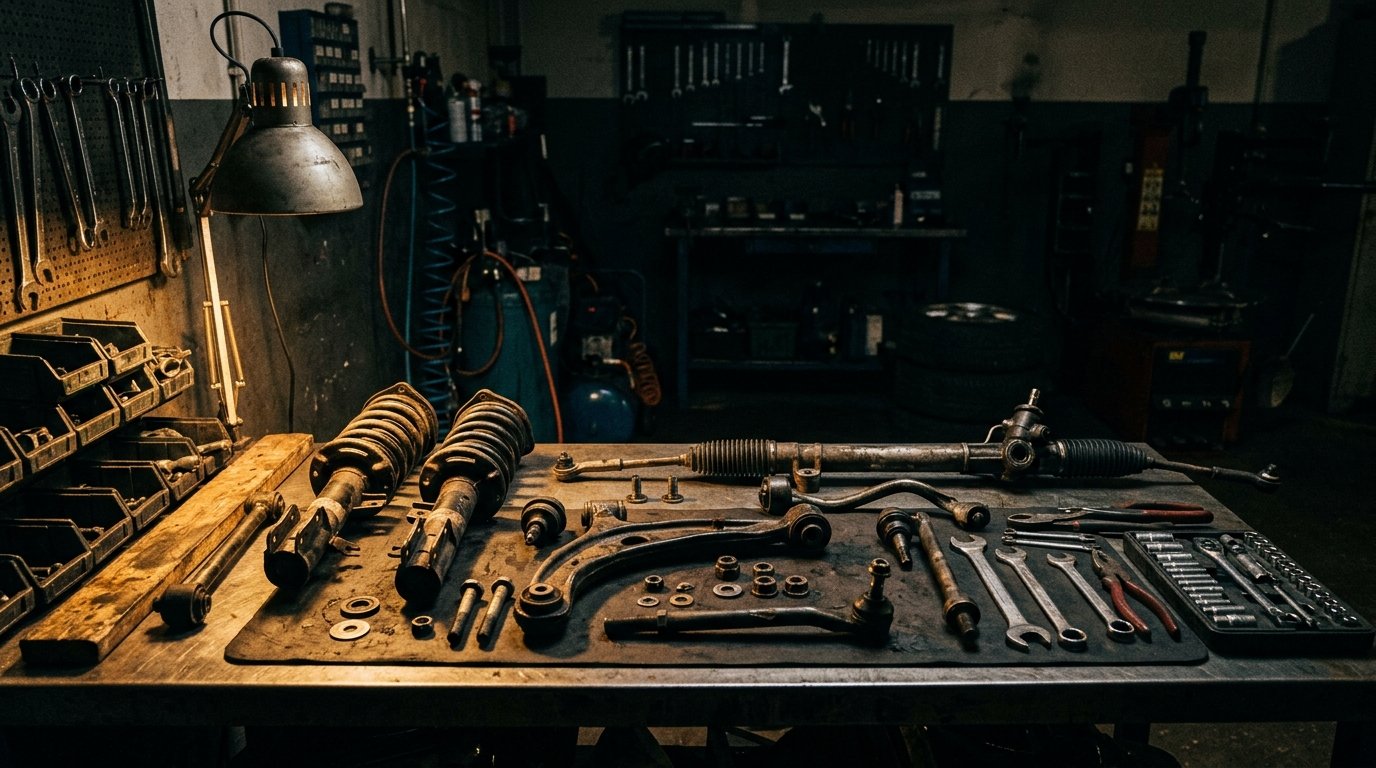
Understanding Your Suspension: What Each Part Does
Modern suspension systems are a marvel of engineering, designed to optimize comfort, handling, and safety. While they might seem complex, breaking down each component demystifies the system. This guide will equip you with the knowledge to confidently maintain, repair, and understand your vehicle's suspension.
What You'll Need (Tools and Parts)
Tools
- 3/8" drive ratchet and breaker bar
- Metric socket set (10mm-19mm)
- Torque wrench (25-250 ft-lbs)
- Pry bar
- Ball joint separator tool (rentable)
- Spring compressor tool (rentable; required for strut replacement)
- Rubber mallet
Parts
- Shock absorbers: $30-$150 each
- Struts: $50-$250 each
- Springs: $40-$200 each
- Control arms: $50-$150 each
- Bushings: $10-$50 per set
- Ball joints: $15-$50 each
When using specific example vehicles, let's talk about the trusty Honda Civic. For a 2013 Honda Civic, you’ll find the front strut assembly consists of KYB 339349 for the left and KYB 339348 for the right.
Difficulty Level & Time Estimate
Difficulty Level: Intermediate
Estimated Time:
- First-timer: 4-6 hours
- Experienced DIYer: 2-3 hours
When to Take It to a Shop:
If your vehicle has air suspension or adaptive dampers, or if rust has significantly corroded components, professional intervention might be the prudent choice due to the complexity and specialized tools required.
Safety First
Specific Safety Precautions:
- Always support the vehicle on jack stands rated for its weight.
- Use a spring compressor with care to avoid potential injury from a spring releasing accidentally.
Required PPE:
- Safety glasses
- Mechanic gloves
- Steel toe boots
Step-by-Step Instructions
1. Lift and Secure the Vehicle
- Pro Tip: Loosen lug nuts slightly with the vehicle on the ground to avoid wheel spin.
- Lift using a hydraulic jack on the control arm for more stability, and secure with jack stands.
2. Remove the Wheel
- Fully remove lug nuts and take off the wheel, exposing the suspension.
3. Detach the Shock Absorber/Strut Assembly
- Remove the lower shock bolt while supporting the control arm or hub assembly to prevent it from drooping unexpectedly (Honda Civic: 14mm, 32 ft-lbs).
- For struts, loosen the top mount nuts/bolts (typically 13mm or 14mm).
4. Unbolt and Remove Control Arms
- Locate and carefully unbolt control arm bolts (Civic specifics: 17mm, 47 ft-lbs for front; 29 ft-lbs for rear).
- If replacing, use a ball joint separator for the ball joint—it’s easy to damage the joint by prying.
- Pro Tip: Mark bolt and washer positions for easier reassembly and maintaining alignment.
5. Replace Bushings or Ball Joints as Needed
- Use a press for bushings or a ball joint press/removal tool.
- Common Mistake: Not keeping mounting points clean; debris can misalign the part during installation.
6. Reassemble the Components
- Verify all bolts are to spec; over-tightening can strip threads, requiring more time and cost.
- Reinstall wheels, torqueing lug nuts in a star pattern for even seating (80 ft-lbs for most Hondas).
How to Know It's Done Right
Final Checks
- Visibly inspect the suspension under load to ensure everything sits correctly.
- Test drive: Listen for unusual noises and assess handling in smooth and bumpy conditions.
- Post-repair alignment: It's advisable to get an alignment post-suspension work to avoid tire wear and handling issues.
Common Mistakes to Avoid
-
Falling into Jack Stand Complacency: Never leave the jack as sole support. Use jack stands properly rated for safety.
-
Forgetting to Torque Properly: Under or over-torquing suspension components invites failures greater than mere annoyance.
-
Mismatched Parts or Tools: Always cross-reference parts numbers and specifications with manufacturer guidelines.
When to Replace vs Repair
Decision Framework:
- Replace: Worn or damaged shocks, struts, and bushings with visible cracks or leaks.
- Repair: Replace individual bushings or ball joints in good-condition control arms.
Cost Comparison:
- DIY: Replacing typical sedan shocks and control arms can cost $300-$500.
- Shop: This can jump to $600-$1200 due to labor rates and tool availability.
Frequently Asked Questions
Q: How often should suspension parts be replaced?
A: Shocks and struts often last 50,000 to 100,000 miles, but routine inspection is vital for detecting leakage or physical damage which necessitates replacement.
Q: Can bad suspension affect tire wear?
A: Absolutely. Bad suspension misaligns the vehicle, leading to uneven and accelerated tire wear patterns.
Q: What is a sign of a failing shock absorber?
A: Look for nose-diving during braking, raised front end during acceleration, excessive body roll, and prolonged bounciness after bumps.
Q: Is it safe to drive with a broken control arm?
A: No, it greatly compromises vehicle handling and safety. Immediate repair is necessary.
Q: How do I identify failing bushings?
A: Common signs include excessive vibration, clunking noises (especially over bumps), and instability when driving.
For detailed, vehicle-specific suspension guides, OwnerKeep.com provides the resources you need to prolong your vehicle’s health and ensure smooth rides for miles to come.